Top 10 IT Skills in Demand at Skill Shikshya for 2026
The job market has changed fast, and IT skills are now the entry ticket to almost every career worth pursuing in 2026.
The World Economic Forum's Future of Jobs Report 2025 found that over 60% of employers globally say their biggest hiring gap is finding candidates with the right technology skills. In Nepal, local companies, banks, startups, and NGOs are all searching for the same thing: people who can show up and contribute from day one.
IT hard skills like coding, cloud configuration, and data analysis are what you put on your resume. IT soft skills like communication, critical thinking, and presentation ability are what actually get you hired and promoted. Both matter, and both are included in every course at Skill Shikshya.
This guide covers the top 10 IT skills in demand at Skill Shikshya for 2026, including who each skill is for, what you will learn, and what kind of job or salary you can realistically expect.
Top 10 IT Skills in Demand at Skill Shikshya
1. Cybersecurity & Ethical Hacking
Global cybercrime costs are projected to reach $10.5 trillion annually by 2026. Nepal is not immune to phishing attacks, financial fraud, and data breaches have all increased sharply in recent years.
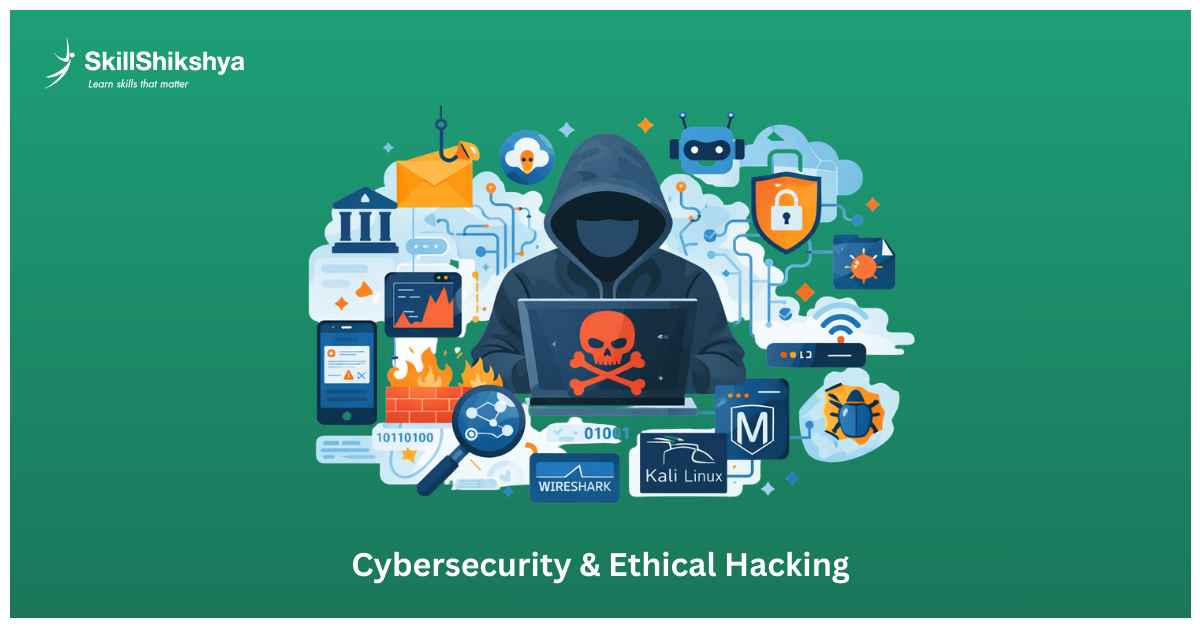
Ethical hacking, legally testing systems to find vulnerabilities before attackers do — is one of the most critical IT niche skills you can develop right now. Banks, fintech companies, hospitals, and government agencies all need people who understand how attacks happen before they can prevent them.
What you learn at Skill Shikshya:
- Network scanning and vulnerability assessment
- Penetration testing using Kali Linux, Metasploit, Wireshark, BurpSuite, and Nmap
- OWASP Top 10 web security vulnerabilities
- Cloud security and malware analysis
- Incident response and Security Operations Center (SOC) basics
- Professional reporting and career guidance for cybersecurity roles
Graduates who enrolled in Skill Shikshya's threat detection and ethical hacking program have gone on to roles in bank security teams and IT audit departments within months. If you want to understand how this career path progresses from fundamentals to a working security role, that breakdown covers every stage clearly.
Best for: Anyone interested in protecting digital assets, even foundational cybersecurity knowledge makes you valuable to any business handling customer data or financial systems.
2. Data Analytics & Business Intelligence
Raw data means nothing without interpretation. Companies pay well for people who can turn numbers into decisions, and that is exactly what data analytics training teaches you.
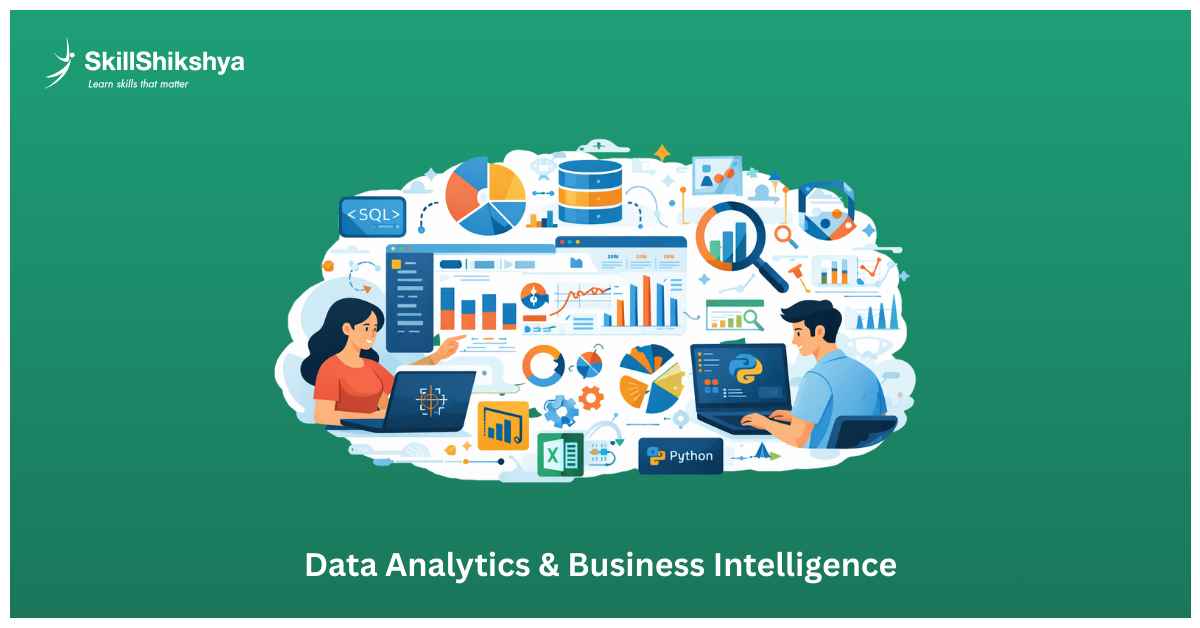
Tools like Microsoft Power BI, Tableau, SQL, Python, and advanced Excel are now standard requirements across Nepal's banking, telecom, retail, and NGO sectors. The ability to build a dashboard, run a query, and present a finding clearly is one of the most consistently IT skills in high demand across every industry.
What you learn at Skill Shikshya:
- SQL for data querying, filtering, and advanced window functions
- Excel (pivot tables, advanced functions, data cleaning)
- Power BI and Tableau dashboard and report building
- Python for data manipulation and exploratory analysis
- Statistical methods for business interpretation
- Presenting findings clearly to non-technical decision-makers
Skill Shikshya's BI and data analytics training with SQL, Power BI, and Tableau is project-based; you finish with real dashboards and reports you can show employers. For a clearer picture of how data roles actually map to salaries and industries in Nepal, that resource gives you a grounded, sector-by-sector view.
Best for: Anyone in or aiming for roles that require IT skills for business analysts, operations analysis, financial reporting, or management decision support.
3. Artificial Intelligence & Machine Learning Fundamentals
You do not need a PhD to work with AI in 2026. Tools have become accessible enough that professionals across industries are using AI to automate tasks, generate content, analyze patterns, and build products.
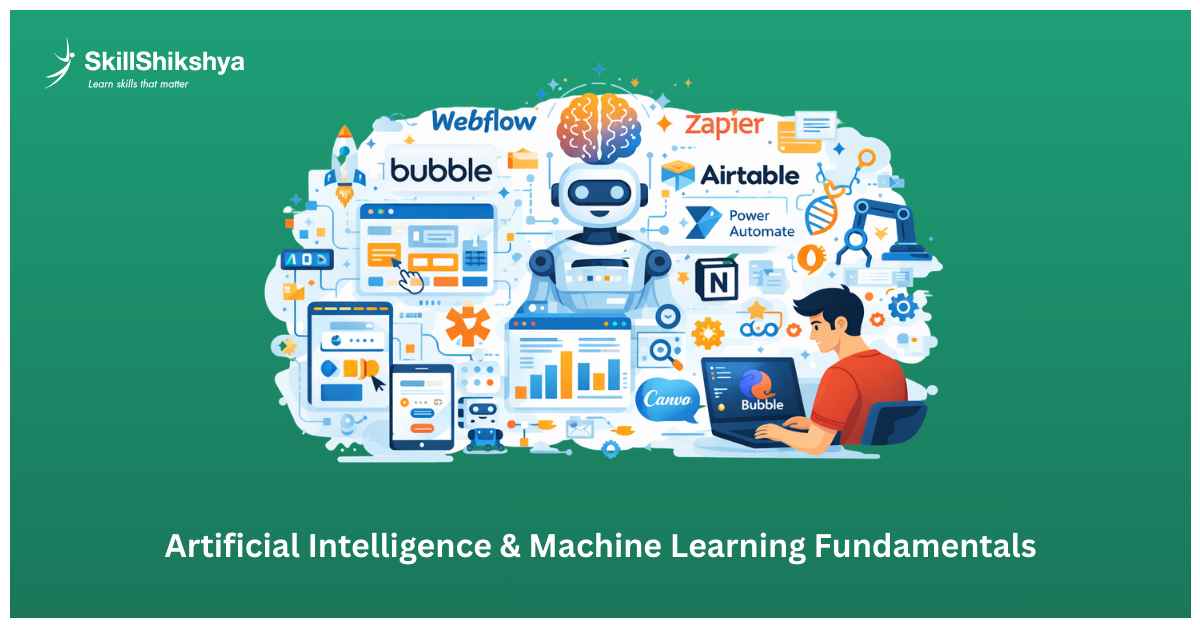
Coursera's 2024 learning trends report placed AI and ML in the top five most-enrolled skill categories globally. In Nepal, fintech, health tech, e-commerce, and media companies are beginning to build AI into their core workflows and they need people who understand what these tools can and cannot do.
What you learn at Skill Shikshya:
- AI fundamentals and prompt engineering for LLMs like ChatGPT, Claude, and Gemini
- Python and LangChain for building LLM-powered applications
- Retrieval-Augmented Generation (RAG) systems
- Fine-tuning open-source models with HuggingFace
- Multi-agent system design and autonomous AI workflows
- Practical AI tools for content creation, research, and business automation
For those ready to go deep into automation, Skill Shikshya's course on building LLM-powered agents and multi-step AI workflows is the advanced path. If you are starting from scratch, generative AI training designed for non-coders and working professionals is the more accessible entry point covering ChatGPT, Canva AI, Leonardo, and Pictory in a practical, project-based format.
Not sure which AI tools are worth learning right now? This breakdown of AI tools students and professionals are actively using today cuts through the noise and gives you a grounded shortlist.
Best for: Professionals who want to stay ahead of automation, content creators, business owners, and developers who want to add AI capabilities to their skill set. This is one of the most IT skills easy to learn at the entry level and the highest-return area to invest in for 2026.
4. IT Skills for Business Analysts
A business analyst (BA) bridges what a company needs and what the technical team actually builds. LinkedIn reported a 27% year-over-year increase in BA job postings across South Asia in 2024 and the role shows no signs of shrinking.
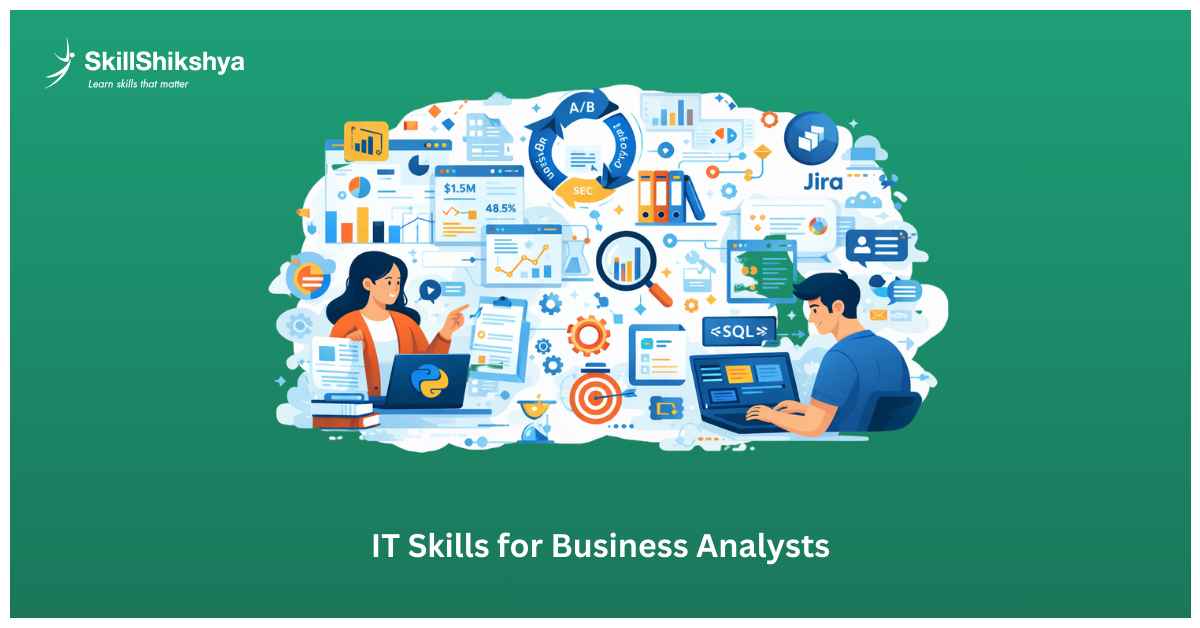
IT skills for business analysts combine technical tools with communication ability, making it one of the strongest options for professionals transitioning out of non-technical roles in operations, admin, or management.
What you learn at Skill Shikshya:
- Requirements gathering, documentation, and process mapping
- SQL for business data querying
- Power BI and Tableau for reporting to stakeholders
- User story writing and backlog management in Jira
- SDLC (Software Development Life Cycle) understanding
- A/B testing, forecasting, and business KPI tracking
- Presenting complex findings clearly to senior leadership
Skill Shikshya's course on combining Excel, SQL, Python, and AI for end-to-end analytics work takes the BA toolkit a step further particularly valuable for those targeting roles in data-heavy or product-driven organizations.
Best for: Operations managers, administrators, project coordinators, and anyone who wants to move into a tech-adjacent, higher-paying role without becoming a full developer.
5. Project Management
Every company runs on projects, product launches, system migrations, marketing campaigns, office rollouts. And every project needs someone who can plan it, track it, communicate about it, and deliver it on time.
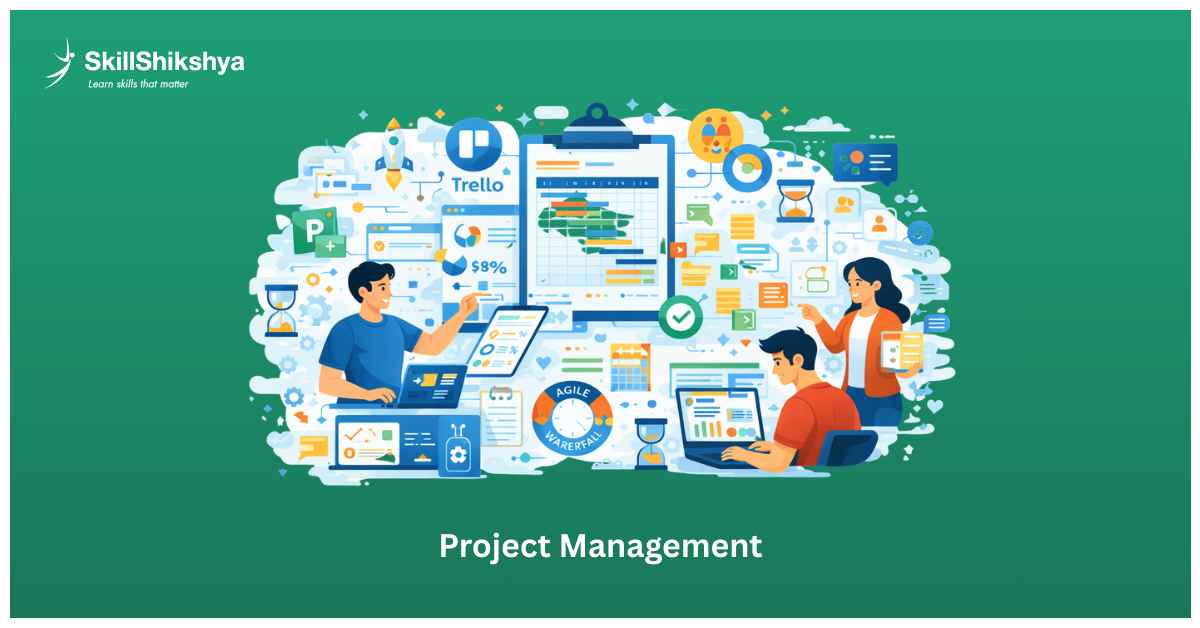
Project management is one of the most IT skills in high demand globally because it applies across every industry — not just tech. In Nepal, companies expanding into digital operations are actively searching for certified project managers who can lead cross-functional teams and manage budgets without losing stakeholder trust.
What you learn at Skill Shikshya:
- Project planning, scheduling, and scope management
- Risk assessment and mitigation strategies
- Resource allocation and budget tracking
- Agile, Scrum, and Waterfall methodologies
- Stakeholder communication and progress reporting
- Tools like Microsoft Project, Trello, Jira, and Notion
Skill Shikshya's structured program covering project planning, risk management, and team leadership prepares you for both PMP-aligned concepts and the practical day-to-day realities of managing projects in Nepali and remote work environments. If you also want to understand how QA fits inside project delivery and what the career track looks like, that read is worth your time before choosing your specialization.
Best for: Team leads, operations managers, admin professionals, and anyone whose job involves coordinating people, timelines, and deliverables — and who wants to do it with recognized methodology and measurable results.
6. Digital Marketing
Every business from a local restaurant in Thamel to a startup selling software internationally needs people who understand how to reach customers online. Digital marketing has become one of the most consistent IT skills on demand because it directly affects revenue in a measurable way.

In Nepal, demand for digital marketing professionals in e-commerce, real estate, education, and tourism has grown significantly. Companies no longer just want someone who can post on social media they want people who understand SEO, paid ads, content strategy, email marketing, and analytics together.
What you learn at Skill Shikshya:
- Search Engine Optimization (SEO) : on-page, off-page, and technical
- Google Ads and Meta Ads campaign management
- Social media marketing strategy across Facebook, Instagram, and LinkedIn
- Email marketing and automation with tools like Mailchimp
- Content marketing and copywriting for digital platforms
- Google Analytics and campaign performance tracking
For context on the SEO side of this work, how search engine optimization fits into a broader digital marketing career explains where it sits in the overall skill set. And if you want the full picture of the career path from beginner to digital marketing specialist, that walkthrough maps it out stage by stage. The Skill Shikshya course on SEO, paid ads, social media marketing, and content strategy covers all of this in a 2-month structured program.
Best for: Marketing professionals, entrepreneurs, content creators, fresh graduates, and anyone who wants a skill that directly drives business growth — and that is measurable from day one.
7. UI/UX Design
Every app, every website, every digital product has a design layer and companies are increasingly willing to pay well for designers who understand both how things look and how people actually use them. This is the domain of UI/UX design.

UI (User Interface) design is about visual layout, colors, typography, and components. UX (User Experience) design is about how people navigate, where they get confused, and what makes them complete an action. Together, they are what separates a product that converts from one that frustrates.
In Nepal's growing startup and software outsourcing market, UI/UX designers are among the most actively recruited roles — and one of the best IT skills without coding pressure for people with a creative or visual background.
What this skill covers:
- User research, personas, and empathy mapping
- Wireframing and prototyping using Figma
- Design systems and component libraries
- Usability testing and user journey mapping
- Collaboration with developers during handoff
- Portfolio building with real product case studies
For a detailed view of what a UI/UX career looks like in Nepal and the tools that drive it, that resource covers the full picture from entry-level design roles to product designer and design lead positions.
Best for: Anyone with a creative eye who wants to enter tech without writing code, professionals in graphic design or content creation who want to move into product roles, and students who enjoy visual problem-solving.
8. IT Soft Skills & Professional Communication
This is the gap that most IT training programs skip and it is exactly why technically strong candidates still struggle in interviews, lose projects to less skilled competitors, or stall out in mid-level roles.
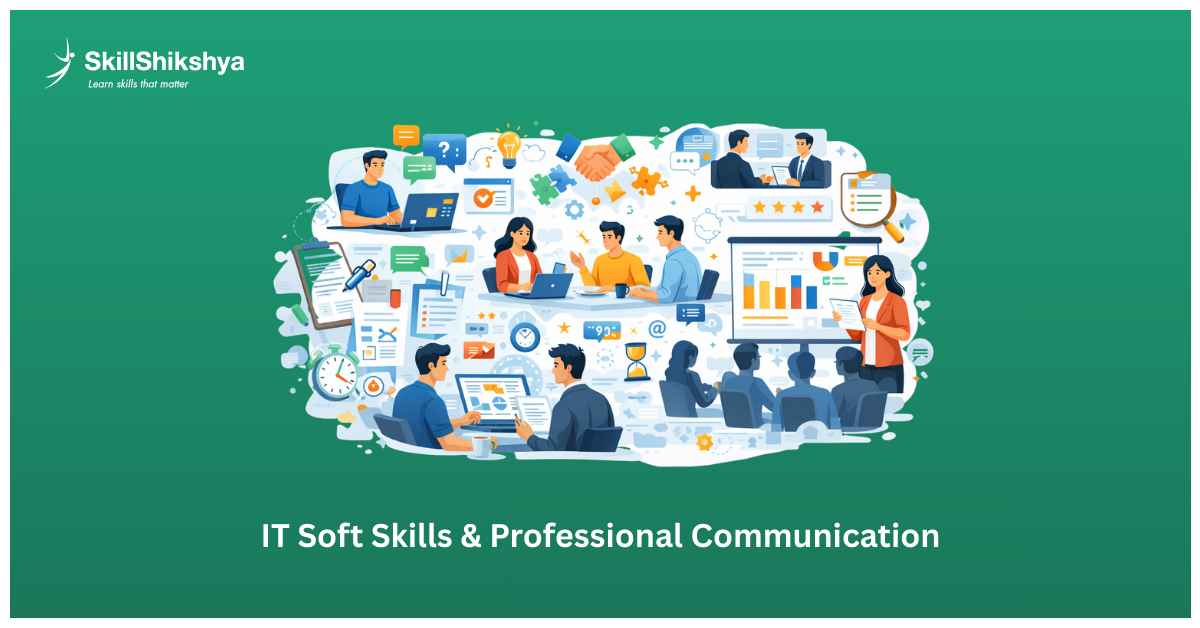
IT soft skills training is what separates a professional who can do the work from one who gets hired, trusted with bigger responsibilities, and promoted. LinkedIn's Global Talent Trends report found that 92% of hiring professionals say soft skills matter as much as, or more than, technical skills in their final hiring decisions.
What Skill Shikshya builds into every course:
- Professional email and report writing in English
- Explaining technical concepts to non-technical stakeholders
- Time management and deadline ownership under pressure
- Group collaboration and conflict resolution in team settings
- Presentation skills for technical demos and client-facing meetings
- Mock interviews with structured, written feedback
IT soft skills development is not a standalone module at Skill Shikshya — it is woven into the practice, feedback, and project delivery of every course. Students practice real-world professional scenarios throughout their training. Before you enroll anywhere, reading about what freshers in Nepal actually need to get shortlisted in tech hiring gives you an honest benchmark to measure yourself against.
Best for: Everyone. There is no technical course — at Skill Shikshya or anywhere else — that is complete without this foundation underneath it.
9. DevOps & Agile Workflows
DevOps is where software development and IT operations merge into a single, faster delivery process. Organizations that adopt DevOps practices report up to 46x more frequent software deployments with significantly fewer failures (DORA State of DevOps Report 2024).
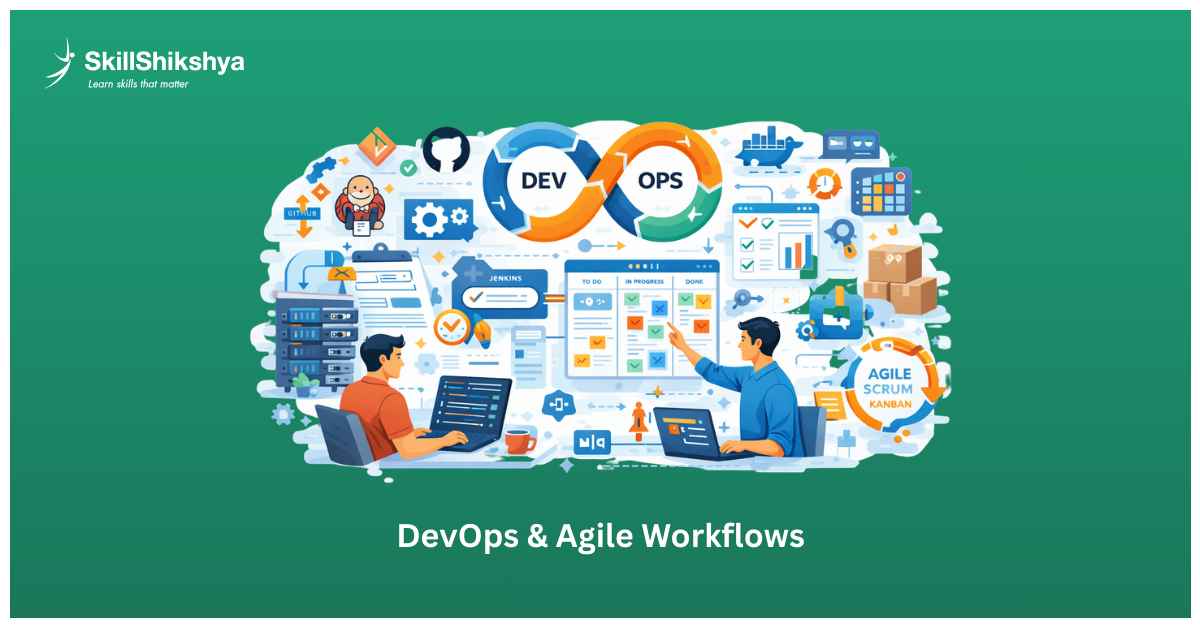
In Nepal's software development and IT outsourcing industry, professionals who understand Agile ways of working, such as sprint planning, continuous integration, and deployment pipelines, are consistently more hireable than those who only write code.
What this skill covers:
- Git workflows and version control with GitHub
- CI/CD pipelines using Jenkins and GitHub Actions
- Docker and containerization fundamentals
- Agile methodology — Scrum, Kanban, and sprint ceremonies
- Project management using Jira and Trello
- Understanding the software development life cycle end-to-end
If you are exploring programming languages as part of this path, which programming language to pick up first after Plus Two gives you a practical starting point before you layer DevOps concepts on top.
Best for: Developers who want to move into senior or team lead roles, IT professionals working in product companies, and anyone who wants to understand how modern software actually gets built and shipped.
10. IT Skills Without Coding — No-Code & Low-Code Tools
Not everyone wants to be a developer and that is completely fine. The no-code and low-code movement has made it possible for non-technical professionals to build applications, automate repetitive tasks, and manage data without writing a single line of code.
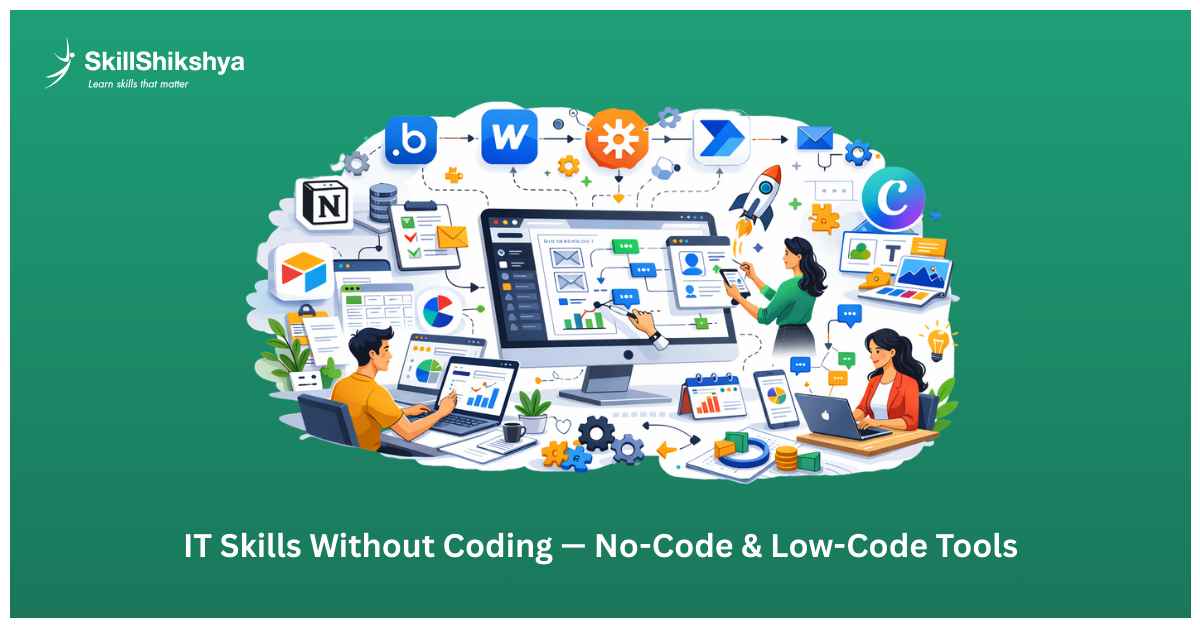
Tools like Bubble, Webflow, Zapier, Notion, Airtable, Power Automate, and Canva Pro are already being used daily by marketing teams, HR departments, operations managers, and small business owners across Nepal. These are among the most accessible IT skills easy to learn and the most practical IT skills without coding available for absolute beginners.
What you learn in this area:
- Building functional web applications using Bubble and Webflow
- Automating business workflows with Zapier and Power Automate
- Managing structured data using Airtable and Notion
- Creating professional digital content without a design degree
- Connecting tools together to eliminate manual work
Best for: Entrepreneurs who want to build without hiring developers, marketing and HR professionals who want to automate their workflows, administrators managing complex operations in spreadsheets, and students who want to start earning from digital skills quickly.
Skills Comparison Table
| IT Skill | Difficulty | Time to Learn | Avg Nepal Salary/Month | Best For |
| Cybersecurity | Intermediate | 2.5 months | NPR 55,000–100,000 | Security roles, banks, IT firms |
| Data Analytics & BI | Beginner–Int. | 2.5 months | NPR 45,000–80,000 | Business, finance, NGOs |
| Generative AI & Agents | Beginner–Int. | 2.5 months | NPR 50,000–95,000 | Tech + non-tech professionals |
| Business Analysis | Beginner–Int. | 2.5 months | NPR 45,000–75,000 | Career switchers, ops teams |
| Project Management | Beginner–Int. | 2.5 months | NPR 50,000–90,000 | Team leads, operations roles |
| Digital Marketing | Beginner | 2 months | NPR 35,000–70,000 | Freelancers, entrepreneurs |
| UI/UX Design | Beginner | 2.5 months | NPR 40,000–80,000 | Creatives entering product roles |
| IT Soft Skills | Beginner | 2.5 months | Adds 20–40% to salary | Everyone |
| DevOps & Agile | Intermediate | 2.5 months | NPR 60,000–110,000 | Developers, senior tech roles |
| No-Code / Low-Code | Beginner | 2.5 months | NPR 30,000–60,000 | Non-technical professionals |
Thinking about enrolling? Skill Shikshya's counseling team helps you identify the right course based on your current level and career goal — at no cost.
Key Benefits of Building In-Demand IT Skills in 2026
Higher Employability and Job Placement Rates
When your resume shows IT skills in high demand, you rise to the top of shortlists automatically. Companies in Nepal are not waiting for perfect candidates they want people who can contribute within the first 30 days.
Skill Shikshya's curriculum is built around this reality. Every course ends with a real portfolio, not just a certificate. Many students receive job offers before they complete their final project.
Better Salaries in Nepal and Remote Work Markets
The salary gap between IT-trained and untrained professionals is significant. A general office role in Nepal pays NPR 20,000–30,000/month on average. A junior web developer or data analyst with six months of the right training earns NPR 40,000–80,000 — often more.
For those targeting remote work, IT skills on demand open the door to USD earnings. Skill Shikshya graduates working remotely report earning $500–$1,500/month within their first year, depending on the skill and market.
Cross-Industry Flexibility
Solid IT skills development travels across sectors. A data analyst can work in banking, retail, agriculture, or healthcare. A web developer can serve tourism companies, law firms, or NGOs. You are not locked into one industry — and that is one of the greatest career advantages technology skills offer.
Who Should Enroll — and What Makes Skill Shikshya Different?
Skill Shikshya courses work well for:
- Students and fresh graduates who want practical skills before their first job interview. Most find that a focused IT skills course gives them more confidence than their formal degree alone.
- Working professionals in administration, marketing, or accounting who want to shift into tech without going back to university full-time.
- Entrepreneurs who want to manage their digital operations, evaluate vendors, or build simple products without being misled by technical jargon.
- Career switchers from teaching, hospitality, or journalism who recognize that IT skills training opens completely new earning paths.
Most beginner courses at Skill Shikshya have no strict eligibility requirements beyond basic computer literacy.
What makes Skill Shikshya different from other IT skills training providers in Nepal:
- Project-based learning — You build real things. Websites, dashboards, automations. Your portfolio is built during the course, not after.
- Industry-relevant curriculum — Content is reviewed and updated every quarter. No outdated tools, no irrelevant theory.
- Mentor access with real feedback — Not just recorded videos. You get direct feedback on your actual work from instructors with industry experience.
- IT soft skills built in — Professional communication, mock interviews, and presentation practice are woven into every technical course.
- Placement support — Resume building, interview preparation, and alumni networks connect you to employers actively hiring in Nepal.
Challenges Students Face and How to Push Through
- "I'm not a math person." Most beginner courses require basic logic, not advanced mathematics. Start with web development or no-code tools if this is a concern. Data analytics does use statistics, but at a level that is taught from scratch.
- "I don't have time." Skill Shikshya offers evening batches, weekend programs, and short-term intensive formats. Most students manage training alongside college or a full-time job.
- "I'll forget everything once the course ends." The antidote is doing, not watching. Project-based courses mean you apply every concept immediately — which makes it stick. Study groups among Skill Shikshya students reinforce learning further.
- "The IT market is saturated." There are more IT graduates than before, yes — but the majority cannot show practical, portfolio-backed work. Employers still struggle to find people who can actually do the job. Skills-first training addresses this gap directly.
- "I don't know where to start." This is the most common barrier. Skill Shikshya's free counseling team helps you identify the right course based on your background and goals. You do not have to figure it out alone.
Future Trends: Where IT Skills Are Headed Beyond 2026
Knowing what is coming next helps you choose skills that stay relevant, not just skills that are popular right now.
- AI-assisted development — Tools like GitHub Copilot and Cursor are already changing how developers write code. The market shift is not "AI replaces developers" — it is "developers who use AI tools replace developers who do not." This affects every skill on this list.
- Quantum computing awareness — Still a specialist area, but organizations are beginning to assess quantum readiness. Early awareness in this area will be valuable within the next five years.
- Green IT and sustainability — European markets are beginning to require IT teams to account for energy consumption and carbon impact. This niche is growing for Nepali professionals targeting remote European clients.
- Edge computing and IoT — As smart devices proliferate — from hospital equipment to smart meters — the demand for professionals who can manage data at the edge grows steadily.
- Digital trust and data privacy — GDPR-equivalent regulations are entering Asian markets. IT professionals who understand data compliance alongside their technical skills will carry a meaningful advantage in regulated industries.
Skill Shikshya continuously updates its curriculum to reflect these shifts — so students are not just ready for today's jobs, but positioned for what comes next.
How to Choose the Right IT Skills Course
Start with your goal, not the course name. Ask yourself:
- Do I want a salaried job in a company, or do I want to freelance?
- Am I a complete beginner or do I have some tech background?
- How many hours per week can I realistically commit?
- What industry do I want to work in?
- If you want a stable job fast — Start with networking, data analytics, or the business analyst track. These have the shortest path from training to employment in Nepal.
- If you want to freelance — Web development, no-code tools, and data analytics are the most marketable skills for platforms like Fiverr, Upwork, and Toptal.
- If you are a complete beginner — No-code tools or web development fundamentals are the friendliest entry points. These are the IT skills without coding pressure and the most accessible IT skills for beginners.
- If you want senior or specialized roles — Cloud computing, cybersecurity, and DevOps offer the steepest salary growth and the most respected certification pathways.
One practical tip: speak with a Skill Shikshya graduate before enrolling. The fastest way to validate any course is an honest conversation with someone who has already completed it.
Not sure which course fits you? Book a free 15-minute career consultation with Skill Shikshya →
Measuring Your Progress After Training
Success in IT skills development is measurable. Expect these clear milestones during and after your Skill Shikshya course:
- Portfolio projects — At least two to three completed, real projects by midpoint. Not certificates — actual work you can show.
- Certification readiness — For courses tied to external exams (CompTIA, AWS, Google), mock test scores track exactly where you stand before the real test.
- Soft skills assessment — Mock interviews and presentations are evaluated with actionable, written feedback.
- Employment or freelance activity — Skill Shikshya tracks graduate outcomes and follows up with alumni within six months of completing a course.
- Salary benchmarking — For career switchers, a meaningful salary increase within twelve months of training completion is a realistic, common outcome.
Conclusion & Your Next Step
The demand for people with strong IT skills is not slowing. The gap between those who have these skills and those who do not is widening and so is the gap in their earnings, career opportunities, and professional confidence.
At Skill Shikshya, every course on this list is taught by instructors with real industry experience, built around real projects, and supported with mentorship and job placement assistance. Whether you are pursuing IT skills for beginners, upgrading as a mid-career professional, or building toward a senior technical role there is a course, a cohort, and a community ready for you.
The best time to start building IT skills in demand was a year ago. The next best time is now.
Visit Skill Shikshya, speak with the admissions team, and take your first step.
Ready to start? Explore all IT skills courses at Skill Shikshya
Frequently Asked Questions
Q1: What are IT skills and why do they matter in 2026?
Q2: What IT skills are easiest to learn for beginners?
Q3: Can I learn IT skills without coding?
Q4: What IT skills are best for a business analyst role in Nepal?
Q5: Are IT skills training in Nepal worth it?
Q6: What IT skills should I add to my resume?
Q7: Are IT skills only for tech jobs?
Q8: How long does IT skills training take at Skill Shikshya?
About Author: