SEO Career Roadmap 2026 Nepal | Beginner to Expert Guide
I'm Bikrant Maharjan, and I've been working as a senior SEO expert for several years now. I've seen this industry grow, watched Google algorithms change dozens of times, and helped countless websites rank on the first page.
When I started my SEO career in Nepal, there was no clear roadmap. I made mistakes, wasted time on outdated techniques, and learned things the hard way. That's exactly why I'm writing this comprehensive SEO training guide today.
If you're searching for "SEO course in Nepal" or you're already learning SEO but feeling lost, this guide will give you a clear path forward. I'll share what actually works based on real experience, not theory.
Learning SEO from scratch at the best IT training institute in Nepal gives you structured knowledge of keyword research, technical SEO, and link-building strategies that deliver results.
Is SEO a Good Career in 2026?
Let me be straight with you: yes, SEO is still a great career choice in 2026.
I hear people asking "Is SEO a good career?" almost every week, especially with all the AI tools coming out. Here's what the actual data shows:
Industry Growth Statistics:
- The global SEO services market was valued at about $74.9 billion in 2025 and is projected to grow to approximately $127.3 billion by 2030 (reflecting ongoing growth in organic search demand).
- 91% of marketers reported a positive impact on website performance from SEO in 2024
- SEO delivers up to 700% ROI when executed as a long-term strategy
- 64.5% of SEO professionalsreceived raises in the past year (SE Ranking, 2026)
In Nepal specifically, SEO jobs are growing as more companies understand the importance of organic traffic and long-term search visibility. I've seen SEO salaries in Nepal increase steadily over the past few years as well.
What's changing is how we do SEO. The fundamentals remain the same, but the tools and techniques keep evolving. That's what makes this career exciting.
What's changing is how we do SEO. The fundamentals remain the same, but the tools and techniques keep evolving. And here's the key thing many people miss: if your website is not visible on Google, it won't show up in AI tools like ChatGPT, Gemini, or other AI-powered search experiences either. That's exactly why SEO is not dying; it's becoming even more important.
Understanding What SEO Really Is (And What It Isn't)
Before we talk about the career path, let's clarify what SEO actually means. SEO (Search Engine Optimization) is the practice of improving websites so they appear higher in search engine results when people search for relevant terms.
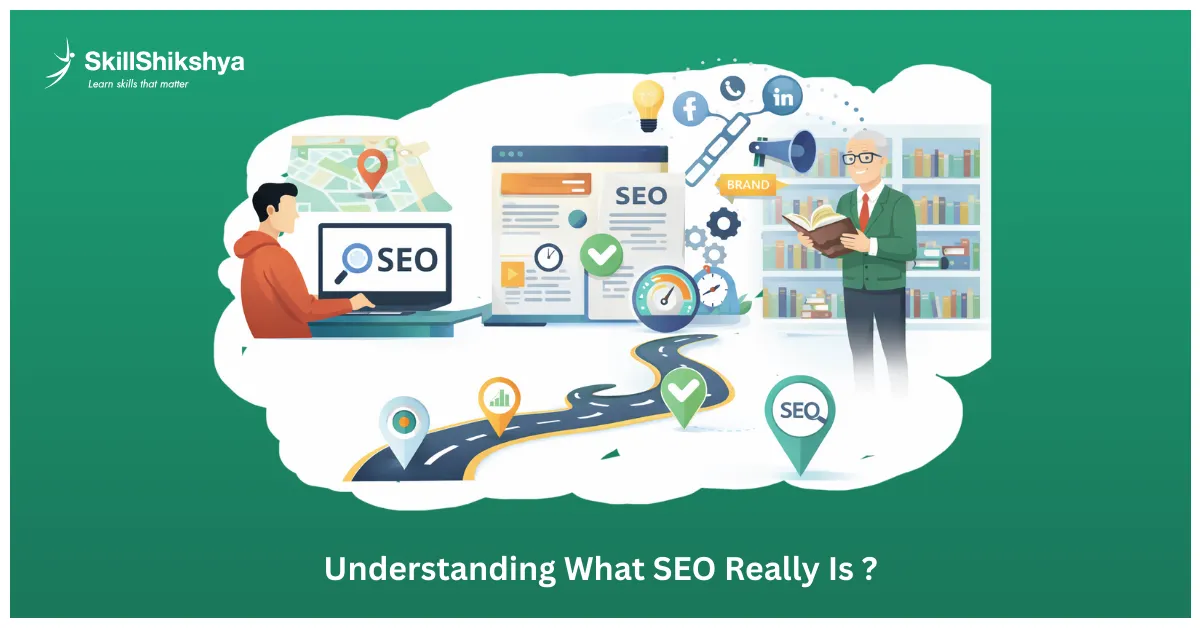
When someone in Kathmandu searches "best restaurants near me" or "digital marketing course," SEO determines which websites show up first.
SEO Elements Explained
SEO has two main components I work with daily:
- On-page SEO is everything you control on your website. This includes your content quality, keyword usage, meta titles, headings, page speed, and user experience. When I optimize a page, I'm making sure Google understands what it's about and that users find it valuable.
- Off-page SEO is about building your website's authority through external signals. The most important factor here is backlinks – when other quality websites link to yours. I also consider social signals, brand mentions, and online reputation.
- Technical SEO ensures that search engines can properly crawl, index, and understand your website. This includes site speed optimization, mobile responsiveness, Core Web Vitals, clean URL structures, XML sitemaps, robots.txt, schema markup, and fixing technical errors that can block rankings. Even the best content won’t rank if technical issues hold the site back.
- Local SEOis critical for businesses targeting specific geographic areas, especially in Nepal. It focuses on optimizing Google Business Profiles, local keywords, NAP consistency (name, address, phone number), local backlinks, and reviews so businesses appear in local search results and Google Maps when people search for services nearby.
Both matter equally. You can't rank well by focusing on just one.
How SEO Works in Simple Terms
Think of Google as a librarian with billions of books. When someone asks a question, Google needs to quickly find the best answer.
How does Google decide? It sends crawlers (automated programs) to read every webpage. These crawlers index the content and evaluate hundreds of ranking factors. Google uses over 200 ranking factors in its algorithm.
When I do SEO optimization, I'm essentially making it easier for Google to understand my content and trust that it's the best answer for specific search queries.
The better I do this job, the higher my page rank. Higher rankings mean more organic traffic, which means more potential customers for businesses.
The Complete SEO Career Path: What to Expect
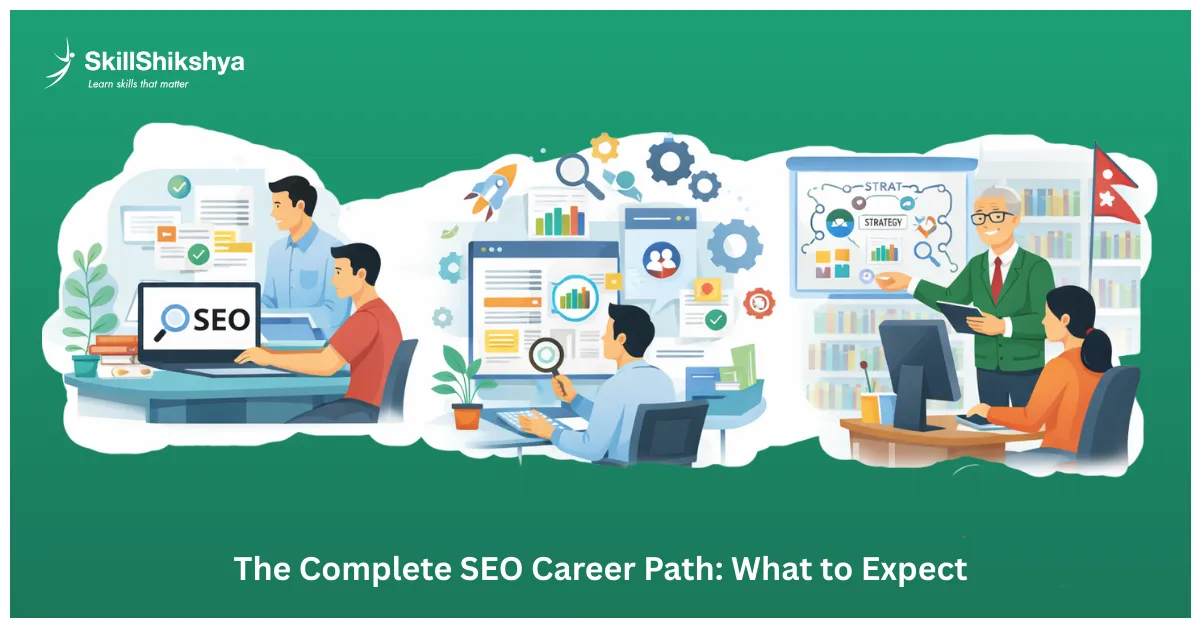
Let me walk you through the typical SEO career progression I've seen and experienced myself.
Entry-Level: SEO Intern and Junior Roles
Most people start as an SEO intern or junior SEO executive. In Nepal, these positions are available at digital marketing agencies and SEO companies.
At this stage, you'll handle basic tasks:
- Keyword research using SEO tools
- Writing meta descriptions and title tags
- Basic content optimization
- Building simple backlinks
- Reporting on SEO rankings
The salary for an SEO intern in Nepal typically ranges from NPR 5,000 to 20,000 per month. It's not much, but you're learning.
I started here too. The key is to absorb everything and ask questions constantly.
Mid-Level: SEO Specialist and Analyst Positions
After 1-2 years of solid work, you move into SEO specialist roles. This is where things get interesting.
As an SEO specialist in Nepal, you'll:
- Develop complete SEO strategies
- Conduct technical SEO audits
- Manage multiple client projects
- Analyze competitors and identify opportunities
- Work with content teams and developers
The average SEO salary at this level in Nepal ranges from NPR 25,000 to 50,000 monthly, depending on your skills and the company.
This is where I really learned how SEO works at a deeper level. You stop just following instructions and start making strategic decisions.
Senior-Level: SEO Expert and Team Lead Roles
After 3-5 years of consistent work and results, you can become a senior SEO expert or SEO manager.
I'm currently at this level, and the role involves:
- Leading SEO teams
- Setting a long-term SEO strategy
- Managing budgets and vendor relationships
- Training junior team members
- Staying ahead of algorithm updates and industry trends
How much do SEO experts earn in Nepal? Senior positions typically pay NPR 60,000 to 120,000 monthly. Some freelance SEO consultants earn even more.
The career path doesn't stop here either. You can become an SEO director, start your own SEO company in Nepal, or specialize in areas like technical SEO or local SEO.
Career Progression Comparison Table
Here's a clear breakdown of what to expect at each level:
| Career Level | Experience | Salary (Nepal) | Key Responsibilities | Required Skills |
| SEO Intern | 0-6 months | NPR 5,000-10,000 | Keyword research, basic optimization, reporting | Basic SEO knowledge, willingness to learn |
| Junior SEO Executive | 6-18 months | NPR 15,000-25,000 | Content optimization, link building, and tool operation | On-page SEO, basic analytics |
| SEO Specialist | 2-4 years | NPR 35,000-65,000 | Strategy development, audits, project management | Technical SEO, analytics, strategy |
| Senior SEO Specialist | 4-6 years | NPR 60,000-90,000 | Advanced strategy, team collaboration, and client management | Advanced technical skills, leadership |
| SEO Manager/Expert | 5-8 years | NPR 80,000-120,000 | Team leadership, budget management, and strategic planning | All SEO skills + management |
| SEO Director | 8+ years | NPR 120,000-200,000 | Company-wide strategy, C-level reporting, industry thought leadership Expert-level + business strategy | Company-wide strategy, C-level reporting, industry thought leadershipExpert-level + business strategy |
Sources: PayScale 2026, Glassdoor 2026, ZipRecruiter 2026, Nepal market research 2025-2026
Your Step-by-Step SEO Roadmap for 2026
Now let's get practical. Here's the exact roadmap I wish someone had given me when I started.
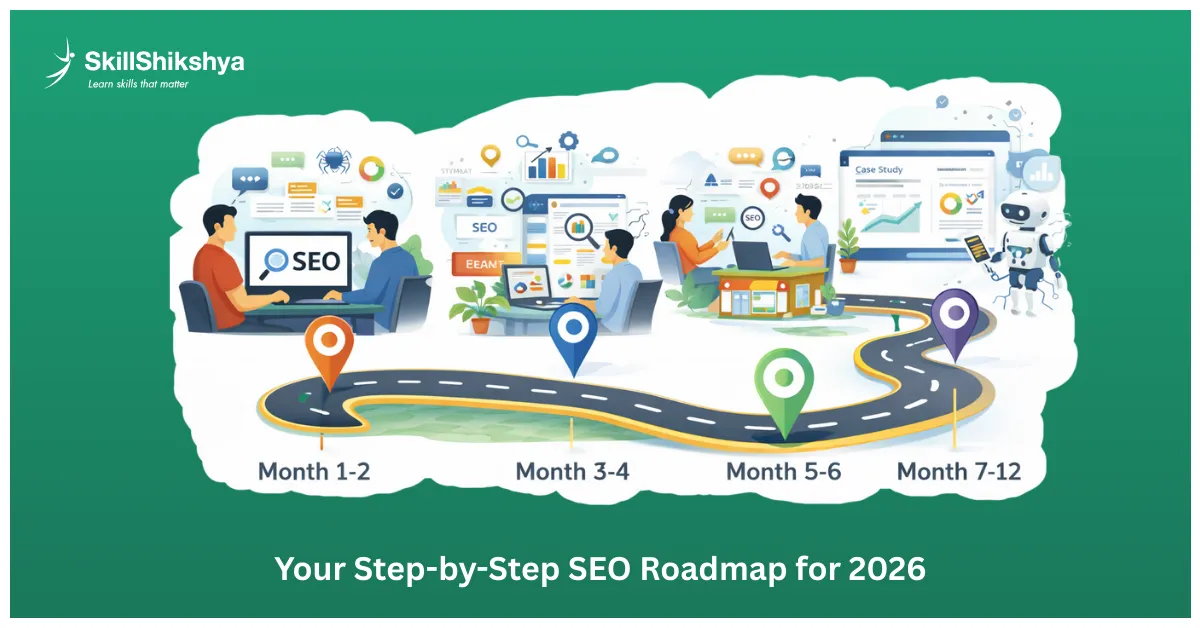
Month 1-2: Learn SEO Fundamentals
Start with understanding core concepts. Don't jump straight into tools.
Study these topics first:
- How search engines crawl and index websites
- What factors influence SEO ranking
- The difference between white hat and black hat SEO
- Basic HTML structure (title tags, meta descriptions, headers)
- Content creation for search intent
For SEO learning, I recommend starting with free resources. Google's SEO Starter Guide is excellent. YouTube channels like Ahrefs and Moz have quality tutorials.
If you prefer a structured approach, look for an SEO course with a free or affordable option. Several platforms offer good introductory courses.
Spend at least 2-3 hours daily on SEO learning during these first months. Many students make critical educational mistakes early on that slow their progress avoid these by following a structured learning path from day one.
Month 3-4: Master SEO Tools and Keyword Research
You can't do professional SEO without tools. Here are the essential SEO tools I use:
Free tools to start with:
- Google Search Console (absolutely essential)
- Google Analytics 4
- Google Keyword Planner
- Ubersuggest (free version)
Paid tools worth learning:
- Ahrefs (my personal favorite)
- SEMrush
- Screaming Frog (for technical audits)
- Rank Math or Yoast (WordPress plugins)
Focus heavily on SEO keyword research. This skill alone sets good SEO specialists apart from average ones.
Learn how to:
- Find keywords with good search volume and low competition
- Understand the search intent behind keywords
- Group keywords into topic clusters
- Identify long-tail keyword opportunities
Practice keyword research for different niches. The more you practice, the better your instincts become.
Quick Win: According to Ahrefs’ analysis of billions of keywords, over 90% of keywords have very low individual search volume, highlighting the importance of long-tail keyword targeting.. Learn to find the hidden gems!
Month 5-6: Get Hands-On Experience
Theory means nothing without practice. This is where most people struggle in Nepal getting that first opportunity.
Here's what worked for me:
- Build your own website. Use WordPress and actually implement what you've learned. I created a simple blog about my interests and used it as a testing ground. Track your progress in Google Search Console.
- Offer free SEO services. Find small businesses in Nepal that need help. Many local shops and restaurants have terrible websites. Approach them, offer to improve their SEO for free or very cheaply, and document your results.
- Apply for SEO internships in Nepal. Even if the pay is low, the experience is valuable. Companies like Skill Shikshya and other digital marketing agencies regularly hire interns.
- Join Facebook groups focused on SEO in Nepal and digital marketing. Network with other professionals and learn from their experiences.
Months 7-12: Build Your Portfolio and Specialize
By now, you should have some results to show. Document everything:
- Traffic increases you've achieved
- Ranking improvements
- Specific projects you've worked on
Create a simple portfolio website showcasing your work. Include case studies with actual numbers.
Start thinking about the SEO specialist roadmap you want to follow. Do you enjoy technical SEO more? Or content strategy? Maybe local SEO for Nepal-based businesses?
Specialization helps you stand out and command higher pay.
Important: Industry research shows that around 86% of SEO professionals now use AI tools as part of their workflows for tasks like research, content optimization, and analysis. Start learning powerful AI technologies that streamline your workflow now.
Essential SEO Tools Deep-Dive: What I Use Daily
Let me break down the exact tools I use and how to master them. This is probably the most valuable section for beginners.
Free Tools Every Beginner Must Master
1. Google Search Console (GSC)
This is non-negotiable. I check GSC every single morning.
What I use it for:
- Monitoring which keywords bring traffic
- Identifying indexing errors
- Checking mobile usability issues
- Finding pages that need improvement
- Submitting new content for indexing
How to start: Connect your website, submit your sitemap, and check the Performance report daily. Focus on queries where you rank in positions 5-15 – these are your quick win opportunities.
2. Google Analytics 4 (GA4)
Understanding user behavior is crucial.
GA4 shows me:
- Where traffic comes from
- Which pages perform best
- User engagement metrics
- Conversion tracking
- Audience demographics
How to start: Set up GA4 on your site, learn to read the Engagement Overview, and create custom reports for SEO performance.
3. Google Keyword Planner
Free keyword research tool directly from Google.
I use it to:
- Find keyword ideas
- Check search volumes
- Understand keyword difficulty
- Discover related terms
How to start: Create a free Google Ads account, access Keyword Planner, and research keywords for your niche. Look for keywords with 100-1000 monthly searches and low competition.
Paid Tools Worth the Investment
1. Ahrefs (My #1 Recommendation)
Cost: Starting at $129/month. Why I love it: The most comprehensive backlink database and powerful keyword research.
Daily uses:
- Competitor analysis
- Backlink profile checking
- Content gap analysis
- Rank tracking
- Keyword difficulty assessment
Learning curve: Medium. Watch their YouTube tutorials, they're excellent.
2. SEMrush
Cost: Starting at $139/month. Best for: All-in-one SEO toolkit
I use it for:
- Position tracking
- Site audits
- Keyword research
- Competitive intelligence
- Content marketing insights
Learning curve: Medium to high, but very powerful once mastered.
3. Screaming Frog SEO Spider
Cost: Free up to 500 URLs, £259/year for unlimited. Best for: Technical SEO audits
What it does:
- Crawls websites like Google does
- Identifies broken links
- Finds duplicate content
- Analyzes meta tags
- Checks redirects
Learning curve: Low to medium. Essential for technical SEO work.
My Daily SEO Tool Workflow
Here's exactly how I use these tools each day:
Morning Routine (30 minutes):
- Check Google Search Console for any critical errors
- Review yesterday's traffic in GA4
- Monitor keyword rankings in Ahrefs/SEMrush
- Check for new backlinks or lost backlinks
Weekly Tasks (2-3 hours):
- Deep dive into GSC data for optimization opportunities
- Conduct competitor analysis using Ahrefs
- Run site audits with Screaming Frog
- Plan content based on keyword gaps
Monthly Tasks (4-6 hours):
- Comprehensive performance reports
- Update keyword tracking lists
- Analyze link-building opportunities
- Strategic planning for next month
Tool Comparison Table:
| Tool | Best For | Cost | Learning Time | Must-Have Level |
| Google Search Console | Performance tracking | Free | 1 week | Essential |
| Google Analytics 4 | Traffic analysis | Free | 2 weeks | Essential |
| Google Keyword Planner | Basic keyword research | Free | 3 days | Important |
| Ahrefs | Backlinks & keywords | $129+/mo | 1 month | Professional |
| SEMrush | All-in-one SEO | $139+/mo | 1 month | Professional |
| Screaming Frog | Technical audits | Free-£259/yr | 1 week | Important |
| Rank Math/Yoast | WordPress SEO | Free-$59/yr | 3 days | Essential (WP) |
| Ubersuggest | Budget keyword tool | Free-$29/mo | 1 week | Optional |
Essential SEO Skills You Need to Master
Let me break down the core skills that have made me successful as an SEO expert.
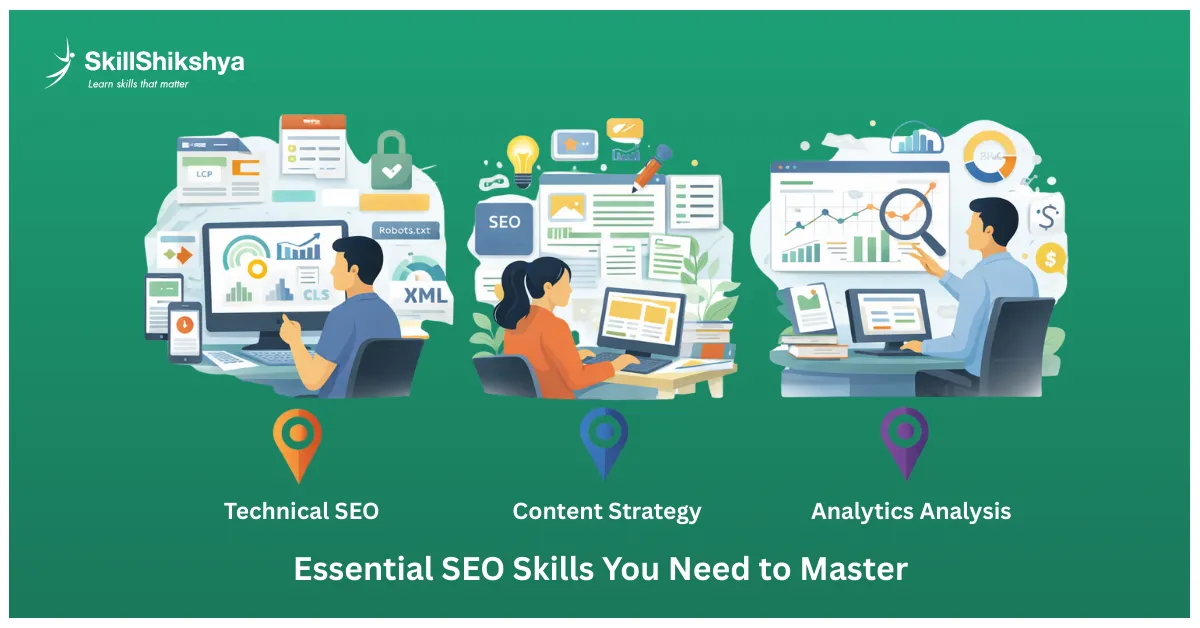
Technical SEO and SEO Optimization
Technical SEO scares many people, but it's not as hard as it sounds.
You need to understand:
- Website speed optimization (Core Web Vitals matter – only 33% of websites meet Google's standards as of 2026)
- Mobile responsiveness (78% of organic traffic comes from mobile devices)
- XML sitemaps and robots.txt
- Structured data markup (Schema)
- SSL certificates and HTTPS
- URL structure and canonicalization
I spend significant time on technical SEO audits. When done right, technical improvements can boost rankings dramatically.
Content Strategy and SEO Marketing
Content is still king in SEO. But not just any content – content that matches search intent and provides real value.
I've learned to:
- Research what content already ranks
- Identify content gaps competitors miss
- Write naturally while including SEO keywords
- Structure content for readability (short paragraphs, subheadings, lists)
- Update old content to maintain rankings
Good SEO digital marketing combines technical optimization with quality content. You need both. SEO is actually a crucial component of broader digital marketing strategies that businesses implement to grow their online presence.
Analytics and SEO Ranking Analysis
Data analysis separates average SEO specialists from experts.
You should become comfortable with:
- Google Analytics (understanding traffic patterns, user behavior, conversions)
- Search Console data (clicks, impressions, CTR, rankings)
- Tracking keyword rankings over time
- Identifying which pages drive results
- Calculating ROI from SEO efforts
I check analytics almost daily. Small changes in data often signal bigger opportunities or problems.
7 Common SEO Mistakes That Will Kill Your Career
Learn from my failures.
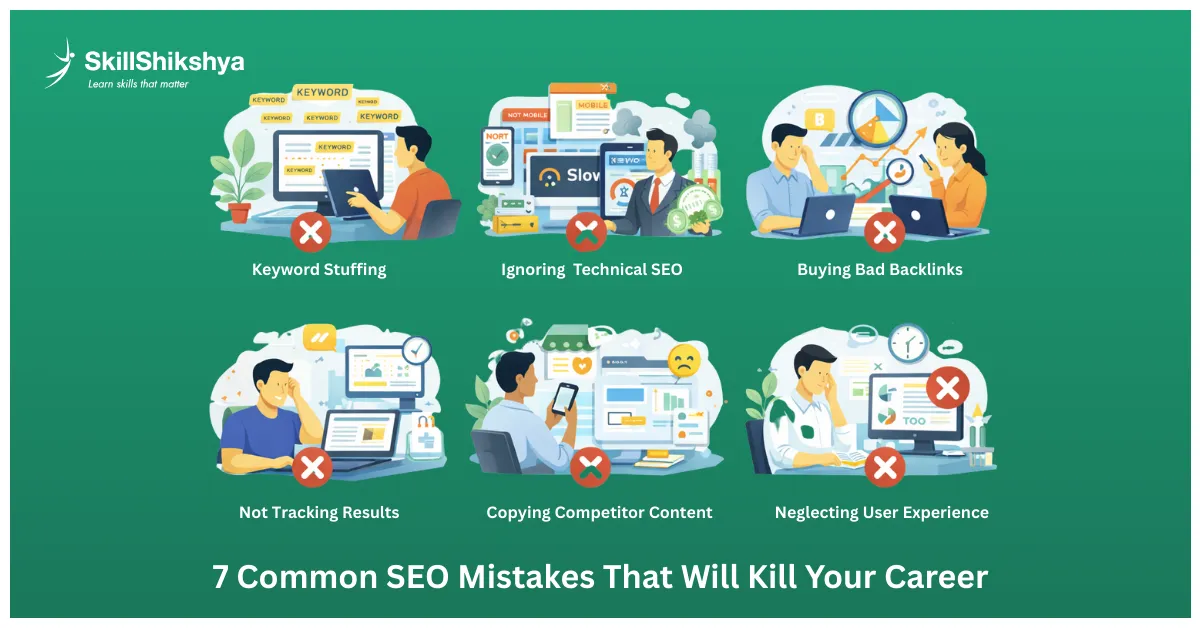
Here are the biggest mistakes I still see beginners making:
1. Keyword Stuffing
Early in an SEO career, everyone thinks more keywords = better rankings. Wrong.
- The mistake: Cramming your target keyword into every sentence, making the content unreadable.
- The reality: Google's algorithm is smart enough to understand synonyms and context. Keyword density should be natural, around 1-1.5%.
- The fix:Write for humans first, optimize for search engines second. Use keywords naturally and include semantic variations.
2. Ignoring Technical SEO
I spent my first year only doing content optimization. My results were mediocre.
- The mistake: Focusing only on content while ignoring site speed, mobile-friendliness, and crawlability.
- The reality: Only 33% of websites meet Google's Core Web Vitals standards. Technical issues can completely block your rankings.
- The fix:Run monthly technical audits with Screaming Frog. Fix broken links, improve page speed, and ensure mobile optimization.
3. Buying Backlinks from Shady Sources
This nearly destroyed a client's website in my second year.
- The mistake: The client bought cheap backlinks from low-quality link farms to boost rankings quickly.
- The reality: Google penalizes manipulative link building. Those penalties can take months to recover from.
- The fix:Focus on earning quality backlinks through great content, digital PR, and genuine relationships. Content marketing is the top link-building method for 40.7% of SEOs.
I once spent 3 months on a strategy that wasn't working because I wasn't properly tracking.
- The mistake: Implementing SEO tactics without setting up proper tracking and measurement.
- The reality: You can't improve what you don't measure. SEO without analytics is guesswork.
- The fix:Set up Google Analytics 4, Google Tag Manager, and Search Console from day one. Track specific KPIs: organic traffic, keyword rankings, conversions, and ROI.
5. Copying Competitor Content
Beginners often try to rank by copying what's already working.
- The mistake: Creating content that's nearly identical to top-ranking pages.
- The reality: Google prioritizes original, helpful content with firsthand experience. The E-E-A-T framework (Experience, Expertise, Authoritativeness, Trustworthiness) rewards authentic content.
- The fix:Research competitors to understand what works, then create something better and more unique. Add your personal insights and original data.
6. Neglecting User Experience
I used to obsess over rankings and forget about actual users.
- The mistake: Optimizing purely for search engines while creating poor user experiences.
- The reality: Google uses page experience and user interaction signals as part of its ranking systems, but does not use Google Analytics metrics like bounce rate directly.
- The fix:Think about user intent. Make content easy to read, fast to load, and valuable. If users don't engage, rankings won't last.
7. Giving Up Too Soon
The biggest mistake? Quitting before seeing results.
- The mistake: Expecting rankings in weeks when SEO takes months.
- The reality: Most pages ranking in Google's top 10 are over 3 years old. SEO is a long-term game.
- The fix: Set realistic expectations. Focus on consistent progress, not overnight success. Track small wins along the way.
- Bonus Mistake:Not keeping up with algorithm updates. Google updates its algorithm constantly. Subscribe to industry blogs like Search Engine Journal or Search Engine Land and stay informed.
SEO Training in Nepal: Where to Learn
Let me share honest thoughts about SEO training options in Nepal.
SEO Course Options (Free and Paid)
Free SEO courses are perfect for beginners:
- Google Digital Garage offers a free SEO course
- HubSpot Academy has excellent free training
- Moz's Beginner's Guide to SEO
- Ahrefs YouTube channel (seriously underrated)
These give you solid foundations without spending money.
Paid SEO courses provide structure and sometimes certification:
- Several institutes in Kathmandu offer SEO courses ranging from NPR 10,000 to 40,000
- International platforms like Coursera and Udemy have affordable options
- Some SEO companies in Nepal provide in-house training programs
SEO Training Programs Worth Considering
If you're looking for SEO training in Nepal, research the institute carefully. I've seen too many places teaching outdated techniques.
Look for programs that:
- Cover current SEO practices (2026 methods, not 2015)
- Include hands-on projects
- Teach actual SEO tools
- Have instructors with real industry experience
Students trained at the best IT institute in Nepal gain competitive advantages through real client projects, agency-level tools, and industry connections that open career doors faster.
Self-Learning vs Formal SEO Course in Nepal
Here's my honest take: you can absolutely learn SEO without a formal course. I'm mostly self-taught.
However, a structured SEO course in Nepal helps if:
- You need accountability and structure
- You want certification for job applications
- You learn better with instructor guidance
- You want networking opportunities
Self-learning works if you’re disciplined, consistent, and genuinely curious. Most SEO resources are freely available online. But a good SEO course helps you learn in a structured way, so you don’t get lost or distracted, and you can progress more efficiently, especially in the beginning.
Choose based on your learning style and career goals.
Getting Your First SEO Job in Nepal
This is where your SEO roadmap meets reality.
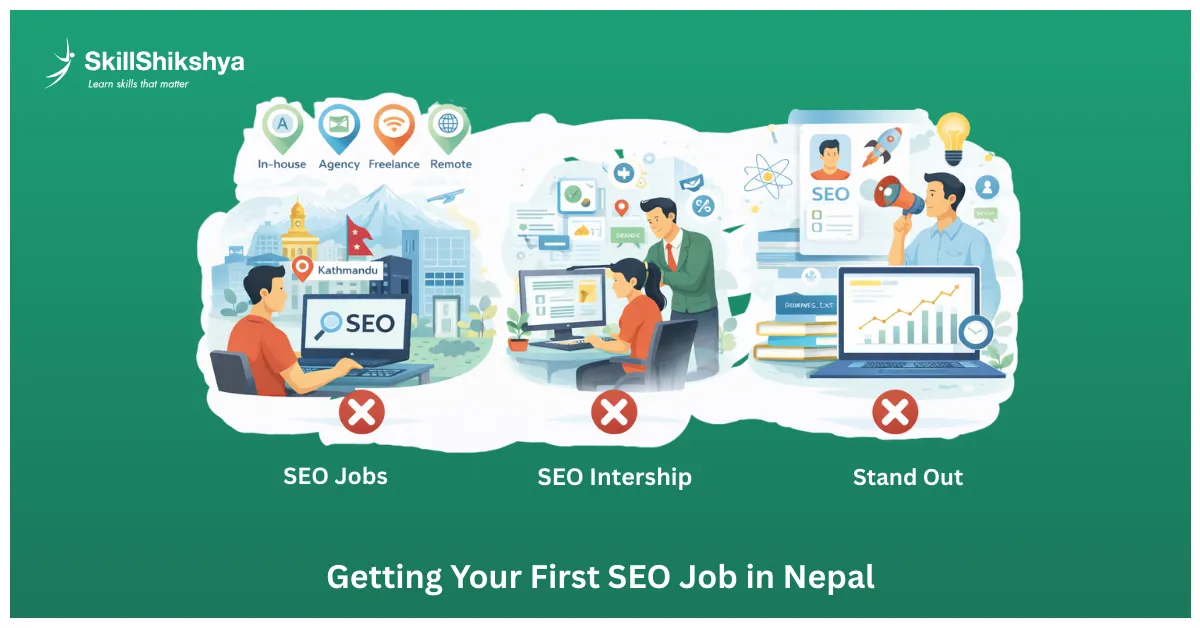
SEO Jobs in Nepal: Current Market Reality
The SEO job market in Nepal is growing but competitive.
Types of SEO jobs available:
- In-house SEO positions at companies
- Agency roles at digital marketing firms
- Freelance SEO work
- Remote positions with international clients
Most SEO jobs in Nepal are concentrated in Kathmandu, though remote work is becoming more common.
When I hire SEO specialists, I look for:
- Practical skills over certifications
- Portfolio with measurable results
- Understanding of current SEO trends
- Communication skills
- Willingness to keep learning
SEO Internship Opportunities
Start with an SEO internship if you're new.
Yes, the pay is low, but you gain:
- Real-world experience
- Mentorship from experienced professionals
- Access to premium SEO tools
- Portfolio pieces
- Industry connections
I always tell beginners: your first role is about learning, not earning. Focus on building skills and a strong portfolio.
How to Stand Out as an SEO Specialist in Nepal
The market is competitive. Here's how to differentiate yourself:
- Build a personal brand. Share your SEO learning journey on LinkedIn. Write about what you're learning. Comment on industry discussions.
- Show results, not just knowledge. Anyone can memorize SEO theory. Show case studies with actual ranking improvements and traffic growth.
- Stay updated. Google updates its algorithm constantly. Follow industry blogs, join SEO communities, and keep learning. 15% of Google searches daily are completely new queries (Google, 2026).
- Develop complementary skills. Learn basic coding (HTML, CSS, JS), understand Google Ads, and familiarize yourself with conversion optimization.
I've seen candidates with less experience get hired because they demonstrated genuine passion and continuous learning.
SEO Salary in Nepal: What You Can Actually Earn
Let's talk money honestly.
Entry-Level SEO Salary Expectations
As an SEO intern or junior executive in Nepal, expect NPR 5,000 to 20,000 monthly.
I know it's not much. But this phase is temporary if you're good.
Focus on learning everything you can. The salary increases quickly once you prove your value.
Average SEO Salary for Experienced Professionals
With 2-4 years of experience, the average SEO salary in Nepal ranges from NPR 35,000 to 65,000 monthly.
This varies based on:
- Your skill level
- The company size and budget
- Your specialization
- Your ability to show ROI
I've seen talented SEO specialists negotiate higher salaries by demonstrating clear results from their work.
How Much SEO Experts Earn in Nepal
Senior SEO experts and managers in Nepal typically earn NPR 70,000 to 150,000+ monthly.
Some earn more through:
- Freelance consulting (many international clients pay in USD)
- Running their own SEO company in Nepal
- Performance-based contracts with multiple clients
The SEO career salary can be quite attractive if you become good at what you do.
Compared to many traditional careers in Nepal, experienced SEO professionals earn well and enjoy flexibility. If you're interested in building multiple income streams, SEO skills translate directly into freelancing opportunities with clients worldwide.
Working with SEO Companies in Nepal
Several quality SEO companies operate in Nepal. Working with one early in your career has benefits:
- You get exposure to diverse clients and industries. I learned faster working on 10 different websites than I would have working on just one.
- You have access to better SEO tools. Individual subscriptions to Ahrefs or SEMrush are expensive. Companies provide access to these tools.
- You work with experienced SEO experts who can mentor you.
However, there are downsides too:
- Sometimes, a high workload with tight deadlines
- Pressure to show quick results
- Less control over strategy decisions
Consider both agency and in-house positions as you plan your career path.
Best SEO Courses in Nepal: 2026 Complete Comparison
Choosing the right SEO training program in Nepal can accelerate your career by 6-12 months. After personally reviewing numerous SEO courses in Kathmandu and talking with graduates, here's my honest comparison based on curriculum quality, instructor experience, and actual student outcomes.
Top SEO Training Institutes in Nepal (Detailed Comparison)
| Institute | Duration | Certification | Hands-On Projects | Placement Support | Tools Provided | Best For |
| Skill Shikshya | 1.5-2 months | Yes (Industry-recognized) | Real client projects | Yes | Ahrefs, SEMrush, Premium tools | Serious career switchers |
What Makes Skill Shikshya's SEO Course Stand Out?
As someone who's worked in this field for years, I can tell you what matters most in SEO training in Nepal. I genuinely recommend it as the best SEO course in Nepal:
Real Client Projects, Not Just Theory
- Work on actual business websites from day one
- Build a portfolio with measurable ranking improvements
- Practice with live Google Search Console and Analytics accounts
Access to Premium SEO Tools
- Ahrefs (worth $129/month individually)
- SEMrush (worth $139/month individually)
- Screaming Frog for technical audits
- Rank Math Pro and other premium plugins
Experienced Industry Mentors
- Learn from SEO experts actively working on high-traffic websites
- Get personalized feedback on your SEO strategies
- Weekly Q&A sessions on algorithm updates
Job Placement Assistance
- Direct connections with digital marketing agencies in Nepal
- Resume building and interview preparation
- Job support for qualifying students
Updated 2026 Curriculum
- AI-powered SEO workflows (86% of professionals now use AI)
- Core Web Vitals optimization
- E-E-A-T content strategies
- Voice search and video SEO
- Local SEO for Nepal businesses
The Future of SEO Jobs: What's Coming Next
People keep asking if SEO has a future with all the AI developments. Let me share my perspective.
AI and SEO: Threat or Opportunity?
AI is changing SEO, but not killing it.
The Current Reality:
- 86% of SEO professionals now use AI in their workflows
- 65% report better SEO results because of AI
- 61% say AI for ranking is "effective" or "very effective"
I now use AI tools for:
- Content outlining
- Initial keyword research
- Data analysis
- Identifying patterns in search results
But AI can't replace the strategic thinking and creativity that good SEO requires.
Google's algorithms are getting smarter, which means we need to be smarter too. The future of SEO jobs belongs to those who adapt.
The SEO specialists who combine technical knowledge with AI tools will thrive. Those who resist change will struggle.
Is SEO in Demand for the Long Term?
Yes, absolutely. Here's why I'm confident:
Search isn't going anywhere:
- 5.9 million searches happen every minute
- 68% of all website traffic comes from organic and paid search
Google is evolving, not dying: Yes, AI Overviews are rolling out. Yes, search is changing. But studies show sites generate 34x more traffic from Google than from chatbots.
Local SEO is booming: Complete Google Business Profiles make businesses 70% more likely to attract visits. Local businesses desperately need this expertise.
The nature of SEO work will change, but the core need – helping businesses be found online – remains constant.
I'm more bullish about the SEO career path in 2026 than I was five years ago.
Future-Proof Skills to Develop:
- AI tool mastery (ChatGPT, Claude, SEO-specific AI)
- E-E-A-T content creation (Experience, Expertise, Authoritativeness, Trust)
- Voice search optimization (58% of searches are voice in 2026)
- Video SEO (43% of users search through images and video)
- Technical Core Web Vitals optimization
Modern SEO professionals increasingly collaborate with designers who optimize user experience and conversion rates. Understanding how users interact with websites enhances your SEO strategy significantly.
My Final Advice: How to Start Your SEO Career Today
If you're serious about starting an SEO career, here's what I recommend you do today:
- First, take one free SEO course this week. Don't overthink which one. Just start. Google's SEO course or HubSpot's are both good.
- Second, install WordPress on a cheap hosting plan and create a simple website. Topic doesn't matter – pick something you're interested in. This is your laboratory.
- Third, join SEO communities. Follow r/SEO on Reddit, join Facebook groups about SEO in Nepal, and connect with SEO professionals on LinkedIn.
- Fourth, set aside time for SEO learning daily. Even 30 minutes consistently beats 5 hours once a week.
- Fifth, apply for SEO internships even if you feel unprepared. You learn more in one month of actual work than in three months of studying.
The how to start a SEO career question has a simple answer: start today with what you have. Don't wait for perfect conditions.
The 90-Day Challenge:
I challenge you to commit to 90 days of focused SEO learning:
- Days 1-30: Complete one SEO course + set up your practice website
- Days 31-60: Implement what you learned + start creating content
- Days 61-90:Apply for internships + offer free SEO help to one business
After 90 days, you'll know if SEO is right for you. And if you commit fully, you'll be job-ready.
I didn't have perfect conditions when I started. I learned as I went, made mistakes, and kept improving.
Conclusion: Your SEO Journey Starts Now
Building an SEO career in Nepal is absolutely possible. I've done it, and I've watched many others do it too.
The SEO career roadmap I've shared comes from real experience. Not every path will look exactly like this, but the fundamentals remain the same.
Remember these key points:
- SEO is still a strong career choice in 2026
- Start with free resources and build practical skills
- Get hands-on experience as quickly as possible
- Build a portfolio with measurable results
- Keep learning because SEO constantly evolves
- Consider both formal training and self-learning
The SEO salary in Nepal might start low, but it grows significantly with experience and proven results.
Is SEO in demand? Yes. Will it remain relevant? Absolutely.
Your journey from beginner to SEO expert won't happen overnight. Mine took years. But if you're genuinely interested in how search engines work and you enjoy the mix of technical and creative work, this career can be incredibly rewarding.
At Skill Shikshya, we're committed to helping people like you build successful digital marketing careers. SEO is a major part of that. The question isn't whether you should start. It's whether you're ready to commit to the learning process.
Not sure if SEO is your path? The tech industry offers diverse opportunities from design-focused careers to development roles. Explore what aligns with your strengths and interests.
So, are you ready to begin your SEO career roadmap? The best time to start was yesterday. The second-best time is right now.
Frequently Asked Questions
What is an SEO career roadmap?
Is SEO a good career in Nepal in 2026?
How long does it take to become an SEO expert?
How much can an SEO professional earn in Nepal?
What skills are required to follow an SEO career roadmap?
Is SEO still relevant with AI tools like ChatGPT and Gemini?
What tools should I learn first in an SEO career roadmap?
Is SEO a long-term career?
About Author:

Meet Mr. Bikrant Maharjan, SEO mentor at Skill Shikshya. With expertise in search engine optimization and digital marketing strategies, he guides learners through practical, data-driven techniques to improve online visibility, boost rankings, and build strong digital presence for real-world success.