Cybersecurity Roadmap 2026: Beginner to Pro in Nepal
I've spent years working in cybersecurity, mentoring students, and watching Nepal's tech industry grow at a pace that both excites and concerns me. Let me be direct: the cybersecurity roadmap for 2026 is not optional reading if you care about building a strong, future-proof career in Nepal.
Here's the reality I see every day. Nepal has over 27 million mobile banking users. Government services are moving online. Digital wallets like eSewa, Khalti, ConnectIPS, and Fonepay process billions of rupees in transactions daily. And cyber attacks on Nepali organizations have surged by 35% in just the past year.
Who protects all of this? Cybersecurity professionals. And Nepal doesn't have nearly enough of them.
The Nepal Information Technology Association estimates a shortage of over 5,000 cybersecurity professionals in our market right now. Companies are desperate to hire. Salaries are rising fast. And yet, most students don't know where to begin.
This roadmap changes that. Here's a complete beginner guide on how to get started in cybersecurity.
What Is Cybersecurity?
Before the technical stuff, let's get clear on what this field actually covers. I meet too many students who think cybersecurity is just "hacking" or just "installing antivirus." It's much bigger than that. Here is a complete breakdown on what is cyber security.
Cyber Security vs Information Security
Cybersecurity focuses specifically on protecting digital systems, networks, and data from attacks. Information security is broader and includes protecting information in any form, including physical.
In practice? Most job postings use these terms interchangeably. Don't stress the difference when you're starting out.
Key Domains of Cybersecurity
The field covers several major areas:
- Network Security: Protecting communication systems from intrusion and attacks.
- Application Security: Finding and fixing vulnerabilities in software and web applications.
- Cloud Security: Securing data and systems hosted on cloud platforms like AWS, Azure, and Google Cloud.
- Ethical Hacking / Penetration Testing: Legally breaking into systems to find weaknesses before criminals do.
- Incident Response: Detecting, managing, and recovering from security breaches.
- Digital Forensics: Investigating cybercrimes and collecting digital evidence.
- SOC Analysis: Monitoring and responding to security threats in real time.
Each path has different skill requirements and career trajectories. You'll specialize later. First, build the fundamentals.
Who Hires Cybersecurity Professionals in Nepal?
More organizations than you might expect:
- Banking and Finance: NIC Asia, Nabil Bank, Standard Chartered, and Himalayan Bank, all have dedicated security teams.
- Telecommunications: Nepal Telecom, Ncell, Vianet, WorldLink.
- Government: Nepal Rastra Bank, NTA, government IT departments.
- Tech Companies: Vrit Technologies, Leapfrog Technology, Cotiviti Nepal, CloudFactory.
- Startups: Growing fintech and e-commerce companies building security from the ground up.
- International Remote: US, UK, and Australian companies hiring Nepali talent remotely.
The options are wide. Your cybersecurity career in Nepal has more doors than you think.
Can Non-IT Students Learn Cybersecurity? Yes: Here's the Honest Truth
This is one of the most common questions I receive, and I want to answer it directly because the misinformation around this topic is keeping talented people out of the industry.
No, you do not need a computer science degree or an IT background to enter cybersecurity. I have personally mentored professionals who came from business administration, education, nursing, and even finance, who are now working as cybersecurity analysts and penetration testers in Nepal.
What matters more than your academic background is your willingness to learn structured technical skills from scratch. Cybersecurity has specializations that require different levels of technical depth. A SOC analyst role, for example, is much more accessible to a non-IT background than reverse engineering malware. Cloud security can be entered through a focused certification path regardless of your prior degree.
What Non-IT Students Need to Know Before Starting
If you're coming from a non-IT background, you're not behind, you're just starting with a different set of prerequisites.
Here's what you need to build first:
- Basic computer literacy: File systems, operating system navigation, and internet fundamentals. Most non-IT students already have this.
- Networking basics: How computers talk to each other. This is teachable in 4-6 weeks with focused effort.
- Linux command line: The most important foundational skill. Takes consistent daily practice over 4-8 weeks.
- Critical thinking: This is where non-IT students often excel. Cybersecurity is fundamentally about problem-solving, pattern recognition, and thinking like an attacker.
Non-IT Backgrounds That Transfer Well Into Cybersecurity
Some non-technical backgrounds actually provide useful adjacent skills:
- Law / Management backgrounds: Governance, Risk, and Compliance (GRC) roles. One of the fastest-growing cybersecurity specializations in Nepal's banking sector.
- Business / Finance backgrounds: Cybersecurity risk management, internal audit, and security policy writing.
- Teaching backgrounds: Security awareness training, writing security documentation, and cybersecurity consulting.
The path may take a few months longer than it would for a BCA graduate. But the destination is identical. I've seen non-IT students outperform engineering graduates in practical lab work because they came in with zero bad habits and strong discipline.
If you're a non-IT student reading this, don't let a degree gatekeep your career. Start with the foundation stage of this roadmap and go from there.
Cybersecurity Scope in Nepal: Real Numbers You Should Know
I always tell students, before you commit to any career path, look at the market. Here's what the data shows for cyber security scope in Nepal in 2026.
Growing Demand Across Industries
Nepal's digital growth is creating security gaps everywhere:
- Banking Sector: With the rise of digital banking, financial institutions face phishing attacks, account takeovers, and fraud daily. They're hiring aggressively.
- E-Governance: The government's push toward "Digital Nepal" creates new infrastructure that needs protection. More systems online means more attack surfaces.
- Nepal's Data Protection Act: Organizations are now legally required to implement cybersecurity measures. Non-compliance carries penalties. This alone is creating thousands of new cybersecurity jobs.
- E-Commerce Growth: Platforms like Daraz, SastoDeal, and local startups all need security professionals.
I've personally watched companies hire anyone with a CEH certificate and basic skills, simply because the talent pool is so thin. That won't last forever. Get skilled now while the advantage is yours.
Cyber Security Salary in Nepal: What You'll Actually Earn
Let me give you verified numbers from multiple sources, including Kumari job, Glassdoor, and Stamford College:
- Entry-Level (0-2 years): NPR 25,000 – 50,000/month, Junior security analyst, trainee ethical hacker, SOC analyst trainee. Even at this level, the career ceiling is high, and raises come fast.
- Mid-Level (2-5 years): NPR 60,000 – 120,000/month. Roles include cybersecurity analyst, SOC analyst, network security engineer, and penetration tester. Skills like ethical hacking, cloud security, and incident response command the higher end.
- Senior/Managerial (5+ years): NPR 150,000 – 300,000+/month. Senior security engineers, security architects, and CISO positions at larger organizations.
- Bug Bounty/Freelance: Variable, Some professionals earn lakhs from a single vulnerability report on platforms like HackerOne and Bugcrowd.
- Certifications Matter: Professionals with CISSP or CEH certifications earn up to 30% more than uncertified peers at the same experience level.
Cyber Security Remote Jobs: The Global Opportunity
This is the part that changes everything. Remote-friendly companies in the US pay $70,000–$150,000 annually for mid-level security professionals. Working remotely from Kathmandu? That's NPR 900,000–1,600,000 per month.
I know Nepali cybersecurity professionals earning this range while living here. It's real, and it's achievable with the right skills and certifications.
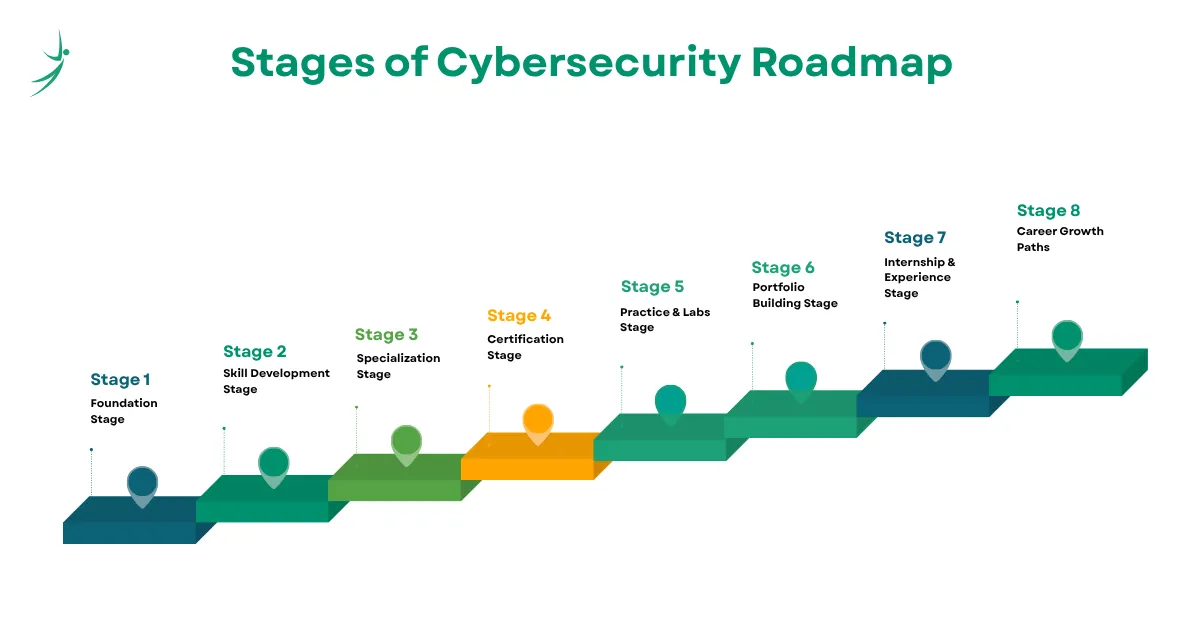
Stage 1 - Foundation Stage: Build Your Knowledge Base (Months 1-2)
Every professional cybersecurity career starts here. I can't stress this enough: skip the foundations and you will struggle at every advanced level.
Core Concepts to Master First
Before touching any tools, understand these:
- The CIA Triad: Confidentiality, Integrity, Availability. These three principles guide every security decision I make.
- Types of Attacks: Malware, phishing, man-in-the-middle, SQL injection, cross-site scripting (XSS), DDoS, social engineering, and ransomware. Know what each means and how they work conceptually.
- Authentication vs Authorization: Understanding the difference matters for every security task.
- Encryption Basics: Symmetric vs asymmetric encryption, SSL/TLS, hashing. You don't need to write cryptographic algorithms, but understanding how they protect data is essential.
- Firewalls, IDS, and IPS: What they do, how they differ, when each is used.
Spend 2–3 weeks building this vocabulary. Read, watch, absorb. Don't skip straight to Kali Linux.
Networking Fundamentals (Non-Negotiable)
Cybersecurity without networking knowledge is like construction without understanding materials. Master these:
- TCP/IP model and OSI model
- DNS, DHCP, HTTP/HTTPS, FTP, SSH protocols
- Subnetting and IP addressing
- Routing and switching basics
- VPNs and proxy servers
- Packet analysis concepts
Where to learn: Professor Messer's CompTIA Network+ course is free and excellent. Cisco Networking Academy also offers free networking courses.
I still review networking concepts regularly. The foundations never stop being relevant.
Operating Systems You Must Know
- Linux: This is not optional. Most security tools run on Linux. I use Kali Linux for penetration testing and Ubuntu for daily work. Get comfortable with the command line before anything else.
- Windows: Most corporate environments run Windows. Understanding Active Directory, Group Policy, and Windows Event Logs is essential for blue team roles.
- Basic Virtualization: Learn to set up virtual machines using VirtualBox or VMware. You'll need this for safe lab environments.
Spend at least 30 minutes daily in a Linux terminal. It feels uncomfortable at first. Push through.
Free Resources to Start Today
YouTube Channels I Recommend:
- NetworkChuck (networking + security)
- John Hammond (CTFs and hacking)
- David Bombal (networking + ethical hacking)
Free Platforms:
These resources cost nothing and are excellent. Use them alongside formal training.
Stage 2 - Skill Development Stage: Learn Core Technical Skills (Months 2-4)
Now it's time to build the technical skills that define your cybersecurity career. This stage separates casual learners from serious professionals.
Programming Languages for Cybersecurity
You don't need to be a software engineer. But you need programming knowledge. Here's my honest priority order:
- Python (Priority 1): Write automation scripts, build simple tools, and analyze malware. Every cybersecurity professional uses Python. Start here.
- Bash/Shell Scripting (Priority 2): Essential for Linux automation, log analysis, and task scripting.
- JavaScript (Priority 3): Required for understanding web application attacks like XSS and CSRF.
- SQL (Priority 4): SQL injection is one of the most common vulnerabilities. Understanding SQL helps you both attack and defend.
I don't recommend learning C or assembly until you're specifically targeting reverse engineering or malware analysis.
Can You Do Cybersecurity Without Coding?
This is the question I see constantly in cybersecurity Facebook groups and Discord servers in Nepal. My honest answer: you can start without coding, and some roles require very little of it — but coding knowledge will always be a competitive advantage and eventually a requirement for senior positions.
Let me break it down by role so you can make an informed decision:
Roles with minimal coding requirement:
- SOC Analyst: Primarily involves reading and interpreting security alerts, not writing code. You'll use SIEM dashboards, investigate logs, and follow runbooks.
- GRC (Governance, Risk, Compliance): Policy writing, audit coordination, risk assessments. Almost entirely non-technical.
- Security Awareness Trainer: Developing phishing simulation programs, employee training. No coding needed.
- Digital Forensics (basic level): Using GUI-based tools like Autopsy and FTK. Limited scripting needed at entry level.
Roles where coding becomes necessary over time:
- Penetration Tester: You can pass a CEH without coding, but real-world pen testing requires Python scripting to customize exploits and automate recon.
- Security Engineer: Building automated security tooling, integrating APIs, writing detection rules.
- Bug Bounty Hunter: Identifying complex vulnerabilities often requires writing proof-of-concept code.
- Cloud Security Specialist: Infrastructure-as-code (Terraform, CloudFormation) is increasingly standard.
My practical recommendation for non-coders: Start your cybersecurity journey now and learn Python in parallel. Don't let "I can't code" stop you from entering the field. Dozens of students I've mentored started as non-coders and were writing functional Python security scripts within three to four months of consistent effort.
If you genuinely want to avoid coding entirely, aim for SOC analyst or GRC roles first. Gain industry experience, then decide whether to expand your technical skills from there.
Essential Cybersecurity Tools I Use Daily
- Kali Linux: The standard penetration testing distribution. It comes pre-loaded with hundreds of security tools.
- Wireshark: Network packet analysis. I use this to understand network traffic and spot anomalies.
- Nmap: Network scanning and host discovery. My first step in any penetration test.
- Metasploit Framework: The industry standard exploitation framework. Learn to use it responsibly in lab environments.
- Burp Suite: Web application security testing. Essential for finding vulnerabilities in websites and APIs.
- John the Ripper / Hashcat: Password cracking tools for testing password security.
- SIEM Tools: Splunk, IBM QRadar, and Microsoft Sentinel for log analysis and threat detection (blue team roles).
Start with Nmap and Wireshark. They teach you to see and understand what's happening on a network.
Linux Mastery: The Foundation of Everything
I cannot overstate this. If you're serious about cybersecurity, you need to live in Linux.
Daily practice goals:
- Navigate file systems without a GUI
- Manage users, permissions, and groups
- Read and write shell scripts
- Analyze logs in /var/log
- Use networking tools (ping, netstat, ifconfig, curl)
OverTheWire Bandit is a free wargame that teaches Linux through challenges. I recommend that every student complete it.
Free Cybersecurity Courses Worth Taking
Completely Free:
- Google Cybersecurity Certificate on Coursera (audit for free)
- Cisco CyberOps Associate - SkillsForAll platform
- IBM Cybersecurity Analyst Certificate (audit option)
- SANS Cyber Aces - a completely free beginner program
Taking a free cybersecurity course doesn't mean settling for low quality. These programs are genuinely strong.
Stage 3 - Specialization Stage: Choose Your Path (Months 4-6)
Here's where most people get confused. They try to learn everything and master nothing. I made this mistake early in my career.
My advice: pick one specialization, go deep, then expand.
Ethical Hacking / Penetration Testing (Offensive Security)
This is what most students want to do, and it's a strong choice. Penetration testers get paid to legally break into systems.
Daily work includes:
- Reconnaissance and information gathering
- Vulnerability scanning and assessment
- Exploitation and post-exploitation
- Report writing for clients
Average salary in Nepal: NPR 60,000–120,000/month at mid-level. Remote potential: $80,000–$130,000/year internationally.
Path to take: CompTIA Security+ → CEH → OSCP.
Network Security (Blue Team)
Network security professionals protect infrastructure. They monitor, detect, and respond to threats. Roles include: Network security engineer, firewall administrator, and SOC analyst. Tools you'll use: Cisco firewalls, Palo Alto, pfSense, SIEM tools. This path is perfect if you enjoy monitoring and analysis over active exploitation.
Cloud Security
Every company is moving to AWS, Azure, or Google Cloud. Cloud security professionals protect this infrastructure. Why this matters in Nepal: Multinational companies operating here require cloud security expertise. This path has the highest international salary potential.
Certifications for this path:
- AWS Certified Security – Specialty
- Microsoft Azure Security Engineer (AZ-500)
- Google Professional Cloud Security Engineer
Incident Response & Digital Forensics
When systems get compromised, incident responders are called. Digital forensics professionals investigate after breaches. Nepal-specific demand: Banks and government agencies in Nepal specifically look for these skills after increasing data breach incidents. Tools: Autopsy, Volatility, Sleuth Kit, FTK Imager.
SOC Analyst Path (Easiest Entry Point)
Security Operations Center analysts are the front-line defenders monitoring alerts 24/7. This role has the lowest barrier to entry and is perfect if you want to get into the industry quickly. Many Nepali students secure SOC roles within 6–8 months of structured learning.
Starting salary: NPR 30,000–50,000/month. Growth: Fast. Many SOC analysts move into penetration testing or incident response within 2–3 years.
Stage 4 - Certification Stage: Get Credentials That Actually Matter
Certifications are the language of cybersecurity hiring. Unlike many IT fields, a cybersecurity certification often matters more than a degree. Here's the honest priority order for Nepal's job market in 2026.
Beginner Certifications
- CompTIA Security+ (Most Recommended First): The gold standard entry-level certification. Recognized globally and in Nepal's banking sector. Cost: ~$400 USD. Many employers in Nepal explicitly ask for this.
- eJPT (eLearnSecurity Junior Penetration Tester): The best practical penetration testing cert for absolute beginners. Much cheaper than CEH (~$200 USD) and more hands-on. Perfect as a first cert if you want the offensive path.
- CompTIA A+ and Network+: Complete these before Security+ if you have weak networking and IT fundamentals.
Mid-Level Certifications
- CEH (Certified Ethical Hacker): Highly valued in Nepal, specifically for penetration testing roles. It carries strong brand recognition with Nepali hiring managers. Cost: ~$1,000 USD. More exam-focused than practical.
- CompTIA PenTest+: Good alternative to CEH. More practical and respected internationally.
- CompTIA CySA+ (Cybersecurity Analyst): Perfect for blue team and SOC roles. Validates defensive security skills.
Advanced Certifications
- OSCP (Offensive Security Certified Professional): The most respected penetration testing certification globally. Entirely practical, 24-hour hacking exam. Once you have this, doors open internationally. Cost: ~$1,500 USD
- CISSP (Certified Information Systems Security Professional): The gold standard for senior roles and management positions. Boosts Nepal salary by up to 30% over peers. Requires 5 years of experience.
Cyber Security Roadmap Certifications Priority for Nepal Market
If I were starting over in Nepal today, here is the exact certification path I'd follow:
- Year 1: CompTIA A+ → CompTIA Network+ → CompTIA Security+
- Year 2: CEH or CompTIA PenTest+ → eJPT (if offensive path)
- Year 3: OSCP (if offensive) or CySA+ (if defensive)
- Year 5+: CISSP
Don't try to rush OSCP in year one. Build your foundation first.
Stage 5 - Practice & Labs Stage: Apply Everything in Safe Environments (Months 5-7)
Studying is one thing. Doing is another. This stage is where you build the muscle memory and practical experience that makes employers want to hire you.
CTF (Capture The Flag) Competitions
CTFs are security challenges where you solve puzzles to find hidden flags. They're the best way to practice real skills in legal environments.
Platforms I recommend:
- TryHackMe: beginner-friendly, guided paths
- HackTheBox: intermediate to advance
- PicoCTF: great for absolute beginner
- CTFtime.org: calendar of upcoming CTF competitions
Complete at least 30–50 machines on TryHackMe before attempting HackTheBox. I've seen students skip this and struggle badly.
Bug Bounty Programs
Companies pay you to find vulnerabilities in their products. Legitimately. This is where freelance cybersecurity income can be significant.
Platforms:
Nepal reality: Some professionals earn lakhs from a single critical vulnerability report. It's not easy money but it's real money for skilled people. Start with programs that have "beginner-friendly" or "VDP" (Vulnerability Disclosure Program) tags.
Building Your Home Lab
This is my most practical advice for becoming job-ready quickly:
Minimum setup:
- Old laptop or desktop (anything with 8GB RAM)
- VirtualBox (free)
- Kali Linux VM (free)
- Vulnerable practice targets: Metasploitable, DVWA, VulnHub machines
What to practice in your lab:
- Network scanning with Nmap
- Web application attacks on DVWA
- Password cracking exercises
- Log analysis and monitoring
You don't need expensive equipment. A used laptop and free software are enough to practice for months.
Stage 6 - Portfolio Building Stage: Prove Your Skills to Employers
In cybersecurity, your portfolio is proof of work. I've interviewed candidates who memorized CISSP content perfectly but couldn't demonstrate a single practical skill. Don't be that person.
What Your Cybersecurity Portfolio Needs
- Find and document vulnerabilities in your home lab environments. Write professional reports exactly how you'd report to a real client.
- Security Tools You've Built: Even simple Python scripts, a port scanner, a password checker, a log analyzer, demonstrate programming ability.
- Bug Bounty Reports (if any): Even low-severity findings, with permission, show real-world impact.
- Personal Research: Blog posts on security topics you've studied deeply. Employers love candidates who share knowledge publicly.
GitHub for Security Professionals
I maintain an active GitHub profile with my security scripts, tools, and project documentation. You should, too. Post your code. Document it well. Even if the code isn't perfect, it shows you're actively building.
Writing Security Research Blogs
Starting a security blog does three things: it forces you to understand topics deeply enough to explain them, builds public proof of your knowledge, and occasionally attracts recruiters and clients directly. Platforms like Medium and Hashnode are free. Start writing about what you're learning.
Stage 7 - Internship & Experience Stage: Enter the Industry (Months 7-10)
You have skills. You have a portfolio. Now it's time for real-world experience.
Finding Cybersecurity Internships in Nepal
The cybersecurity internship market in Nepal is still developing, but opportunities exist if you look strategically:
- Job Portals: Merojob, Kumari job, LinkedIn (search "cybersecurity intern Nepal" or "cyber security intern")
- Direct Applications: Tech companies like Vrit Technologies, Leapfrog, and Cotiviti Nepal. Banks like NIC Asia and Nabil Bank. Email their HR departments directly.
- Training Institute Networks: Many cyber security course providers in Kathmandu have company partnerships. Ask explicitly about placement before enrolling.
- LinkedIn Networking: Connect with Nepali cybersecurity professionals. Many hear about openings before they're posted.
My honest experience: I applied to 20+ places before landing my first cybersecurity internship. Persistence matters more than perfection.
What to Expect as a Security Intern
Typical responsibilities:
- Security log monitoring and analysis
- Vulnerability assessments on internal systems
- Supporting senior security engineers
- Documentation and report writing
- Participating in security audits
Stipend: NPR 15,000–30,000/month for most Nepal internships. Some unpaid internships exist I only recommend those at genuinely prestigious organizations where learning value is clear. Focus on skills, not stipend. One strong internship experience transforms your resume.
Freelancing: Bug Bounties and Security Audits
Can't find internships? Build experience through freelancing:
- Bug bounties: Start with HackerOne's public programs. Even low-severity findings build your reputation.
- Small business security audits: Approach local businesses needing security assessments. Many have never had a security review.
- Fiverr/Upwork security gigs: Phishing awareness training, security report templates, basic vulnerability assessments. This supplements income while building experience. If you're a student looking for additional earning options, read our guide on online earning for students in Nepal.
Stage 8 - Career Growth Paths: Where This Career Takes You
Cybersecurity careers have multiple serious directions. Here's what I see working for Nepali professionals:
Cybersecurity Jobs in Nepal: Role Breakdown
- Security Analyst: Monitor threats, analyze security events, respond to incidents. Most common entry point.
- Penetration Tester: Conduct authorized attacks to find vulnerabilities. The "ethical hacker" role everyone wants.
- Security Engineer: Design and build security systems and infrastructure.
- Cloud Security Specialist: Protect cloud environments. Fastest-growing specialty.
- Digital Forensics Analyst: Investigate cybercrimes. Growing role as cybercrime increases.
- Security Architect: Design overall security posture for organizations. Senior, high-paying role.
- CISO (Chief Information Security Officer): Top executive security role. 10+ years of experience required.
Cybersecurity Companies in Nepal Actively Hiring
IT and Tech:
- Leapfrog Technology
- Cotiviti Nepal
- CloudFactory
- F1Soft International
Banking Sector:
- NIC Asia Bank
- Nabil Bank
- Nepal Investment Bank
- Himalayan Bank
Telecom:
- Nepal Telecom
- Ncell
- Vianet Communications
- WorldLink Communications
Cyber Security Remote Jobs: The Income Multiplier
This is my strongest recommendation for motivated students. Remote cyber security jobs pay 5–10x local Nepal salaries. Where to find remote opportunities:
- LinkedIn Remote Jobs (filter: remote, cybersecurity)
- We Work Remotely
- Remote.co
- Dice (US-focused tech jobs)
- BugCrowd / HackerOne(reputation-based remote work)
Target markets: US, UK, Australia, Canada, Singapore. Time zone management is the main challenge. Many companies in these markets work across time zones regularly now.
Cybersecurity Trends 2026: What's Reshaping the Industry
Staying current with trends isn't optional in cybersecurity. The threat environment changes faster than any other IT field. Here's what I'm watching and preparing for:
AI-Powered Cyberattacks and Defenses
AI is being used on both sides of the security battle.
Attackers are using AI to generate highly convincing phishing emails, automate vulnerability scanning at massive scale, and create polymorphic malware that changes to avoid detection.
Defenders are using AI to detect anomalies in network traffic faster than humans, automate threat hunting across massive log datasets, and predict attack patterns before they happen.
Every security professional needs to understand AI tooling now. Explore our guide on top AI tools every student should know to stay ahead.
Zero Trust Architecture
"Never trust, always verify." Zero Trust has moved from concept to implementation requirement in 2026. Traditional security assumed anyone inside the network was safe. Zero Trust assumes breach and verifies every request. Every user, every device, every connection. Understanding Zero Trust principles is increasingly required for senior security roles and a strong differentiator in interviews.
Cloud Security as the New Normal
As organizations move to AWS, Azure, and Google Cloud, the security perimeter has dissolved. Cloud security professionals are among the highest-paid specialists in 2026. For Nepal: This is a massive opportunity. International companies can hire you remotely for cloud security work. The certification path (AWS Security Specialty or AZ-500) is clear and achievable within a year.
Ransomware Evolution
Ransomware attacks on Nepali organizations have increased significantly. Hospitals, government agencies, and financial institutions have been targeted. Incident response and ransomware recovery skills are increasingly valued in Nepal's market. This niche has very few local experts.
Cybersecurity in Nepal's Banking and Fintech Sector
The Nepal Rastra Bank has issued directives requiring banks to implement specific cybersecurity standards. Organizations are legally required to conduct regular security audits and maintain dedicated security teams. This regulation-driven demand is creating hundreds of stable, well-paying positions in Nepal's banking sector, specifically.
How to Choose the Right Cybersecurity Course in Nepal
Self-study works, but structured training accelerates your path dramatically. I've seen students spend 18 months stuck trying to self-teach what a proper cyber security course covers in 2–3 months.
What to Look for in Training Programs
- Hands-on Labs: Theory without practice doesn't prepare you for real work. Demand practical lab time.
- Current Curriculum: The field changes fast. Courses more than 2 years old are already outdated.
- Experienced Instructors: Learn from people actively working in security, not just academics.
- Certification Alignment: Does the program prepare you for CompTIA Security+ or CEH? This matters for your career.
- Career Support: Placement assistance and industry connections.
- Community: Learning with peers keeps you accountable.
Online vs Offline Cyber Security Course in Nepal
Online options offer flexibility. Good for working professionals who need to learn around schedules. Offline courses in Kathmandu give you immediate feedback, face-to-face mentorship, and local networking. Better for full-time students who benefit from structure. At Skill Shikshya, we offer both options. You can attend onsite in Baneshwor or join remotely.
Certifications vs Degree: The Honest Answer
I've hired candidates and reviewed hundreds of applications. A CEH certificate with a strong CTF portfolio beats a CS degree with no practical skills every time in our market.
That said, degrees help with certain corporate or government roles. If you're already in a BSc CSIT or BCA program, add certifications alongside it.
If you're choosing between paying for a degree or a cyber security course in nepal plus certification prep? The course wins for faster entry into the job market.
Skill Shikshya's Cyber Security Course in Kathmandu
I'm part of Skill Shikshya's Cybersecurity training program, based in Sankhamul-31, Baneshwor, Kathmandu.
What our program covers:
- Network security fundamentals
- Ethical hacking and penetration testing methodology
- SIEM tools and log analysis
- Vulnerability assessment techniques
- Incident response procedures
- Security tool proficiency (Kali Linux, Nmap, Wireshark, Burp Suite)
- Certification preparation (Security+, CEH pathways)
- Portfolio building guidance
- Interview preparation
Who it's for: Complete beginners to IT professionals looking to shift into security. Duration: 2 months with flexible batch timings (morning, evening, weekend). Location: Both onsite in Kathmandu and remote options available. Placement support: Yes, we have direct connections to hiring companies.
Whether you just completed your SEE and are wondering how to start an IT career or you're coming from a +2 background exploring IT options, cybersecurity is one of the strongest paths available in 2026.
Visit our cybersecurity course page or call us at 9868730959 to learn more.
Cybersecurity After SEE and +2 in Nepal: Your Complete Starting Guide
I want to speak directly to students who just finished SEE or are currently in +2 and wondering whether cybersecurity is a realistic path for them. The answer is yes, and the window you have right now is one of the best possible times to start.
Nepal's cybersecurity talent shortage means that employers actively look for young professionals who started early and built consistent skills before even entering the formal job market. A 22-year-old with two years of TryHackMe, a CompTIA Security+ certificate, and documented CTF wins is far ahead of a 25-year-old BSc graduate with no practical skills.
After SEE: What Should You Do Next?
If you've just completed SEE and are deciding your path, here are the realistic options for getting into cybersecurity:
- Option 1: +2 Science → BSc CSIT or BCA with Parallel Cybersecurity Training The most structured path. Take +2 in Computer Science or Science, then pursue BSc CSIT or BCA. Alongside your degree, enroll in a cybersecurity training program in Kathmandu and start certifications from Year 1 of college. By the time you graduate, you'll have both academic credentials and practical security skills.
- Option 2: Diploma in IT + Cybersecurity Certification Track A faster route into employment. A 1.5–2 year IT diploma followed by CompTIA Security+ and CEH gets you job-ready in 3–4 years total, sometimes faster than a full degree.
- Option 3: Direct Cybersecurity Training After SEE If you have clarity about cybersecurity and want to start immediately, you can join a structured cyber security course in Kathmandu after SEE while pursuing +2 simultaneously. Some students split their time between +2 classes and evening cybersecurity training. This is aggressive but achievable.
After +2: Which Course Is Right for You?
If you've completed +2 (whether Science, Management, or Humanities), here is the clearest path forward:
- Enroll in a cybersecurity training program, this gives you the practical foundation fast.
- Start with CompTIA Network+, the networking foundation most +2 students are missing.
- Target CompTIA Security+ within 6–8 months, this is your first credential that employers recognize.
- Build a TryHackMe profile and complete labs, this is your practical proof of skills.
- Apply for SOC analyst or cybersecurity intern roles, don't wait for a degree to apply.
What Academic Subjects Help?
If you're in +2 right now, the subjects that transfer most directly into cybersecurity are: computer science (obviously), mathematics (logic, algorithms), and physics (understanding hardware, networking electronics). But I want to be clear students from Management and Humanities backgrounds have successfully entered cybersecurity. The academic background matters less than your dedication to building the technical skills from scratch.
The Honest Timeline for SEE/+2 Students
Most students who start cybersecurity training right after SEE or +2 and practice consistently can expect:
- Month 6: First basic tools proficiency, TryHackMe beginner rooms complete
- Month 8–10: CompTIA Security+ exam ready
- Year 1: First cybersecurity internship applications
- Year 1.5–2: Entry-level SOC or junior security analyst role at NPR 25,000–40,000/month
- Year 3–4: Mid-level role at NPR 60,000–90,000/month with growing specialization
If you're 17 or 18 reading this and you start today you'll be a certified, experienced cybersecurity professional by the time your peers are still figuring out their career paths.
Is Cybersecurity Hard in Nepal? An Honest Answer From Someone Who's Been There
This question shows up in every Nepal cybersecurity group I'm part of. Students type it into Google at 2am after a frustrating lab session. Let me give you the real answer, not the motivational-poster version.
Yes, cybersecurity is genuinely difficult. I won't tell you otherwise.
But "hard" in cybersecurity means something specific. It's not hard the way calculus is hard where you either understand a formula or you don't. Cybersecurity is hard because it requires you to hold multiple complex systems in your mind simultaneously, think like both an attacker and a defender, keep up with a field that changes faster than almost any other, and practice skills that feel uncomfortable until suddenly they don't.
What Makes Cybersecurity Specifically Hard in Nepal
Beyond the general technical difficulty, Nepal has some specific challenges worth naming honestly:
- Limited local mentorship: India has thousands of experienced cybersecurity professionals sharing knowledge. Nepal has far fewer. Finding a local mentor who can guide you through advanced topics is harder here than in more mature markets.
- Outdated local training: Some cybersecurity courses in Nepal still teach content from 5+ years ago. CEH version 10 content in 2026 is not adequate preparation for today's market. This means you need to supplement local training with international resources constantly.
- Language and resource barriers: Most cutting-edge cybersecurity content — research papers, advanced courses, exploit documentation is in English. Students who struggle with technical English take longer to absorb material.
- Infrastructure gaps: Reliable high-speed internet for heavy lab work and video courses is available in Kathmandu but inconsistent outside it.
What Makes It Easier Than People Assume
Here's the other side of the truth, which people don't talk about enough:
The community is genuinely helpful. Global cybersecurity Discord servers, Reddit communities, and TryHackMe forums have thousands of people who answer questions from beginners without judgment. The international cybersecurity community is more welcoming than most tech fields.
Free resources cover almost everything. You can legitimately learn everything from CompTIA Security+ level to OSCP level using freely available material. YouTube, TryHackMe, Hack The Box, OverTheWire, these aren't "budget options." They're the same platforms that professionals in the US and UK use.
Your progress is visible quickly. Unlike many careers where you spend years in theory, cybersecurity gives you concrete feedback immediately. Solve a CTF challenge, read a packet capture successfully, identify a vulnerability in a lab, these wins come within weeks and tell you directly that you're growing.
Nepal's talent shortage works in your favor. In a market where a skilled professional with a Security+ and 6 months of CTF experience can land a job, the bar to employment is actually lower than in saturated markets like India or the US. Your skills go further here.
The Real Reason Most People Quit
In my experience mentoring dozens of Nepali cybersecurity students, the people who quit don't quit because it's too hard technically. They quit because they don't see progress fast enough, they try to learn everything at once instead of one thing deeply, or they watch too many tutorials without doing enough hands-on practice.
The solution is simple but not easy: focus on one topic at a time, prioritize doing over watching, and measure progress with real milestones like CTF completions and certification exams rather than hours spent studying.
Is cybersecurity hard in Nepal? Yes. Is it too hard? Not even close.
Challenges on the Cybersecurity Path and How to Push Through
Every honest mentor will tell you: this field is hard. I want to prepare you rather than just motivate you.
Dealing with Technical Complexity
Cybersecurity pulls from networking, programming, operating systems, cryptography, and more simultaneously. Students often feel overwhelmed 3–4 weeks into serious study.
My approach: Learn in connected chunks, not isolated topics. When you study networking, study it in the context of how network attacks work. Connect theory to application constantly.
Keeping Up with Rapid Changes
What I knew 3 years ago is partially outdated today. New vulnerabilities, new tools, new attack methods emerge weekly.
How I manage this:
- Follow cybersecurity news on Krebs on Security and Dark Reading
- Subscribe to SANS Internet Stormcast podcast
- Join Reddit's r/netsec and r/cybersecurity communities
- Set aside 30 minutes daily for current security news
Awareness compounds. You don't need to master everything you need to know what's happening.
Limited Local Mentorship in Nepal
This is a real challenge I hear from students constantly. Few experienced cybersecurity mentors exist in Nepal compared to markets like India or the US.
Solutions that work:
- International online communities (Discord servers, Reddit)
- TryHackMe and HackTheBox community forums
- LinkedIn connections with global professionals
- Formal training programs where instructors have industry experience
Don't limit your mentorship search to Nepal. The internet gives you access to global experts.
Real Success Stories: Nepali Cybersecurity Professionals Who Made It
I've mentored and watched these career progressions. Details are anonymized:
Arjun's Path (From Graduate to SOC Analyst)
- Month 0: Fresh BCA graduate, minimal security knowledge.
- Month 2: Started TryHackMe, completed first 20 machines.
- Month 4: Completed cyber security training, started CompTIA Security+ prep.
- Month 7: Passed Security+ exam. Applied to 30+ positions.
- Month 9: SOC Analyst role at Kathmandu-based IT firm. NPR 40,000/month.
- Year 2: Promoted to SOC Team Lead. NPR 70,000/month.
- Year 3: Lateral move to penetration testing. NPR 95,000/month.
Key lesson: He didn't wait for perfection before applying. He applied while still learning.
Sunita's Transition (From IT Support to Pen Tester)
- Month 0: 2 years IT support experience. Wanted better pay.
- Month 3: Completed ethical hacking training. Started CTFs seriously.
- Month 6: CEH certification passed.
- Month 9: 50+ HackTheBox machines complete. Started bug bounty hunting.
- Month 11: First bug bounty payout, NPR 45,000 for a critical finding.
- Year 1.5: Full-time penetration tester at security consultancy. NPR 85,000/month.
- Year 3: Remote penetration tester for Australian firm. $3,500/month.
Key lesson: Sunita's practical CTF and bug bounty work got her hired, not just the CEH.
Measuring Your Progress: How to Know You're Growing
Tracking progress keeps you motivated and shows where to focus. I use these indicators:
Technical Progress:
- CTF machines completed monthly (aim for 5–10)
- Certifications attempted and passed
- New tools learned and practiced
- GitHub repositories updated
Career Progress:
- Applications sent and response rates
- Interviews secured and feedback received
- Salary increases over 6-month periods
- Network connections made with industry professionals
Knowledge Depth:
- Topics you can explain without notes
- Security concepts you apply instinctively
- Questions you can answer in mock interviews
- Real-world problems you've solved independently
Set targets monthly. Review them weekly. Adjust based on what's working.
Your 2026 Action Plan: What to Do Starting This Week
You've seen the complete path. Here's exactly what I'd do if I were starting over today:
This Week (Days 1–7)
- Day 1: Create TryHackMe account. Complete the "Introduction to Cybersecurity" path.
- Day 2–3: Install VirtualBox and Kali Linux VM. Spend 1 hour exploring the interface.
- Day 4–5: Start CompTIA Network+ prep materials (free on Professor Messer's YouTube).
- Day 6: Join Nepal cybersecurity Facebook groups and LinkedIn communities.
- Day 7: Research cyber security courses in Kathmandu. Make a list of options.
This Month
- Complete 10 TryHackMe rooms
- Learn basic networking thoroughly (OSI model, TCP/IP, subnetting)
- Practice Linux command line daily (30 minutes minimum)
- Decide on your specialization path (offensive vs defensive)
- Enroll in a structured cyber security training program
Next 3 Months
- Complete your cybersecurity training program
- Start CompTIA Security+ exam preparation
- Build your first CTF portfolio on TryHackMe
- Set up your home lab
- Begin LinkedIn networking with security professionals
Next 6–12 Months
- Pass your first certification exam
- Complete 50+ CTF machines
- Apply for cybersecurity internship in Nepal
- Start exploring bug bounty programs
- Build a portfolio with write-ups and projects
Year 2 and Beyond
- Work toward CEH or CompTIA PenTest+ (offensive path)
- Actively pursue remote international opportunities
- Consider OSCP if targeting penetration testing
- Mentor newer students (accelerates your own learning)
- Target NPR 80,000–120,000/month roles with 2 years of solid experience
Nepal needs skilled cybersecurity professionals urgently. The talent shortage is real, the demand is real, and the salaries reflect that reality.
The professionals earning NPR 150,000+ per month started exactly where you are right now. The difference between them and those who didn't make it? They started, stayed consistent, and never confused watching tutorials with actual practice.
Your move.
Start your cybersecurity journey with Skill Shikshya or call 9868730959 for a free consultation.
Frequently Asked Questions
Is cybersecurity a good career in Nepal in 2026?
What is the average cybersecurity salary in Nepal?
Can non-IT students study cybersecurity in Nepal?
How long does it take to become a cybersecurity professional in Nepal?
Which cybersecurity certification is best for beginners in Nepal?
Is coding required for cybersecurity?
What are the best cybersecurity jobs in Nepal right now?
How can I start cybersecurity after SEE or +2 in Nepal?
Are cybersecurity jobs available in Kathmandu only?
Is CEH worth it in Nepal?
About Author: