IT Courses in Nepal: Top 10 Mistakes Students Make After +2
IT courses are structured training programs that teach technical and practical skills such as programming, web development, UI/UX design, networking, cybersecurity, data analytics, and digital technologies. In Nepal, IT courses after +2 help students build job-ready skills, enter the tech industry faster, and qualify for roles in software development, data, design, and IT support without relying only on traditional degrees.
Finishing your +2 and considering IT courses in Nepal? You’re not alone. The tech industry is expanding rapidly, and more students than ever are exploring career options in the IT field to build stable, high-paying futures. But here’s what most institutes won’t openly tell you: the decisions you make right now can shape your entire professional journey.
Over the years, I’ve seen countless students in Nepal rush into IT programs without proper research, only to realize months later that they chose the wrong course, the wrong institute, or worse, a program that doesn’t align with real job market demands. The result is wasted time, lost money, and growing frustration.
Eye-Opening Statistics:
- 68% of IT students in Nepal regret their course choice within the first year
- Students who research thoroughly are 3.5x more likely to get placed within 6 months
To help you avoid these common pitfalls, let me walk you through the 10 biggest mistakes students make when choosing IT courses, and more importantly, how you can make a smarter, career-driven decision from the very beginning.
Why Your IT Course Choice Matters More Than Ever in 2026
The IT landscape in Nepal has transformed dramatically. What worked five years ago won't cut it today. Companies are now looking for graduates with hands-on experience in programming languages like Python, Java, and JavaScript. They want people who understand real-world tools like Git & GitHub, can work with databases using SQL, and know their way around cloud computing. They are also looking for a person who has knowledge and experience in UI/UX and digital marketing as well.
But here's the problem: not all IT courses in Nepal after 12 prepare you for this reality. Some teach outdated technology. Others focus too much on theory without enough practical work. And some institutions simply don't have the industry connections to help you land that first job.
Reports highlight that Nepal’s IT sector is rapidly expanding, offering numerous opportunities across software development and related fields as the digital economy grows.
Your course choice isn't just about the next four years. It's about building a foundation for roles like Full-Stack Developer, Cybersecurity Analyst, or Data Scientist careers that can pay well and offer real growth opportunities in Nepal and beyond.
Mistake #1: Choosing IT Courses Based on What Your Friends Pick
This is probably the most common trap I see. Your best friend signs up for cybersecurity, so you think, "Maybe that's for me too." Your cousin is excited about becoming a Web Developer, and suddenly you're considering the same path.
Here's the reality: your friend's passion isn't your passion. What excites them about coding in React.js or working with Node.js might bore you to tears. And if you spend the next few years studying something that doesn't interest you, you'll struggle to stay motivated.
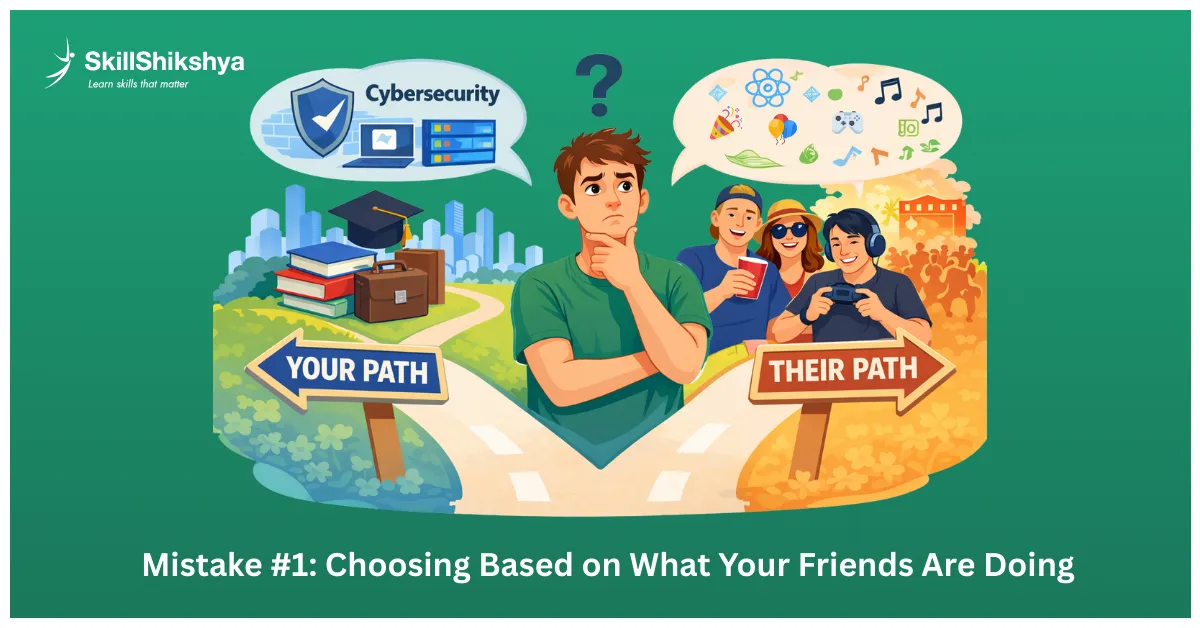
The real cost: Students who choose IT courses based on peer pressure often drop out or switch programs midway, losing both time and money. Worse, they might finish the course but hate their job because they never really wanted to be a Mobile App Developer or System Administrator in the first place.
How to avoid this: Take time for honest self-reflection. Ask yourself: What aspects of technology genuinely interest you? Do you enjoy solving problems with code? Are you fascinated by how data tells stories? Does the idea of protecting systems from cyber threats excite you? Your answers will point you toward the right specialization, whether that's programming languages, database management, or artificial intelligence (AI).
Not sure where to start? Check out the top IT courses available for +2 graduates to explore your options.
Mistake #2: Not Researching the Course Curriculum Thoroughly
You see a flashy brochure for an IT course. The title sounds impressive. You skim through it and sign up. Three months later, you discover the curriculum is outdated, the projects are boring, and the skills you're learning won't actually help you get hired as a Front-end Developer or Back-end Developer.

Many students don't dig deep enough into what they'll actually learn. They don't ask about which programming languages are taught, whether HTML & CSS are covered comprehensively, or if they'll get experience with modern frameworks like React.js.
The real cost: You might graduate with theoretical knowledge but without practical skills in tools that employers actually use. Companies in Nepal and abroad want graduates who can start contributing immediately, not people who need six months of retraining.
How to avoid this: Request the complete syllabus before enrolling. Look for these key elements in its course details:
- Coverage of in-demand programming languages (Python, Java, JavaScript)
- Hands-on projects and real-world applications
- Training in tools like Git & GitHub for version controlCoverage of in-demand programming languages (Python, Java, JavaScript)Hands-on projects and real-world applicationsTraining in tools like Git & GitHub for version controlDatabase management with SQLExposure to cloud computing platformsWhether the course includes machine learning or AI fundamentals
- Coverage of in-demand programming languages (Python, Java, JavaScript)
- Hands-on projects and real-world applications
- Training in tools like Git & GitHub for version control
- Database management with SQL
- Exposure to cloud computing platforms
- Whether the course includes machine learning or AI fundamentals
- Database management with SQL
- Exposure to cloud computing platforms
- Whether the course includes machine learning or AI fundamentals
Talk to alumni if possible. Ask them: "Did the curriculum prepare you for actual work? Were the IT courses subjects relevant to what employers wanted?" If you're unsure which programming languages to prioritize, research current market demand first.
Mistake #3: Ignoring Accreditation and Institution Reputation
Imagine spending two years completing an IT course, only to discover that employers don't recognize your certificate. Or worse, you want to continue your education abroad and find that your degree isn't accredited.
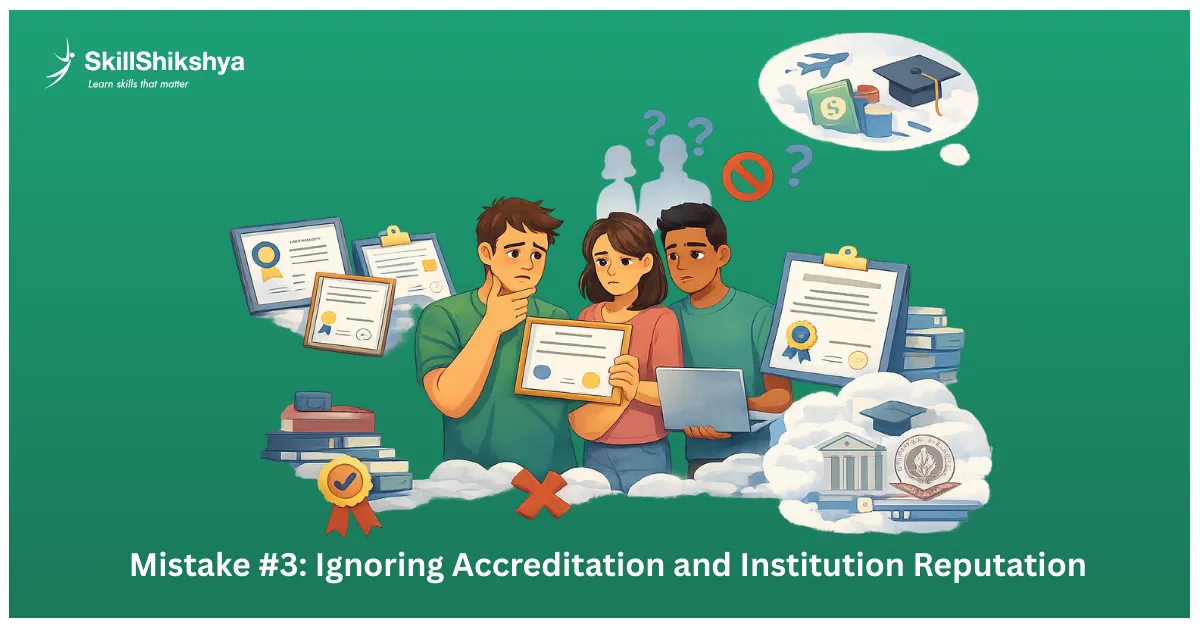
Too many students in Nepal focus on finding IT courses near me without checking whether those nearby institutions have proper accreditation from bodies like the University Grants Commission (UGC) or recognized technical education boards.
The real cost: An unaccredited degree can limit your career options significantly. You might struggle to get hired by reputable companies or face difficulties if you want to pursue higher education. Your hard work becomes devalued because the certification doesn't hold weight in the market.
How to avoid this: Before enrolling in any institute:
- Verify their accreditation status with UGC or relevant authorities
- Check how long they've been operating
- Look at their placement records—where do their graduates actually work?
- Search for reviews from former students
- Ask about their industry partnerships
When searching for the best IT institute in Nepal, accreditation should be your first checkpoint legitimate institutions will transparently showcase their certifications, industry partnerships, and placement records.
A good institute will proudly display its accreditations and have success stories to share. If they're hesitant to provide this information, that's a red flag.
Mistake #4: Falling for the "Cheapest Option" or "Most Expensive Must Be Best" Trap
Money matters, especially for students and families. But when it comes to it courses requirements and quality, price alone doesn't tell you the full story.
Some students go for the cheapest option available, thinking they're being smart with money. Others assume that expensive automatically means better and enroll in premium programs without questioning what they're actually getting.

The real cost: The bargain option might have outdated equipment, instructors without industry experience, or no job placement support. Meanwhile, that expensive program might be all marketing and no substance, leaving you with a fancy certificate but no practical skills in areas like cybersecurity, network engineering, or IT support.
How to avoid this: Evaluate the complete package:
- Quality of teaching staff—do they have real industry experience?
- Infrastructure and lab facilities—will you get hands-on time with the necessary tools?
- Internship and placement opportunities—do they have connections with companies hiring Software Developers or Data Analysts?
- Student-to-instructor ratio—will you get individual attention?
- Project work and portfolio building opportunities
Sometimes paying a bit more is worth it if the program offers real value through industry connections, modern curriculum, and strong placement support. Other times, a moderately priced program with excellent instructors and a practical focus beats expensive programs with more flash than substance.
Mistake #5: Specializing Too Quickly Without Building Foundations
AI, blockchain, machine learning—these buzzwords sound exciting! Many students want to dive straight into highly specialized fields like cybersecurity or become Data Scientists right after +2, without understanding that these specializations require solid foundational knowledge first.
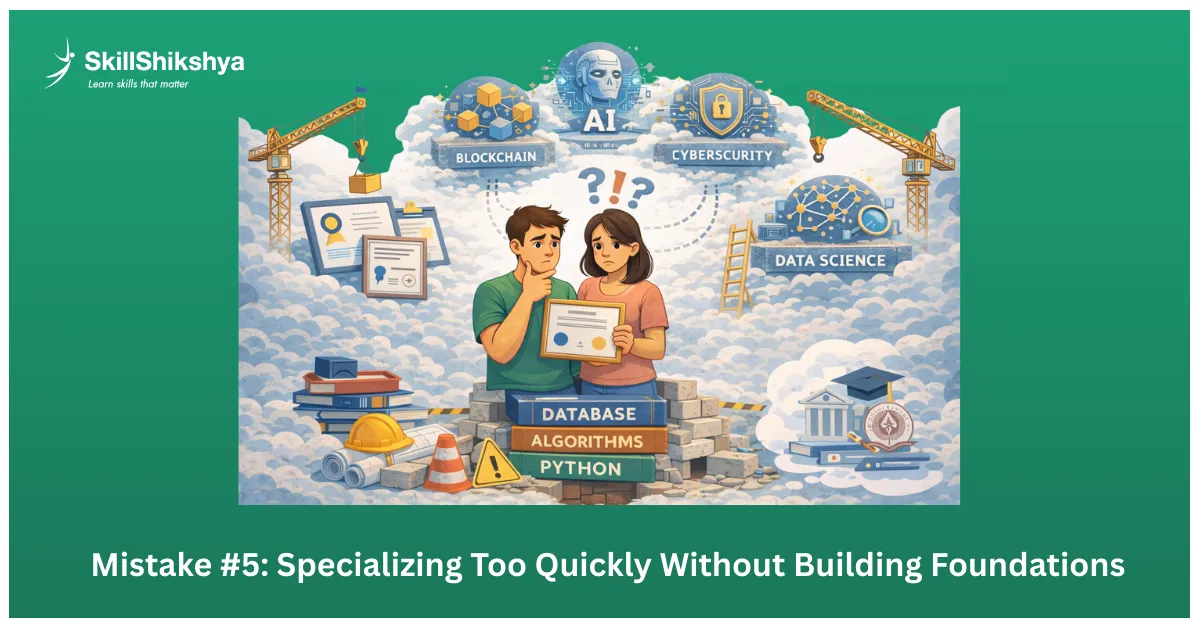
Think about it: You can't become an expert in machine learning or artificial intelligence (AI) if you don't first understand core programming concepts, how algorithms work, or basic data structures. It's like trying to build the top floor of a building before laying the foundation.
The real cost: Students who specialize too early often struggle because they lack fundamental knowledge. When technology shifts (and it always does), they find it hard to adapt because their foundation is shaky. They might learn one specific tool, but can't understand the underlying principles that would help them master new tools as they emerge.
How to avoid this: Look for IT courses after 12th that provide a strong foundation in:
- Core computer science principles
- Multiple programming languages (start with Python or Java, then expand)
- Understanding of how systems work
- Problem-solving and algorithmic thinking
- Database fundamentals with SQL
Once you have these foundations, you can branch into specializations like becoming a Full-Stack Developer, focusing on cloud computing, or diving into cybersecurity. The fundamentals give you flexibility to pivot as technology evolves and your interests develop.
Mistake #6: Choosing IT Courses Without Hands-On Practical Training
Theory is important. You need to understand concepts. But here's what employers actually care about: Can you do the work?
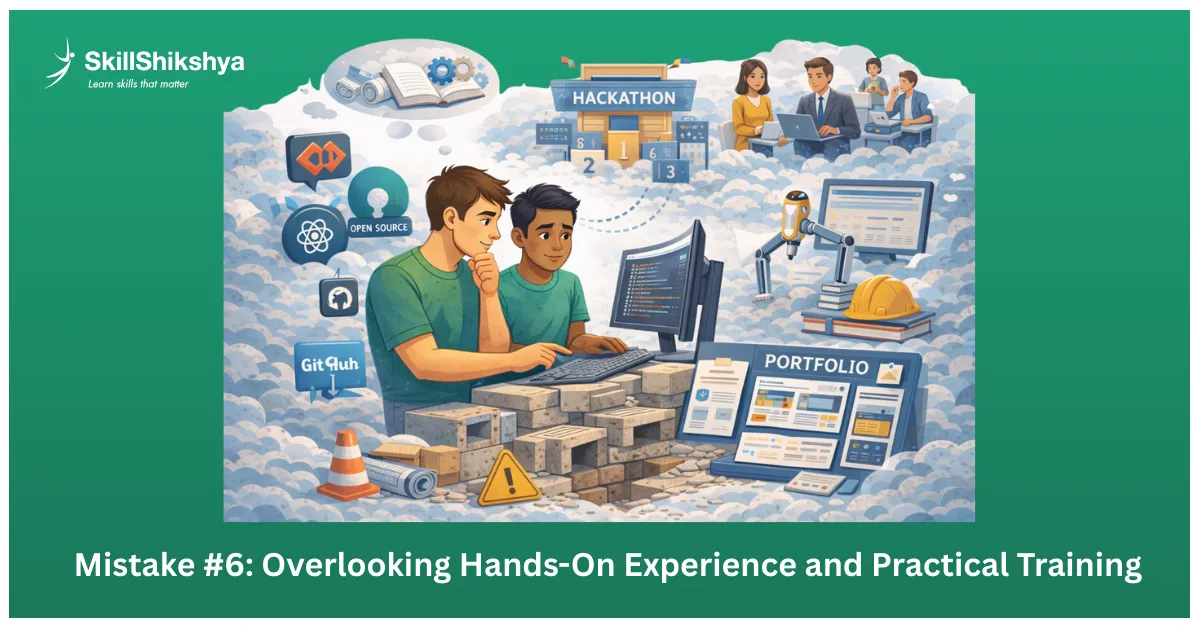
Many students focus on IT courses and degree programs without asking the critical question: "How much time will I spend actually building things?" They graduate with heads full of concepts about programming languages but have barely written any real code. They know database management theory but have never actually designed and queried a database.
The real cost: When you apply for jobs as a Web Developer, employers ask to see your portfolio. They want to see websites you've built, projects you've completed, and code you've written. If all you have is theory, you'll struggle against candidates who spent their education building real applications, contributing to open-source projects, and solving actual problems.
How to avoid this: Choose programs heavy on practical work:
- Look for courses that include multiple project assignments
- Ask about internship opportunities during the program
- Check if students build a professional portfolio as part of the curriculum
- Find out if they participate in hackathons or coding competitions
- Verify that you'll work with industry-standard tools (Git & GitHub, modern frameworks like React.js, real databases)
The best IT courses in Nepal combine theory with extensive hands-on practice. You should be building things from day one, not just reading about how to build them.
Mistake #7: Focusing Only on Technical Skills While Ignoring Soft Skills
You might become the best Python programmer or JavaScript expert in your class. But if you can't explain your code to a team, struggle with presentations, or can't collaborate effectively, you'll hit a career ceiling fast.
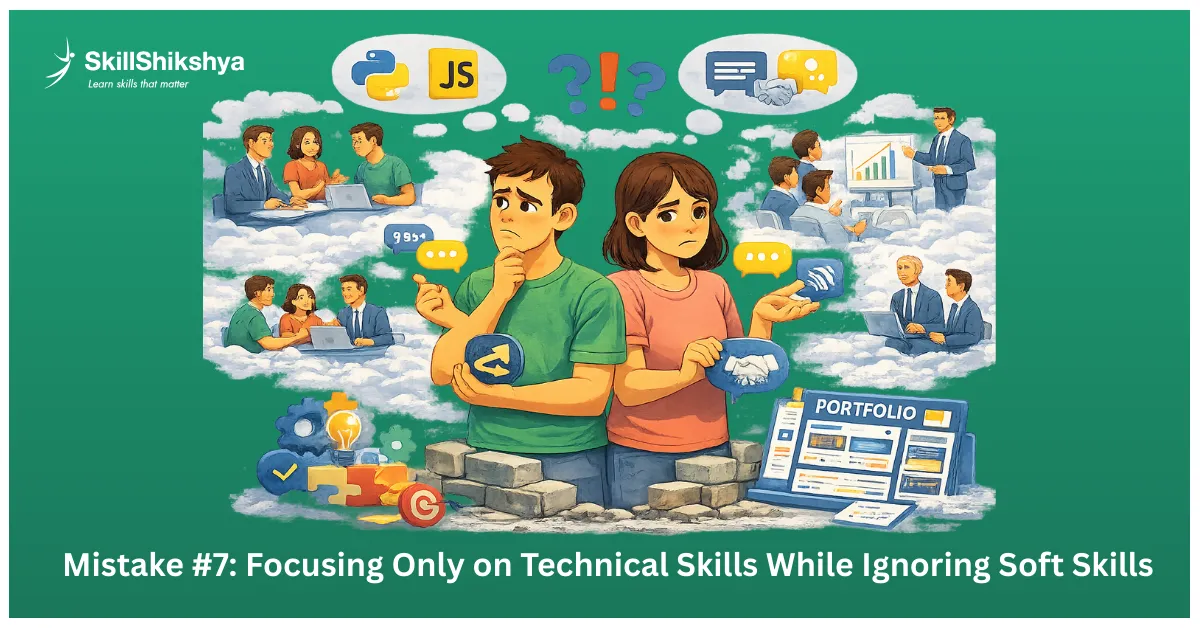
Students exploring which IT course is best in Nepal often focus exclusively on technical training in programming languages, frameworks, and tools. They forget that IT professionals don't work in isolation. You'll need to communicate with clients, collaborate with other developers, present your ideas to non-technical stakeholders, and work in teams.
The real cost: Companies want well-rounded professionals. The difference between someone who stays in a junior position and someone who moves into senior roles or management isn't just technical skill; it's also communication, problem-solving, and leadership ability. Without these soft skills, even brilliant technical professionals struggle to advance.
How to avoid this: Look for programs that develop both technical and soft skills:
- Presentation assignments where you explain technical concepts
- Team projects that require collaboration
- Communication workshops or professional development modules
- Opportunities to interact with industry professionals
- Training in project management and organization
Some institutes integrate these naturally into their curriculum. Others offer separate workshops or modules. Either way, make sure your program helps you develop into a complete professional, not just a coder.
Mistake #8: Not Considering Job Placement Support and Industry Connections
You're enrolling in an IT course to build a career, right? Yet many students don't ask one of the most important questions: "What happens after I graduate? Will you help me find a job?"
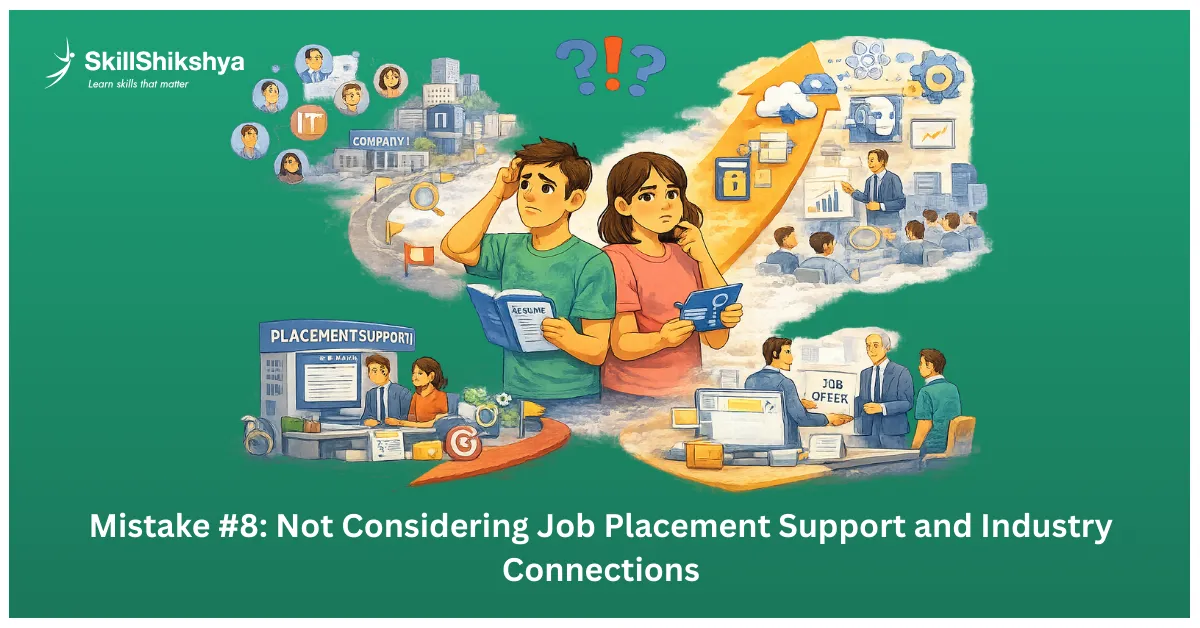
Understanding what the IT courses are and which ones lead to actual employment is critical. Some institutions offer excellent training but have zero connections to companies hiring Software Developers, Network Engineers, or IT Support Engineers. Others have strong placement cells with partnerships across Nepal's IT sector and even international companies.
The real cost: Without placement support, you're on your own in a competitive job market. You might have great skills, but no idea where to apply or how to present yourself. Meanwhile, graduates from institutes with strong industry connections are getting interviews lined up before they even finish their courses.
How to avoid this: Investigate the institute's placement support:
- What percentage of graduates find jobs within six months?
- Do they have partnerships with IT companies in Nepal?
- Is there a dedicated placement cell?
- Do they offer resume building, interview preparation, and career counseling?
- Can current students or alumni connect you with the placement support they received?
- Do they bring in guest speakers or arrange company visits?
An institute's industry connections can make a huge difference. Companies often reach out directly to institutes they trust, offering internships and job opportunities before positions are advertised publicly.
Mistake #9: Choosing Courses Without Considering Coding Requirements
Not all IT roles require heavy coding. But many students don't realize this until they're struggling through programming-intensive courses they never wanted to take in the first place.
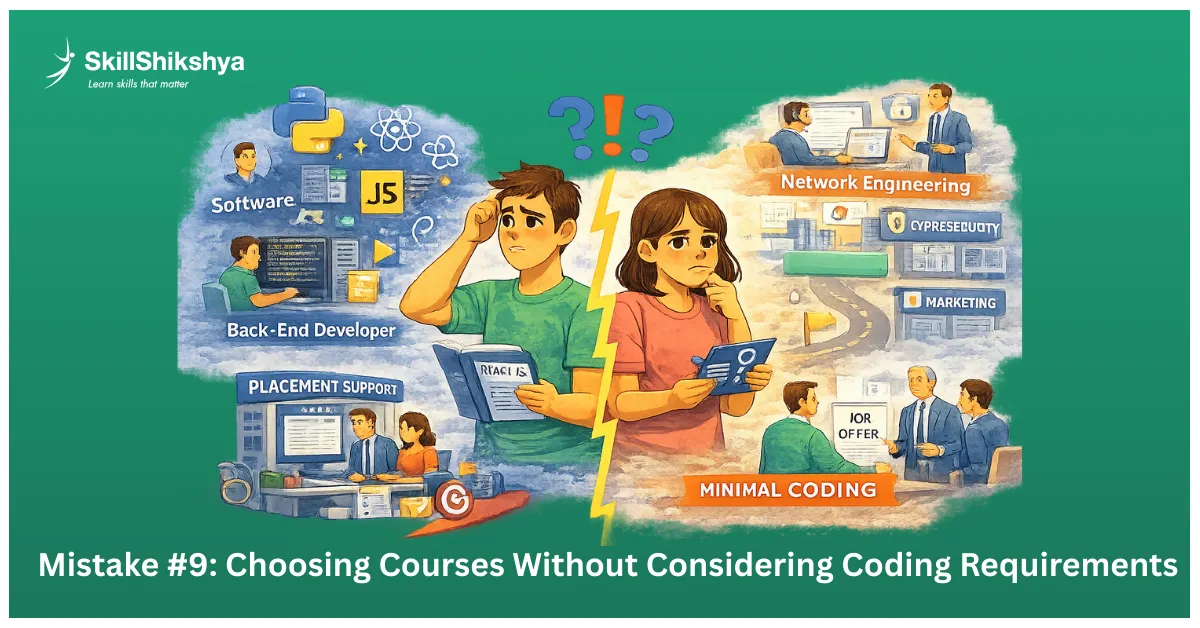
If you're exploring it courses without coding, you need to be clear about your interests from the start. While roles like Software Developer, Back-end Developer, or Full-Stack Developer absolutely require strong coding skills in languages like Python, Java, and JavaScript, other IT careers focus more on different skills.
The real cost: Coding-averse students who end up in programming-heavy courses often struggle, lose confidence, and sometimes drop out. On the flip side, students who love coding but choose less technical paths might feel unchallenged and miss opportunities to develop their programming talents.
How to avoid this: Be honest about your relationship with coding:
If you love coding and problem-solving, look for courses emphasizing:
- Programming languages (Python, Java, JavaScript)
- Software development
- Web development (HTML & CSS, React.js, Node.js)
- Mobile app development
- Database programming with SQL
If you prefer IT work with minimal coding, explore areas like:
- IT Support and System Administration
- Network Engineering and Administration
- Cybersecurity (while some coding helps, much of the work focuses on security protocols, risk assessment, and incident response)
- Digital marketing with technical aspects
- UI/UX design (some coding is useful, but not the primary focus)
Both paths are valid. Both lead to good careers. The key is choosing the path that matches your interests and strengths.
Mistake #10: Ignoring Future Trends and Market Demand
The IT field evolves incredibly fast. Skills that were hot five years ago might be less relevant today, while new technologies like machine learning, cloud computing, and AI are creating thousands of new opportunities.
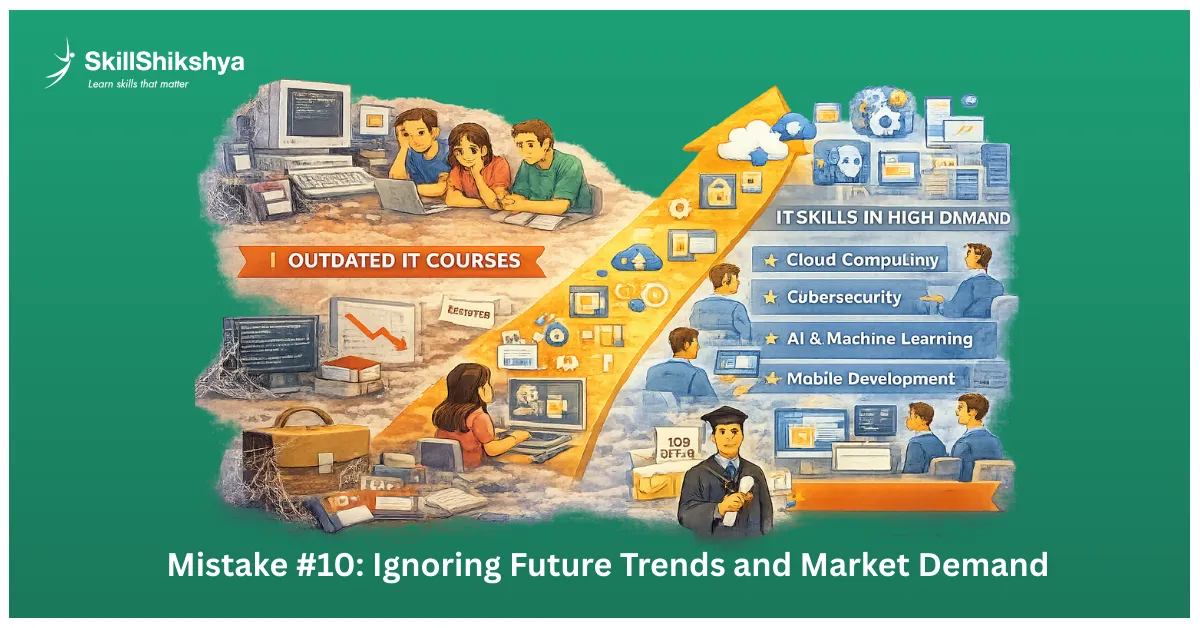
Students often look at how many types of it courses exist without considering which ones align with future market needs. They might choose a course because it sounds familiar or traditional, not realizing that demand for those skills is declining while other areas are booming.
The real cost: You might graduate with skills that are already becoming obsolete or in declining demand. Meanwhile, students who chose forward-looking programs are stepping into roles with higher pay, more opportunities, and better growth potential.
How to avoid this: Research current and emerging trends in IT:
High-growth areas in Nepal's IT sector include:
- Cloud computing and cloud architecture
- Cybersecurity and ethical hacking
- Artificial intelligence (AI) and machine learning
- Full-stack web development
- Mobile app development
- DevOps and automation
Want to stay ahead? Explore essential AI tools that modern IT professionals use.
Ask yourself these questions:
- Which IT courses list after 12th includes training in emerging technologies?
- Does the course curriculum get updated regularly to reflect industry changes?
- Do instructors have current industry experience?
- Are graduates finding jobs in growing sectors?
Look at job postings in Nepal to see what skills employers are actually seeking. Check LinkedIn to see which roles are in demand. Talk to people working in IT about where they see the industry heading.
The courses after +2 in Nepal that will serve you best are those teaching skills that will still be valuable five and ten years from now, while also giving you the foundation to adapt as technology continues to change.
How to Choose the Right IT Course After +2: A Step-by-Step Approach
Now that you know the mistakes to avoid, here's a practical framework for making your decision:
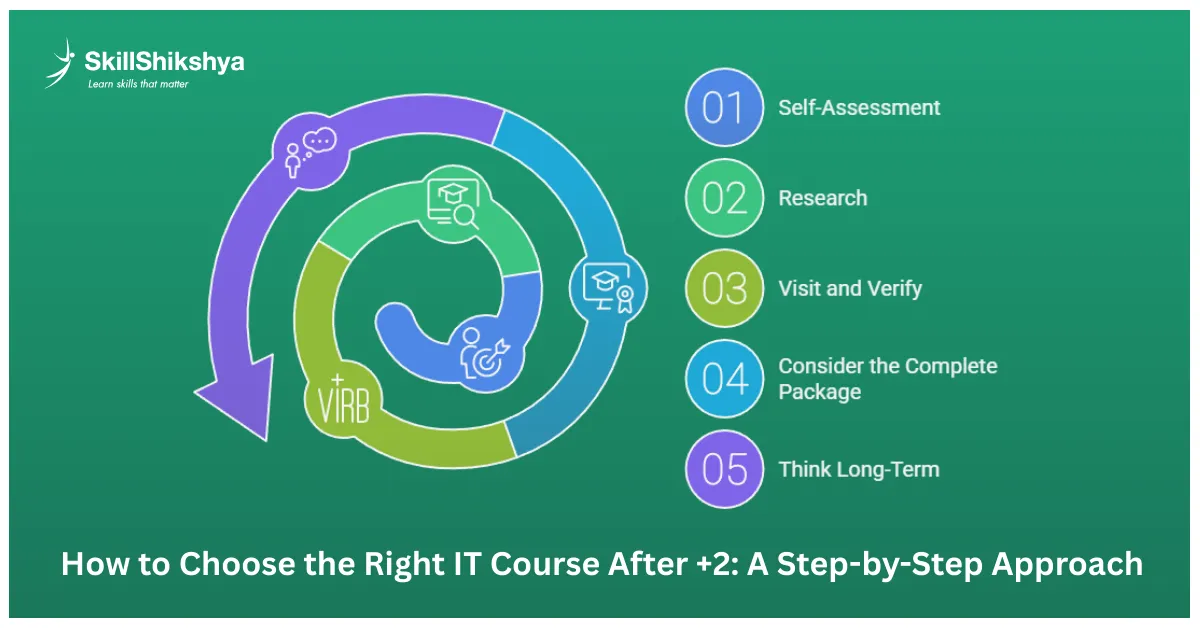
Step 1: Self-Assessment
- What aspects of technology genuinely interest you?
- How comfortable are you with mathematics and logical thinking?
- Do you prefer working with people or independently?
- Are you more creative or analytical?
- Do you want to code extensively or focus on other IT aspects?
Step 2: Research
- Explore available IT courses at the top IT training institutes in Nepal that meet basic criteria (accredited, established reputation, strong placement records)
- Request detailed syllabi and course information
- Check for coverage of key areas: programming languages, database management, and modern frameworks
- Verify hands-on training opportunities
- Look at placement records and alumni success
Step 3: Visit and Verify
- Visit campus facilities if possible
- Talk to current students about their experience
- Meet instructors if you can
- Check computer labs and infrastructure
- Ask about class sizes and individual attention
Step 4: Consider the Complete Package
- Accreditation and recognition
- Course curriculum and IT course subjects
- Practical training and projects
- Industry connections and placement support
- Cost vs. value offered
- Location and accessibility
Step 5: Think Long-Term
- Does this course align with your career goals?
- Will these skills be relevant in 5-10 years?
- Does the program provide a foundation for continuous learning?
- Can you pursue further education or specialization later?
Your IT Career Starts with the Right Choice
Choosing your IT path after +2 is one of the most important decisions you'll make. The right course opens doors to exciting careers as a Software Developer, Data Analyst, Cybersecurity expert, or any number of roles in Nepal's growing tech sector.
The wrong choice can mean wasted time, money, and frustration, or worse, a career you never really wanted in the first place. Take your time. Do your research. Ask questions. Visit institutes. Talk to students and alumni. Think about where you want to be in five years, not just where your friends are going or what sounds impressive.
The IT industry in Nepal is full of opportunities for people with the right skills and training. By avoiding these 10 common mistakes, you'll be much better positioned to choose a course that sets you up for real success.
Your future in tech starts with making an informed, thoughtful choice about its courses after +2. Make it count.
Frequently Asked Questions
What are the most in-demand IT courses in Nepal after +2?
Do I need to be good at math to pursue IT courses?
What's the difference between a diploma and a degree in IT?
Can I get a good job with an IT course without a formal university degree?
How important are certifications compared to degrees in IT?
What if I choose the wrong IT specialization?
How long does it take to become job-ready after starting an IT course?
Are online IT courses as valuable as traditional classroom courses in Nepal?
Where can I find quality IT courses in Nepal?
About Author: