How to Start an IT Career After SEE in Nepal: Beginner's Guide
Finishing SEE feels like stepping into an entirely new world, no school bells, no fixed routine, and the freedom to choose your own path. One of the most common questions students ask right now is: "After SEE, what can I do?" or "What should I study after SEE in Nepal?"
If IT is on your mind, the answer is a confident yes, you can absolutely begin an IT career after SEE, even with zero prior experience. Enrolling in the best IT training institute in Nepal during this critical transition period can provide the structured guidance and industry-relevant curriculum that SEE graduates need to launch successful tech careers.
Nepal's tech industry continues to grow, creating opportunities in fields such as software development, design, digital marketing, data analysis, and cybersecurity. Students who begin learning early often gain a strong advantage by the time they complete their higher secondary education.
This beginner-friendly roadmap is designed specifically for SEE graduates who want to know where to begin, what IT course to pick, how much IT courses in Nepal cost, and how to grow step by step.
Why Starting Your IT Career Right After SEE Gives You an Advantage
Most SEE students spend months waiting for +2 classes to begin. That free time can be used strategically and the best way to use it is to enroll in an IT course after SEE in Nepal and start building skills that will serve your career for years.
Starting early helps you:
- Build strong fundamentals before things get academically busy
- Try different fields and identify what actually suits you
- Develop real projects for your portfolio
- Gain confidence before choosing a +2 stream
- Stay productive during the long post-SEE break
- Explore whether you want to pursue a diploma course or a short skill-based IT course
If you want one-to-one guidance, you can book an online counselling session with SkillShikshya experts to get a clear career roadmap, answers to all your questions, and direction tailored to your interests.
Why Choose an IT Career After SEE in Nepal?
The IT industry in Nepal is growing rapidly, creating exciting opportunities for students who want to build a successful future in technology. For students wondering “what to study after SEE in Nepal?” or searching for the best course after SEE in Nepal, the tech field offers strong career potential, practical skills, and global opportunities.
Here are some of the biggest reasons why choosing an IT career after SEE in Nepal can be a smart decision:
- High Demand for IT Professionals: Skilled professionals are needed in fields like web development, UI/UX design, digital marketing, cybersecurity, QA, and data analysis both in Nepal and internationally.
- Start Your Career Early:Students can begin learning practical and job-ready digital skills immediately after SEE without waiting for a university degree.
- Skills Matter More Than Degrees: In many IT careers, practical knowledge, portfolios, and real-world skills are highly valued by companies.
- Strong Career & Salary Opportunities: IT professionals often enjoy competitive salaries, freelancing opportunities, and long-term career growth.
- Remote & Global Work Opportunities: Many IT jobs allow professionals to work remotely for companies and clients around the world.
- Fast-Growing Career Paths: The technology industry evolves quickly, giving motivated learners opportunities for rapid skill and career development.
How SEE Graduates Can Start a Career in IT
Follow these steps to launch your tech journey.
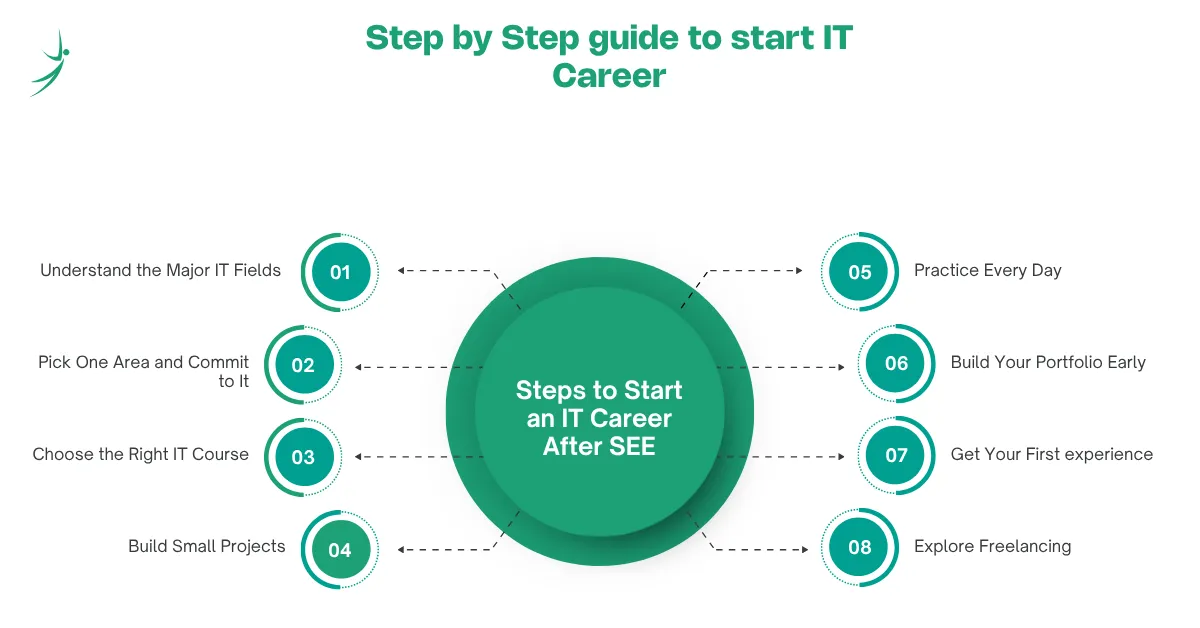
Step 1: Understand the Major IT Fields Available to You
The first thing every SEE graduate should do is get familiar with what the IT world actually offers. The best IT courses for SEE students in Nepal typically cover one or more of these areas:
- Web development: Building websites and web apps
- Python programming: The most beginner-friendly coding language
- UI/UX design: Designing user interfaces and digital experiences
- Digital marketing: SEO, social media, content strategy
- Graphic design: Visual communication and branding
- Cybersecurity fundamentals: Protecting digital systems
- Data analytics:Turning data into insights (also a great starting point if you want to know how to start a data analyst career)
- Video editing and content creation: For social media and YouTube
Exploring these fields gives you a clear sense of what matches your skills and personality. SkillShikshya's course catalogue provides helpful breakdowns across all major categories.
Step 2: Pick One Area and Commit to It
SEE graduates often feel overwhelmed by too many options. The key is not to learn everything at once, pick one direction, learn consistently, and build momentum.
Here's a simple guide to help you choose:
| Your Interest | Best Starting IT Course |
| Logical thinking, problem-solving | Python Programming |
| Visual creativity | Graphic Design |
| Design + user experience | UI/UX Design |
| Social media, online platforms | Digital Marketing |
| Building websites | Web Development |
| Working with numbers and data | Data Analytics |
Step 3: Choose the Right IT Course and Know What It Costs
One of the most-searched questions among SEE graduates is: "What is the IT course fee in Nepal?" or "What is the IT course price in Nepal?"
The good news is that quality IT training doesn't have to cost a fortune. Here's a general overview of beginner IT courses and what you can expect:
Recommended IT Courses for SEE Students
| Course | Difficulty | What You Learn | Suitable For |
|---|---|---|---|
| Python Programming | Easy | Basic coding, logic building, small programs | Students who want to learn programming |
| Web Development | Medium | HTML, CSS, JavaScript, website creation | Learners who want to build websites |
| Graphic Design | Easy | Photoshop, colour theory, design projects | Students with creative interests |
| UI/UX Design | Medium | Wireframing, prototyping, interface design | Students who enjoy design + problem-solving |
| Digital Marketing | Easy | SEO, social media marketing, content strategy | Students interested in online marketing |
| Data Analytics | Medium | Excel, Python basics, data visualisation | Students curious about data and trends |
IT Course Fees in Nepal: What to Expect
IT course fees in Nepal vary depending on the institute, course duration, and format (online vs. in-person). As a rough guide:
- Short skill-based courses (1–3 months): NPR 5,000 – 25,000
- Comprehensive IT courses (3–6 months): NPR 15,000 – 50,000
- Diploma courses in Nepal after SEE (1–2 years): NPR 50,000 – 1,50,000+
For SEE graduates who want to build industry-ready skills quickly without committing to a long diploma, short-to-medium IT courses offer the best value. Platforms like SkillShikshya offer beginner IT courses with transparent pricing you can check their current course fees directly on their website.
Step 4: Build Small Projects From the Very Beginning
In IT, your portfolio matters more than any certificate. Even as a SEE graduate with no experience, you can start creating small but meaningful projects:
- A simple personal website
- A basic UI landing page or wireframe
- Social media posters and flyers
- Short video edits
- Small Python programs (like a calculator or quiz game)
- Keyword research samples for digital marketing
These early projects make a real difference when applying for internships, part-time jobs, or freelancing work. If you want guided, project-oriented learning, SkillShikshya's masterclasses include real-world exercises built specifically to grow your portfolio.
Step 5: Practice Every Day Even 30 Minutes Is Enough
Daily practice is what separates fast learners from the rest. Here are some free tools SEE students can use to supplement their IT courses:
- W3Schools: For coding basics (HTML, CSS, JavaScript, Python)
- Figma: For UI/UX design practice
- Canva: For graphic design
- FreeCodeCamp: For web development
- Google Digital Garage: For digital marketing fundamentals
- Kaggle: For data analytics beginners
Combining free tools with a structured course from a good IT institute in Nepal gives you the fastest, most well-rounded progress.
Step 6: Build Your Portfolio Early
Whether you want a job after SEE in Nepal, freelancing income, or just a strong foundation for higher studies, a portfolio is your most valuable asset. In IT, employers and clients care far more about what you can create than what your marksheet says.
Your portfolio can include:
- Website demos
- UI/UX prototypes in Figma
- Graphic design samples
- Short video edits
- Simple automation scripts
- Marketing case studies or SEO reports
Even one or two solid projects can open doors for part-time work, internships, or freelance clients.
Step 7: Get Your First Experience
Once you have a portfolio with even one or two projects, it’s time to step into the professional world. You don’t need a university degree to land your first gig in IT; you just need to prove you can do the work. For SEE graduates in Nepal, getting that initial exposure can happen through several practical paths:
- Apply for Entry-Level Internships: Many IT companies and startups in Kathmandu and other tech hubs look for enthusiastic interns. Look for "internships for freshers" on job portals like Merojob, Kumari Job, or LinkedIn. Even a short 2-month internship during your post-SEE gap can give you invaluable workplace experience.
- Help Local Businesses and Relatives: Look around your neighborhood. Does a local café need an Instagram manager? Does a relative's clothing shop need a flyer or a simple website? Offer to do it for free or for a small fee. This counts as real-world client experience that looks great on a CV.
- Join Tech Communities and Network: Follow seniors and professionals in the Nepali IT industry on LinkedIn. Join local tech communities, Discord servers, and Facebook groups related to your field (e.g., Python Nepal, Web Developers Nepal). Networking often leads to unadvertised internship opportunities and mentorship.
Step 8: Explore Freelancing Once You Have Basic Skills
Platforms like Fiverr and Upwork allow teenagers and young professionals to earn part-time income from skills like:
- Simple web pages and WordPress sites
- Graphic design and social media creatives
- Short video edits
- UI landing page designs
- Basic SEO tasks and keyword research
- Social media management
Many SEE graduates in Nepal have started earning online within 3–6 months of beginning their IT training. Understanding how to position yourself as a beginner freelancer and which skills are most in demand can help you start generating income long before you finish +2.
Skill Shikshya: Start Your IT Career with the Right Guidance
Many students in Nepal often wonder “what to study after SEE in Nepal?” or “after SEE what can I do?” when planning their future. With the growing demand for digital skills, choosing the right IT course after SEE in Nepal can open the door to exciting career opportunities.
Skill Shikshya helps students explore the best IT courses and receive proper career counseling to build a successful future in the tech industry.
Whether you are interested in becoming a web developer, UI/UX designer, digital marketer, QA tester, graphic designer, or data analyst, Skill Shikshya provides practical guidance to help you start your journey with confidence.
Why Skill Shikshya is Helpful for Students
- Career Counseling After SEE: Students receive guidance on choosing the right career after SEE based on their interests, strengths, and future goals.
- Guidance on IT Courses in Nepal: Learn about different IT courses in Nepal, prices, duration, and career opportunities to make informed decisions.
- Practical Skill Development: Gain hands-on experience through real projects and industry-focused learning instead of only theoretical knowledge.
- Support for Beginners: If you are wondering “how do I start my career in IT?” or “how to start an IT career with no experience?”, Skill Shikshya helps beginners understand the right learning path step by step.
- Explore Future Career Opportunities: Students can discover different career paths including IT after SEE, digital careers, and even learn how to start a data analyst career with the right foundational skills.
Choosing the right learning path early can create better career opportunities in the future. Skill Shikshya helps students gain clarity, confidence, and practical direction toward building a successful IT career in Nepal.
Conclusion
Building an IT career after SEE in Nepal is absolutely achievable and starting early gives you an advantage most students never use. By the time others are still figuring out what to study after SEE in Nepal, you can already have real projects, job-ready skills, and a growing portfolio.
Whether you're wondering how to start an IT career with no experience, what the best IT course is for you, or what IT course fees in Nepal look like, the most important step is simply to begin.
SkillShikshya supports SEE graduates through beginner-friendly IT courses, guided learning pathways, project-based training, and one-to-one counselling. Explore all learning options and choose the best path for you.
Frequently Asked Questions
After SEE, what can I do in IT even with no experience?
How do I start an IT career with no experience?
What is the best IT course for SEE students in Nepal?
What are IT course fees in Nepal?
Should I do a diploma course or a short IT course after SEE?
Is it possible to get a job after SEE in Nepal in IT?
How do I start a data analyst career after SEE?
What should I study after SEE in Nepal for a good IT career?
Does my +2 stream (Science, Management, Humanities) matter for an IT career?
Does SkillShikshya offer IT courses for SEE students in Nepal?
About Author: