Top QA Training Institutes in Nepal (2026 Comparison Guide)
Quality Assurance has become one of the most accessible and fastest-growing career tracks in Nepal's IT industry. As software companies, fintech startups, outsourcing firms, and product companies scale their development teams, the demand for trained QA engineers who can write test cases, run automation suites, test APIs, and sign off on production releases keeps rising faster than the supply of qualified professionals.
Whether you just completed your +2 or a BCA/BIT degree, or you are a working professional considering a switch into tech, a structured QA training program in Nepal gives you a practical, well-paying entry point into the software industry in 3 to 4 months. Before you compare institutes, read our beginner's guide to start understanding what the QA role involves.
This guide gives you an honest, detailed comparison of every major institute offering QA course in Nepal in 2026: curriculum depth, fees, placement outcomes, instructor quality, and exactly what each program includes so you can make the right decision before spending a rupee.
Quick Comparison: QA Training Institutes in Nepal 2026
| Institute | Duration | Fee (NPR) | Mode | Certification | Placement |
|---|---|---|---|---|---|
| Skill Shikshya | 3 months | 30,000 | Hybrid | Certified QA Professional | Job or internship guaranteed |
| Deerwalk Institute | 3 months | 35,000 | Hybrid | Yes | Internship support |
| Broadway Infosys | 3 to 4 months | 38,000 | Hybrid | Yes | Internship support |
| TechAxis | 2.5 to 3 months | 32,000 | Hybrid | Yes | Internship support |
| Mindrisers | 3 months | 25,000 | Hybrid | Yes | Internship support |
What to Look for When Choosing a QA Training Institute in Nepal
Not every QA program in Nepal is built the same way. Some institutes teach the theory. Others give you lab time with real tools. Before you pay a single rupee to any institute, run each option through these six criteria. The difference between landing a QA role in 30 days and searching for 6 months often comes down to how well you evaluate before enrolling.
Curriculum Depth and QA Syllabus
A strong QA course in Nepal should cover manual testing fundamentals, test case writing, JIRA, TestRail, SDLC and STLC, Agile workflow, Selenium with Java or Python, API testing with Postman, performance testing with JMeter, and CI/CD integration basics. The syllabus should build progressively from what is quality assurance all the way through to job-ready automation skills. Ask every institute for a module-by-module breakdown before you commit to paying fees.
Hands-On Labs and Real Projects
The best QA programs in Nepal are built around project-based learning. By the time you graduate, you should have documented proof of work: written test cases, a working Selenium automation framework on GitHub, a Postman collection with test assertions, and at least one API testing project. Nepal's IT companies test practical QA skills directly in technical interviews. A certificate without portfolio evidence rarely gets a candidate through the first round.
Instructor Quality
Find out whether the instructors are currently practising QA engineers with experience at Nepal's IT companies or outsourcing firms. Trainers who have built real automation frameworks and written test strategies for production systems bring a level of practical depth that instructors teaching purely from documentation cannot match. Ask for instructor profiles before enrolling.
QA Certification
Check whether the course awards or prepares you for a recognized credential. ISTQB Foundation Level is the globally recognized baseline certification that Nepal's IT companies and international outsourcing clients respect. A course that prepares you for ISTQB adds measurable career value beyond the local certificate.
Placement Support
Structured placement support, which includes a hiring partner network, resume review, mock technical interviews, and portfolio guidance, is often the difference between landing a QA role in weeks and searching for months independently. Ask every institute specifically how many graduates from the last two batches got placed in QA roles, not just internships, within 3 months of completing the program.
Course Fee vs Value
The most expensive course is not always the best. Evaluate curriculum depth, lab access, tool training, ISTQB preparation, and placement outcomes together. A NPR 38,000 program with only internship support may offer less real-world value than a NPR 30,000 program with guaranteed job placement. The number on the fee sheet matters far less than the outcome it delivers.
QA Training Institutes in Nepal: Full Breakdown
Here is an honest, detailed breakdown of every major institute currently offering QA and software testing training in Nepal. The comparison covers what each institute teaches, what it costs, what you get on completion, and what you should verify before signing up.
1. Skill Shikshya: Strongest Placement Guarantee in This Comparison
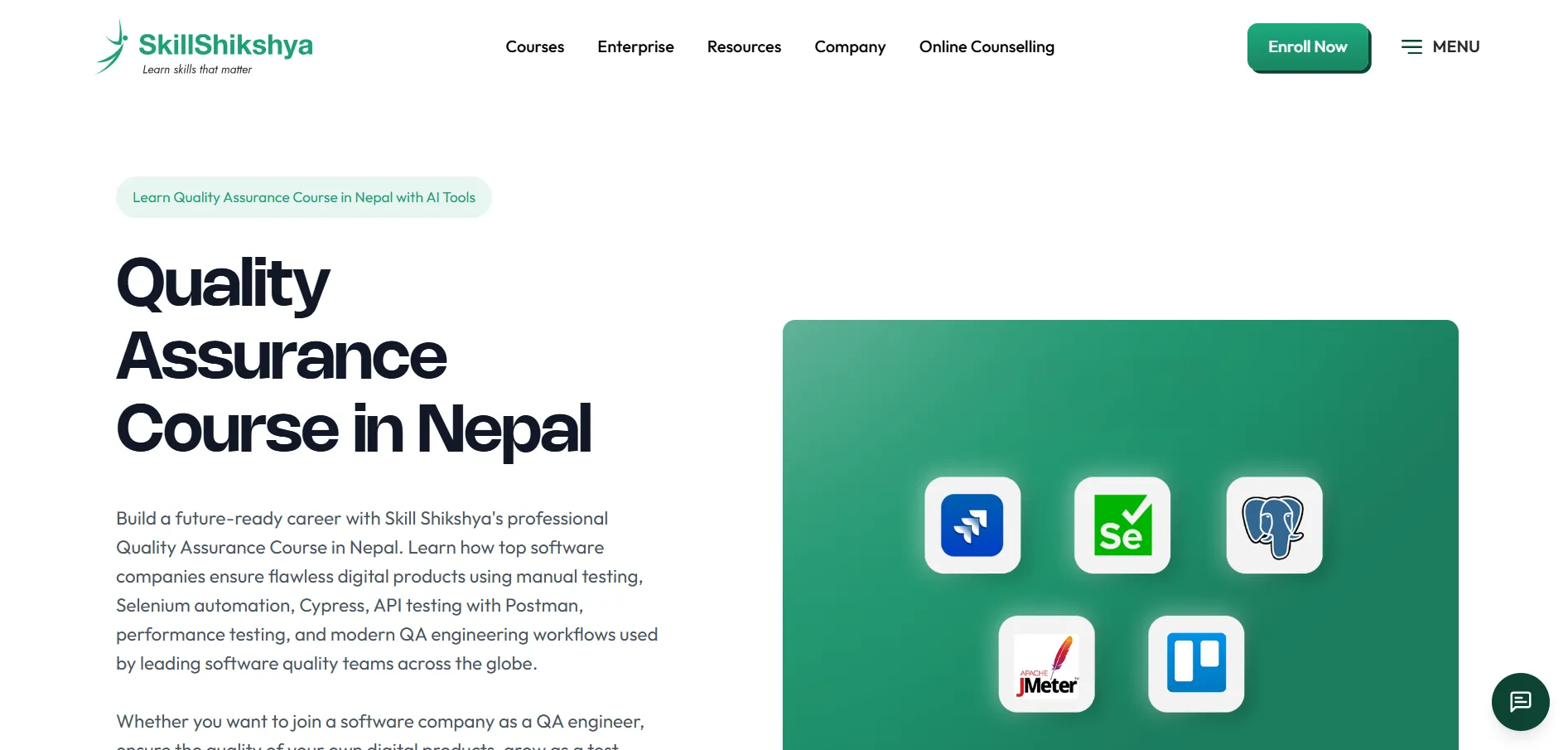
Skill Shikshya's Quality Assurance Training Course in Nepal is the top QA course in Nepal, offering a practical, tool-first curriculum with guaranteed job or internship placement for every student who completes the program.
Location: Siddhartha Marga / Sankhamul-31, Baneshwor, Kathmandu
Who it is for: Complete beginners, including those from non-IT backgrounds, who want to become job-ready QA engineers in 3 months. Morning, evening, and weekend batches are available, with online options for students outside Kathmandu.
What sets Skill Shikshya apart: Job or internship is guaranteed on completion. No other institute on this list offers this level of outcome accountability.
| Detail | Information |
|---|---|
| Duration | 3 months |
| Fee | NPR 30,000 |
| Mode | Hybrid |
| Location | Siddhartha Marga / Sankhamul-31, Baneshwor, Kathmandu |
| Certification | Certified QA Professional |
| Placement | Job or internship guaranteed |
Why Choose Skill Shikshya:
Project-first curriculum: Graduate with documented test cases, a working Selenium automation framework on GitHub, a Postman collection with test assertions, and a JMeter performance test project. Every module ends with a portfolio-ready deliverable you can show to any employer in Nepal's IT market.
- Job or internship guaranteed: The only institute on this list that guarantees a placement outcome, not just placement support. Every student who completes the program gets connected to a job or internship opportunity.
- Full QA toolchain: The course covers manual testing fundamentals, JIRA, TestRail, SDLC, STLC, Agile workflow, Selenium with Java or Python, API testing with Postman and Newman, performance testing with JMeter, and CI/CD basics with GitHub Actions. You graduate knowing every top QA tool that Nepal's IT companies use in production.
- ISTQB preparation: Course content aligns directly with the ISTQB Foundation Level syllabus, so graduates are positioned to sit the exam immediately after completing training without paying for additional preparation.
- Certified QA Professional credential: Recognized by employers at Nepal's software companies, outsourcing firms, fintech startups, and international remote teams hiring Nepali QA engineers.
- Hybrid learning with flexible batches: Morning, evening, and weekend schedules accommodate both full-time students and working professionals. Online batches serve students outside Kathmandu who want structured training without relocating.
- Best value: At NPR 30,000 with guaranteed placement, a comprehensive 3-month curriculum covering every tool in the QA software stack, and real lab access from day one, Skill Shikshya delivers more outcome per rupee than any other institute on this list.
2. Deerwalk Institute of Technology
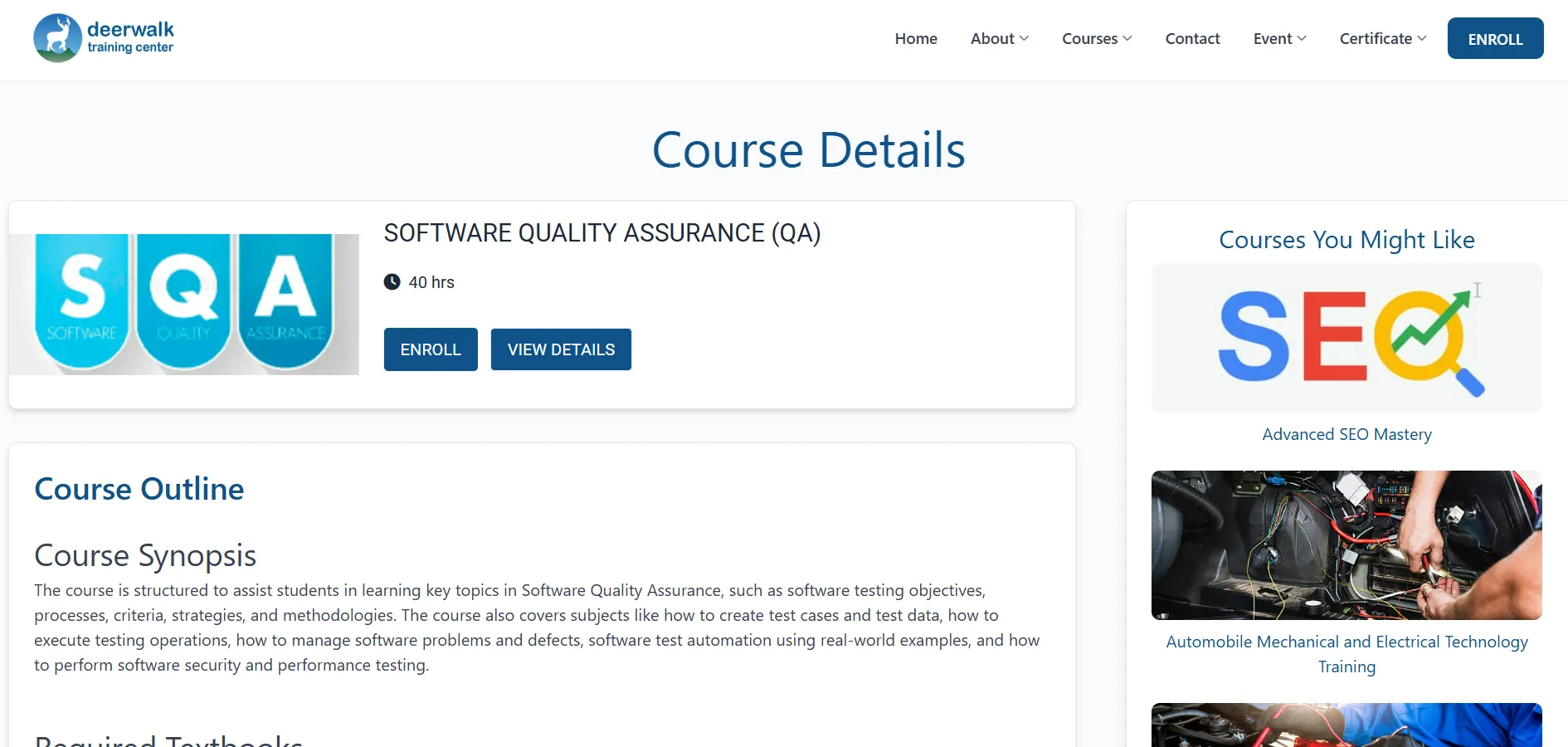
Deerwalk Institute of Technology is one of Nepal's established IT training institutions, offering a structured QA and software testing course with a focus on both manual and automation testing skills.
Location: Sinamangal, Kathmandu
| Detail | Information |
|---|---|
| Duration | 3 months |
| Fee | NPR 35,000 |
| Mode | Hybrid |
| Location | Sinamangal, Kathmandu |
| Certification | Yes |
| Placement | Internship support |
Key Highlights:
The curriculum covers manual testing fundamentals, test case design, JIRA, Selenium basics, and the QA process within Agile teams. Deerwalk is an established institute with a recognized name in Nepal's IT training market, and the alumni community provides some networking value when you start your job search.
Things to Consider: At NPR 35,000, Deerwalk sits in the mid-range on cost but offers internship support rather than guaranteed placement. Students should confirm the depth of automation coverage and whether the Selenium training includes framework-level work such as Page Object Model implementation, or just basic scripting, before enrolling. Ask specifically whether API testing with Postman is included in the fee, since mid-level QA roles in Nepal increasingly require this skill.
3. Broadway Infosys
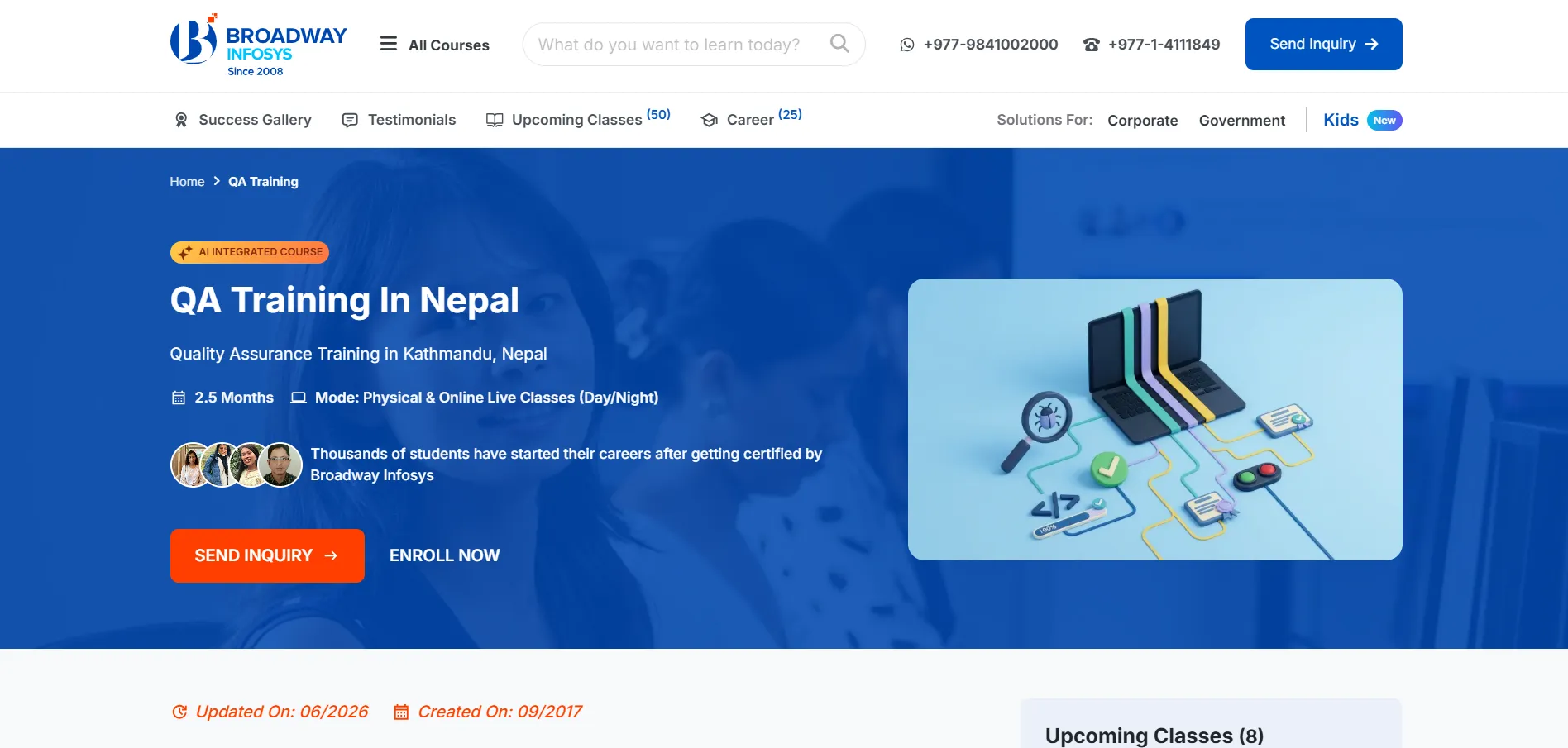
Broadway Infosys is an established IT training institute at Sriganesh Marg, Tinkune, Kathmandu, offering a 3 to 4-month QA program built around both manual and automation testing practice.
Location: Sriganesh Marg, Tinkune, Kathmandu
| Detail | Information |
|---|---|
| Duration | 3 to 4 months |
| Fee | NPR 38,000 |
| Mode | Hybrid |
| Location | Sriganesh Marg, Tinkune, Kathmandu |
| Certification | Yes |
| Placement | Internship support |
Key Highlights:
The program covers SDLC, STLC, test planning, manual testing, Selenium, JIRA, and QA basics for Agile environments. Broadway's established brand and large alumni network add some placement credibility in Nepal's job market. The certification carries institutional recognition for local employers.
Things to Consider: At NPR 38,000, Broadway is the most expensive option on this list, and placement remains at the internship support level rather than guaranteed outcomes. Students should confirm whether automation framework training covering Page Object Model and CI/CD integration is included at this price point. Given that the scope of QA in Nepal now heavily favors automation skills, you want to verify this before committing to the highest fee on the list.
4. TechAxis
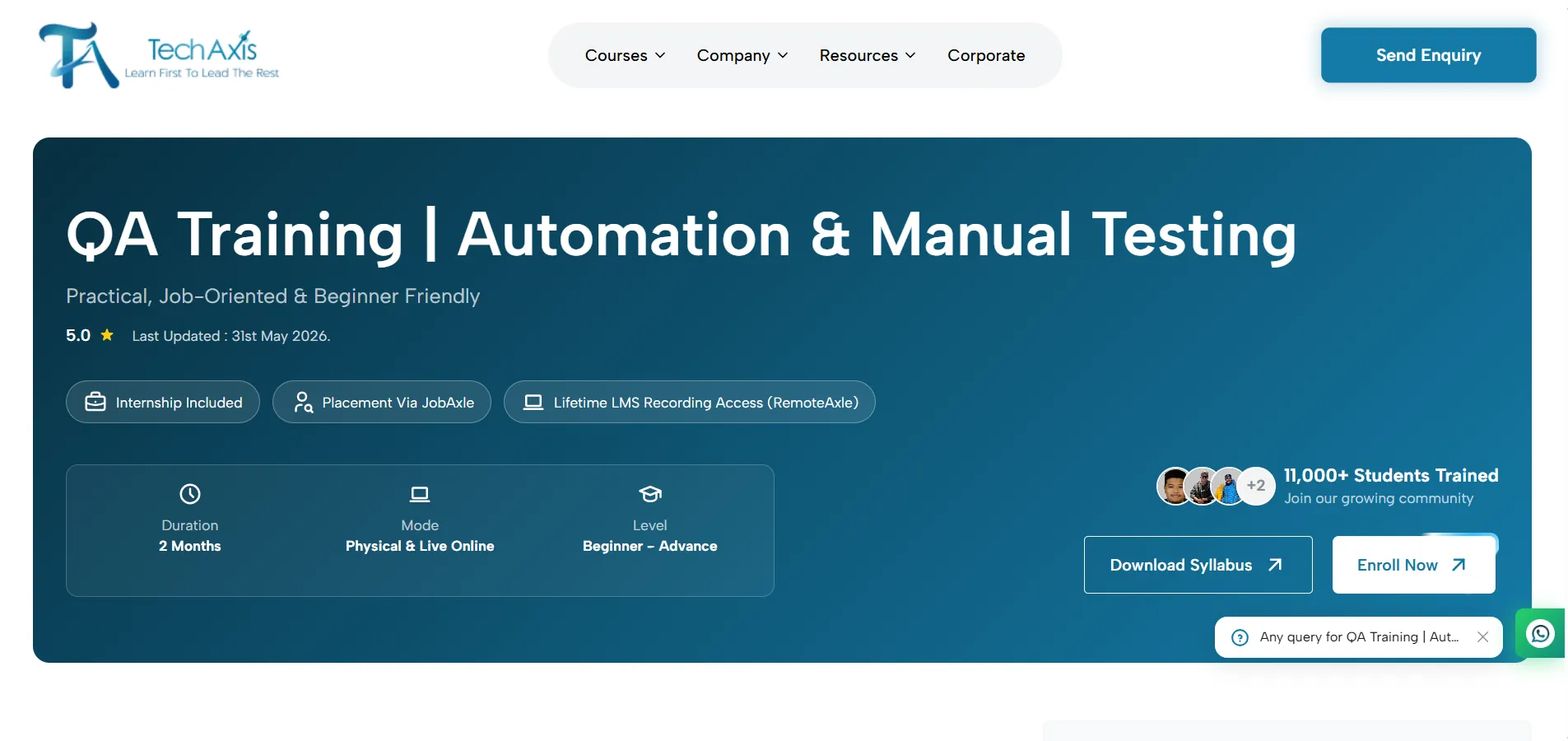
TechAxis is based in Lalitpur and has been running technical training programs since 2017, offering a QA and software testing course connected to their JobAxle hiring platform for Nepal's IT companies.
Location: Lalitpur
| Detail | Information |
|---|---|
| Duration | 2.5 to 3 months |
| Fee | NPR 32,000 |
| Mode | Hybrid |
| Location | Lalitpur |
| Certification | Yes |
| Placement | Internship support via JobAxle |
Key Highlights:
The curriculum covers manual testing, test case writing, JIRA, Selenium basics, and QA in Agile sprints. The JobAxle integration gives graduates direct exposure to IT company job listings in Nepal, which provides a practical channel to the hiring market. Practical exercises and project-based assessments run throughout the program.
Things to Consider: TechAxis is a reasonable option for students in Lalitpur who want to avoid commuting to Kathmandu. Confirm the depth of automation coverage and whether Postman and API testing are included in the syllabus. The shorter 2.5 to 3-month timeline compared to other institutes is worth exploring in detail so you understand whether the compressed schedule affects the depth of automation training.
5. Mindrisers Institute of Technology
Mindrisers Institute of Technology is located at Kumari Galli 2, Putalisadak, Kathmandu, and offers one of the more affordable QA training pathways in Nepal at NPR 25,000.
Location: Kumari Galli 2, Putalisadak, Kathmandu
| Detail | Information |
|---|---|
| Duration | 3 months |
| Fee | NPR 25,000 |
| Mode | Hybrid |
| Location | Kumari Galli 2, Putalisadak, Kathmandu |
| Certification | Yes |
| Placement | Internship support |
Key Highlights:
The program covers QA fundamentals, manual testing, JIRA, basic Selenium, and software testing processes. Mindrisers is the most budget-friendly option on this list and provides basic career support through its alumni connections.
Things to Consider: Mindrisers is worth considering for students with a limited training budget. Verify whether automation framework training, Postman API testing, and performance testing with JMeter are included in the NPR 25,000 fee or require additional payment. Confirm placement outcomes specifically, asking how many graduates land actual QA roles rather than just internships, and within what timeframe after completing the program.
Free QA Courses Online Worth Exploring Before You Enroll
Paid training delivers structure, mentorship, and placement support. But before you spend NPR 25,000 to NPR 38,000, these free resources let you validate that QA is the right career track, build foundational knowledge, and arrive at your paid program with a head start.
- ISTQB Foundation Level Syllabus (Free PDF): The globally recognized QA baseline. Download and study the official syllabus from ISTQB.org free of charge. Understanding the foundation concepts before joining a paid program helps you absorb classroom content faster and prepares you to sit the certification exam sooner after completing training.
- Software Testing Mentor (YouTube): One of the best free channels for manual testing fundamentals, test case writing, and JIRA basics. Highly relevant for QA freshers in Nepal starting from zero with no prior IT background.
- Automation Step by Step (YouTube): Covers Selenium, Cypress, API testing with Postman, and CI/CD basics in structured, beginner-friendly video series. A strong complement to any paid QA program and useful for preview before classes begin.
- Postman Learning Center (Free): Postman's official free learning center covers API testing fundamentals, collection building, and the Postman API Fundamentals certification, all at no cost. Completing the free certification before your paid course adds a recognized credential to your profile from day one.
- SauceDemo and DemoQA Practice Sites: Open-source applications built specifically for QA practice. Write test cases and build a Selenium portfolio against these real applications before your paid program begins so you arrive with documented work already on GitHub.
Paid vs Free QA Courses: Which Is Right for You?
| Factor | Free Courses | Paid Courses |
|---|---|---|
| Cost | Free | NPR 25,000 to 38,000 |
| Curriculum depth | Surface to intermediate | Comprehensive |
| Tool lab access | Limited | Hands-on with JIRA, Selenium, Postman, JMeter |
| Mentorship | None | Direct instructor access |
| Project guidance | None | Real test frameworks with expert feedback |
| Certification | Completion badges only | QA Professional credential + ISTQB prep |
| Placement support | None | Internship or job support |
| Accountability | Self-paced, easy to quit | Structured and scheduled |
| Best for | Exploring the field | Building a career |
When free resources are enough:
Free courses work if you want to confirm QA is the right career track before committing to a paid program, if you want to build manual testing and JIRA basics before starting formal training, or if you are a developer or analyst who needs surface-level QA awareness to collaborate better with QA engineers on your team.
When a paid QA course is worth the investment:
A paid program earns its cost when you are serious about landing a QA role in Nepal's IT market and need structured, guided practice with real tools. If you need lab time writing actual Selenium scripts, building Postman collections, and running JMeter load tests with instructor feedback on your work, free resources will not get you there. If you want placement support, technical interview preparation, and a QA certification that strengthens your CV for Nepal's employers, a structured paid program is the right investment. To understand the full scope of QA in Nepal and where the industry is heading, read the dedicated guide before you decide.
QA Careers in Nepal: What You Can Do After This Course
Completing a QA training program in Nepal opens a clear and well-paid career path. Here is an honest look at the roles you can target, starting from your first QA internship through to senior automation and leadership positions.
- Manual QA Tester: Write and execute test cases, log bugs in JIRA, retest fixes, and participate in Agile sprints. This is the most common entry-level QA role in Nepal and the most actively hired position at software companies, fintech firms, and outsourcing organizations for graduates of QA training programs. To understand the full scope of what a QA engineer does day-to-day, the dedicated role guide covers every responsibility in detail.
- QA Analyst: Analyze requirements, write test plans, define test scope, and track quality metrics across sprints. This is a step up from manual testing that requires a deeper understanding of the SDLC and project management processes. Most QA engineers reach this level after 1 to 2 years of hands-on experience.
- Automation QA Engineer: Build and maintain Selenium or Cypress automation frameworks, integrate test suites into CI/CD pipelines, and run regression suites on every code push. Automation engineers command 40 to 60% higher salaries than manual-only roles. This is the natural career progression after gaining 1 to 2 years of manual QA experience and building real automation projects. The types of software testing guide explains where automation fits within the broader testing landscape.
- API QA Engineer: Test backend APIs using Postman and Newman, validate data integrity, check authentication flows, and integrate API test suites into deployment pipelines. API QA is one of the most in-demand specializations in Nepal's fintech and outsourcing sectors right now, and it is a skill you can start building in any structured QA training program.
- Performance QA Engineer: Design and run load, stress, and spike tests using JMeter or k6 to validate system stability under traffic. High demand exists at Nepal's fintech companies before festival-season traffic peaks, and performance QA skills open doors to specialized, higher-paying roles. Review the top QA tools of 2026 to understand which performance testing platforms Nepal's companies currently use.
- QA Intern: Entry-level exposure at Nepal's IT companies while you build hands-on experience toward a full-time engineer role. This is the standard first step for graduates of QA training programs in Kathmandu, and it typically converts to a full-time position within 3 to 6 months for candidates who perform well.
QA Salary in Nepal: What to Expect After Training
| Experience Level | Monthly Salary (NPR) |
|---|---|
| QA Intern | NPR 10,000 to 25,000 |
| Junior Manual QA Tester (0 to 1 year) | NPR 25,000 to 50,000 |
| QA Engineer (1 to 3 years) | NPR 55,000 to 1,02,000 |
| Senior QA / Automation Engineer (3 to 5 years) | NPR 1,10,000 to 2,21,000 |
| QA Lead or Manager (5+ years) | NPR 1,50,000 to 3,00,000+ |
| Remote QA for international clients | Significantly higher |
Sources: Glassdoor Nepal, KumariJob, NecJobs (June 2026)
Three factors drive QA salary growth in Nepal faster than anything else. Automation skills in Selenium, Cypress, or Playwright add 40 to 60% over manual-only base salaries. API testing with Postman is the single fastest skill to push a junior engineer into the mid-level salary band. ISTQB certification adds credibility specifically for international outsourcing clients who compare Nepali candidates against certified engineers from other markets.
Which QA Course in Nepal Is Right for You?
Every student's situation is different. Here is a direct decision guide based on where you are starting from.
- You are a fresh student or +2 graduate: Start with a structured paid course that includes JIRA and Selenium labs, ISTQB preparation, and guaranteed placement support. The investment pays back quickly once you land your first QA role, and the structured environment builds habits that self-study cannot replicate. Follow the QA career roadmap for Nepal to understand exactly what comes after your training program ends.
- You are a developer looking to add QA skills: You already understand code. What you need is the testing framework: test strategy, automation frameworks, CI/CD integration, and API testing. Choose a course that goes deep on automation rather than spending classroom time on basic SDLC concepts you already know from development work.
- You are making a career switch from a non-IT background: Manual testing is the clearest non-coding entry point into IT. A 3-month QA program teaches you everything you need to start as a junior manual QA tester without requiring prior programming knowledge. Many of Nepal's working QA engineers made exactly this transition from non-IT backgrounds.
- You want to pursue remote QA work: Prioritize courses that prepare you for ISTQB certification, include Selenium and Postman labs, and give you documented project work to present on GitHub. Remote QA opportunities for Nepali professionals are growing through international outsourcing platforms, and certification plus a strong GitHub portfolio are the two things that differentiate candidates in that hiring market.
Conclusion
Nepal's IT industry needs trained QA engineers more than it needs any other entry-level tech role right now, and a 3-month structured training program is the fastest way to get there. Whether you are a fresh graduate, a career switcher, or a working professional looking for a clear path into software, the opportunity is real and the timeline is short.
The five institutes in this guide all offer genuine training, but only Skill Shikshya backs its program with a guaranteed job or internship placement. At NPR 30,000 with a full toolchain curriculum covering everything from manual testing to Selenium, Postman, and JMeter, it delivers the strongest outcome per rupee on this list.
If you are still mapping your path, the QA career roadmap for Nepal is the right place to start. If you are ready to enroll, the Quality Assurance Training Course at Skill Shikshya gets you job-ready in 3 months with a placement guarantee behind it. The scope of QA in Nepal keeps growing, and the right time to get trained is now.
Frequently Asked Questions
How do Nepal's QA training institutes compare?
What do QA training institutes in Nepal charge?
What is the QA salary in Nepal?
Which QA training institute in Nepal is best for beginners?
Is coding required to join a QA training program in Nepal?
Does ISTQB certification matter for QA jobs in Nepal?
Are there QA job opportunities in Nepal after training?
What's the difference between manual and automation QA testing?
About Author:

Ms. Rashmi Singh is a Dynamic Project Manager and QA Mentor with over 6 years of experience driving the end-to-end delivery of networking, SaaS, AI, and cybersecurity solutions. She is passionate about bridging the gap between technical execution and operational excellence, ensuring that every digital product is robust, secure, and high-performing.
With a proven track record of spearheading major product launches like Mikha, Docs.Ink, and Koili, Ms. Singh brings deep expertise in Agile methodologies and cross-functional leadership to her mentoring. She enjoys helping aspiring professionals master the complexities of enterprise-level implementations from SIEM systems to AI-driven products while nurturing a mindset of innovation and meticulous attention to detail.