DevOps vs. DevSecOps: Understanding the Difference
The tech landscape changes fast. A few years ago, deploying software once a month was considered fast. Today, top engineering teams deploy code multiple times a day. But as delivery speeds accelerate, a critical question emerges: Is your code actually secure?
When exploring how modern teams balance speed and security, the conversation always comes down to DevOps vs DevSecOps. While they sound incredibly similar, understanding what is DevOps vs DevSecOps can completely reshape how your engineering team builds, tests, and deploys applications.
Whether you're an aspiring engineer, IT professional, or someone considering a DevOps career, understanding these concepts is essential for success in today's technology landscape. Many professionals begin by enrolling in a DevOps course to build practical skills in automation, CI/CD, cloud computing, containers, and modern software delivery practices.
Let's dive into how these two methodologies compare, why the tech industry is shifting, and what it means for your career.
What is DevOps? An Overview
At its core, DevOps is a cultural and technical shift designed to break down the traditional walls between software development (Dev) and IT operations (Ops).
If you're new to the concept, start by understanding about DevOps and how it revolutionized software development and IT operations.
Before DevOps, developers wrote code and handed it over to operations to deploy and maintain. This created massive bottlenecks. DevOps solves this by combining these teams into a unified workforce that shares responsibility for the entire application lifecycle.
The ultimate goal of DevOps is simple: Maximize deployment velocity and maintain high system reliability.
Essential DevOps Tools for Continuous Integration
To make rapid deployments possible, DevOps relies heavily on automation tools. These tools are chained together to handle everything from version control to automated testing:
- Version Control: Git, GitHub, GitLab
- Continuous Integration / Continuous Deployment (CI/CD): Jenkins, GitHub Actions, CircleCI
- Containerization & Orchestration: Docker, Kubernetes
- Infrastructure as Code (IaC): Terraform, Ansible
Choosing the right DevOps tools is essential for building efficient, automated, and scalable software delivery pipelines.
What is DevSecOps?
As software delivery speeds skyrocketed under DevOps, security teams struggled to keep up. Traditional security checks were performed at the very end of the development lifecycle. If a vulnerability was discovered right before release, the entire deployment had to be put on hold, shattering the speed gains that DevOps promised.
This friction birthed DevSecOps (Development, Security, and Operations).
What is devsecops exactly? It is the evolution of DevOps that treats security as a core, shared responsibility from day one. Instead of auditing code at the final gate, DevSecOps introduces a "shift-left" security framework. This means security testing happens early and continuously throughout the planning, coding, and building stages.
Why Do We Need DevSecOps?
In our highly connected digital ecosystem, cyber threats are more sophisticated than ever. Relying on an annual security audit or a quick scan before launch leaves platforms wide open to breaches.
Why do we need devsecops boils down to three primary benefits:
- Reduced Costs: Catching a security flaw during the coding phase is significantly cheaper than fixing a live exploit in production.
- Uninterrupted Velocity: Automated security checks prevent massive pre-release bottlenecks.
- Shared Accountability: Security is no longer "someone else's job"; it becomes ingrained in the developer mindset.
Master Linux, Git, Docker, Kubernetes, AWS, and CI/CD through hands-on projects and real-world labs.
The DevSecOps Pipeline and Process
A successful devsecops methodology requires rewriting the standard deployment workflow. Security cannot be a standalone phase; it must be woven directly into every single layer of the workflow.
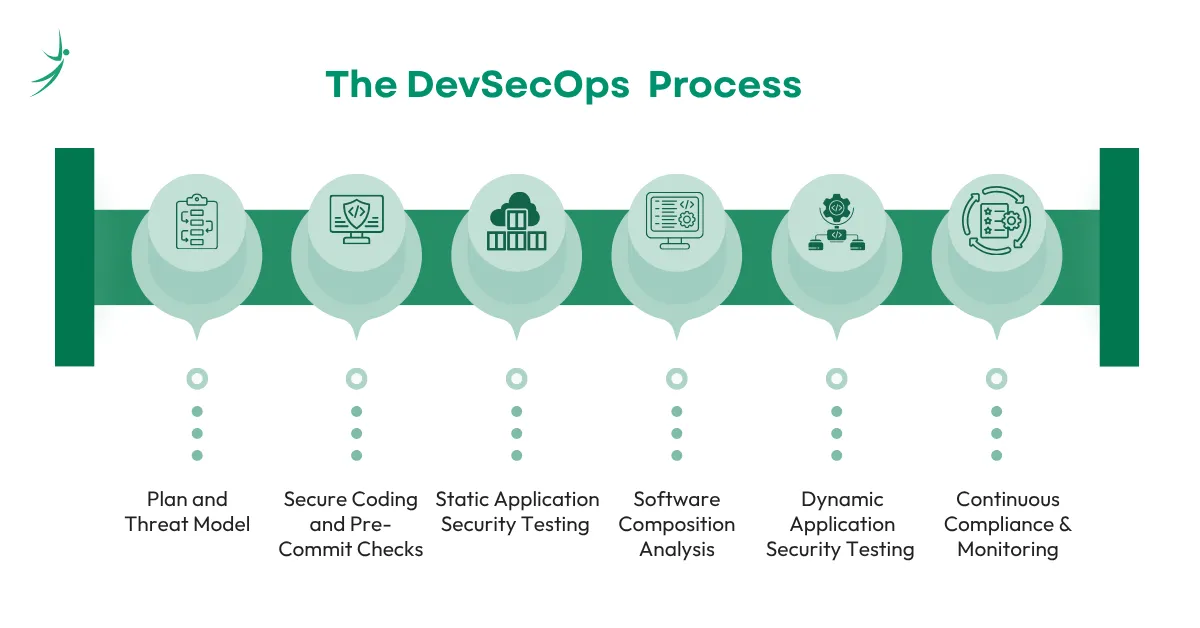
Here is how a standard devsecops process operates sequentially in production environments:
- Plan and Threat Model: Before writing a single line of code, developers and security teams collaborate to analyze potential threats, design constraints, and compliance requirements.
- Secure Coding and Pre-Commit Checks: As developers write code, IDE plugins and pre-commit hooks scan for hardcoded credentials, secrets, or insecure code patterns in real-time.
- Static Application Security Testing (SAST): Once code is pushed to the repository, the devsecops pipeline automatically triggers SAST tools to analyze the raw, uncompiled source code for structural vulnerabilities.
- Software Composition Analysis (SCA): The pipeline runs SCA scans to evaluate all open-source libraries and third-party dependencies, instantly flagging outdated components with known vulnerabilities (CVEs).
- Dynamic Application Security Testing (DAST): When the application is built into a staging environment, automated DAST tools simulate live attacks against the running application to catch runtime vulnerabilities and configuration flaws.
- Continuous Compliance & Monitoring: Post-deployment, runtime defense tools and automated log analyzers monitor the live infrastructure for anomalies, drift, and unexpected security threats.
Modern DevSecOps Tools & The Role of AI
To prevent security checks from slowing things down, teams rely on dedicated DevSecOps automation tools. Rather than replacing traditional DevOps tooling, these security layers integrate directly into your existing infrastructure:
- SAST & SCA Scanners: Snyk, SonarQube, Veracode, Checkmarx
- Container Security: Aqua Security, Trivy, Prisma Cloud
- Secrets Detection: GitGuardian
Furthermore, devsecops ai has completely shifted how vulnerabilities are managed. Modern AI-driven tooling doesn't just flag a security bug; it automatically drafts secure code fixes and reviews open-source packages for behavioral anomalies before a developer even merges their pull request.
DevOps vs. DevSecOps: The Core Similarities
While the industry often highlights their differences, it's vital to remember that devops and devsecops are built on the exact same structural foundation. DevSecOps is not a replacement for DevOps; it is its natural perfection.
Both methodologies share these core elements:
- Automation First: Both rely heavily on removing human error through automated pipelines.
- Culture of Collaboration: Both break down isolated organizational silos to foster open, cross-functional communication.
- Continuous Feedback Loops: Both depend on real-time logging, telemetry, and monitoring to iteratively improve software quality.
DevOps vs. DevSecOps: The Differences Explained
The true division lies in priority and ownership. In a standard DevOps model, speed and feature delivery are king. In DevSecOps, speed and safety are treated as equal parameters.
| Feature | DevOps | DevSecOps |
| Primary Focus | Speed of delivery, feature development, and uptime. | Fast delivery baked with proactive security and risk mitigation. |
| Security Ownership | Delegated to a separate, isolated Security/QA team at the end. | Shared equally among developers, ops, and security engineers. |
| Core Workflow | Continuous Integration & Continuous Deployment (CI/CD). | Automated CI/CD paired with Shift-Left Security Scans. |
| Target Metrics | Deployment frequency, Lead time for changes, MTTR. | Vulnerability discovery rate, Time-to-patch, Compliance drift. |
| Testing Approach | Automated functional, performance, and unit testing. | SAST, DAST, SCA, Secrets detection, and Pen testing. |
2026 Global Salary Breakdown: DevOps vs. DevSecOps
In the Global tech sectors, the difference between the two tracks usually comes down to base pay vs. total compensation (which includes stock options, equity, and bonuses).
- DevOps Engineer Average: Base salary spans between $130,000 and $144,000 per year. Total compensation packages at major tech hubs (like Meta, AWS, or Apple) frequently clear $200,000 to $250,000+ for upper-tier talent.
- DevSecOps Engineer Average: Base salary scales higher, resting between $138,000 and $182,147 per year. Senior architects or specialists with active federal or aerospace security clearances regularly pull $210,000 to $275,000+.
Experience Tier Comparison
| Experience Level | DevOps Base Salary Range | DevSecOps Base Salary Range |
| Entry-Level (0-2 Years) | $81,000 – $95,000 | $95,000 – $130,000 |
| Mid-Level (3-6 Years) | $110,000 – $135,000 | $130,000 – $170,000 |
| Senior/Lead (6-10 Years) | $140,000 – $179,000 | $165,000 – $215,000 |
| Principal / Staff / Architect | $175,000 – $220,000+ | $210,000 – $275,000+ |
The salary listed above reflects actual market averages for 2026 collected from (KORE1, Glassdoor).
Prioritizing Security: DevSecOps Best Practices
Simply buying security tools won’t suddenly fix your pipeline. To implement effective devsecops practices, engineering departments must alter how they manage active devsecops projects.
- Implement "Shift Left" Early: Introduce lightweight code scanners inside the developer's IDE so they fix issues while actively typing code, long before it reaches a server.
- Automate Threat Modeling: Keep an updated visual blueprint of your system's data flows so you can immediately see where untrusted inputs interface with your core application databases.
- Build Security Champions: Train selected developers within your product squads to act as internal security advocates. This bridges the gap between raw engineering and strict compliance rules.
Transitioning from DevOps to DevSecOps
What to Expect When Transitioning
When making the jump, expect initial cultural pushback. Developers often worry that added security checks will ruin their metrics or drag down delivery speed. You will likely uncover a backlog of hidden technical debt and unpatched dependencies that require active engineering time to fix.
Preparing to Transition
Start small. Do not try to inject ten security tools into your pipeline overnight. Begin by introducing basic Software Composition Analysis (SCA) to check for broken dependencies. Once your team adjusts to managing those alerts, slowly introduce static code analysis (SAST) and container shielding.
Common Pitfalls to Avoid
- Alert Fatigue: Turning on every single security rule at maximum severity will flood your engineers with thousands of warnings. This leads to developers ignoring alerts entirely. Fine-tune your rules to highlight only critical and high-risk items first.
- Forcing Tools Without Training: Dropping high-end security enterprise platforms onto your team without proper devsecops training results in broken pipelines and frustrated staff. Change the mindset before changing the tooling.
Kickstarting Your Career in DevOps and DevSecOps
The massive market pivot toward continuous security has created a dramatic talent shortage, driving up career demand across the globe.
If you're planning a DevOps career path, learning both DevOps and DevSecOps can open doors to some of the most in-demand technology roles.
DevSecOps Training, Internships, and Free Certifications
If you are completely new to the space, start by exploring a comprehensive devsecops tutorial online. Building a portfolio with hands-on devsecops projects such as configuring a secure GitHub Actions pipeline that builds a Docker container and automatically checks it with Trivy will make you highly competitive for a devsecops internship.
To validate your skills, look into highly regarded devsecops free certification tracks or introductory courses offered by major cloud platforms, such as:
- GitLab Certified DevSecOps Specialist
- Practical DevSecOps (Introductory Webinars & Labs)
- AWS Certified DevOps Engineer / Microsoft Certified: DevOps Engineer Expert
Benefits and Challenges
DevOps: Speed & Reliability
DevOps focuses on breaking down the walls between development (the people who write code) and operations (the people who deploy and maintain it).
The Benefits
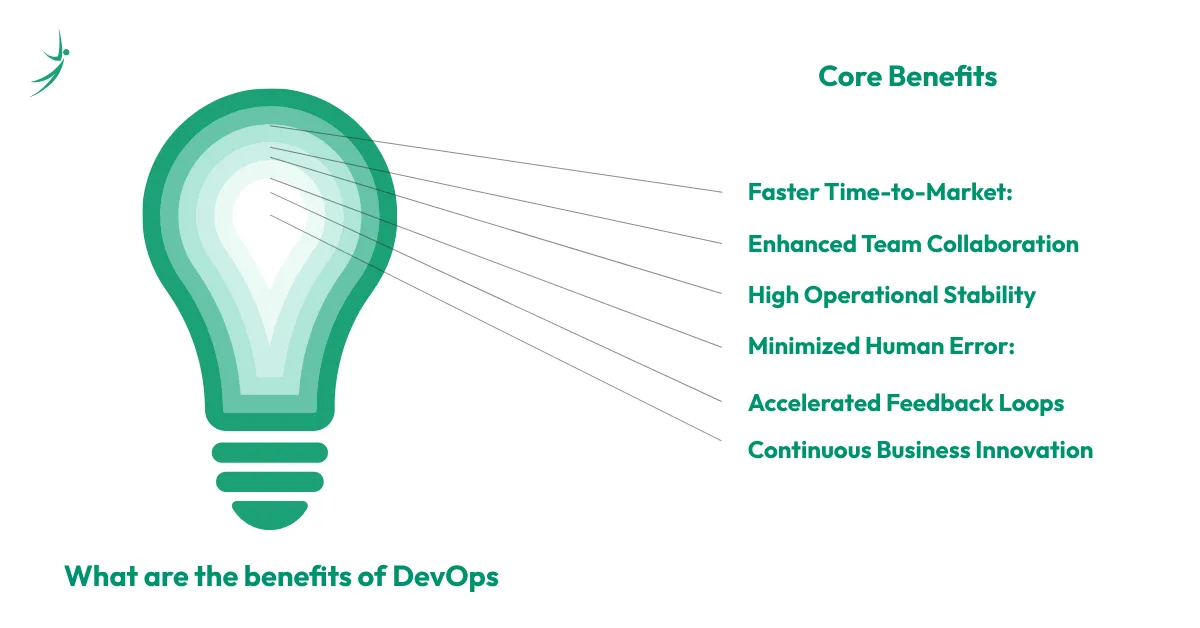
- Faster Time-to-Market: Automated CI/CD pipelines enable engineering teams to deploy features and bug fixes multiple times a day instead of waiting for slow, monthly release cycles.
- Enhanced Team Collaboration: Eliminating operational silos means developers and systems engineers share a single goal, improving organizational morale and reducing finger-pointing when things break.
- High Operational Stability: Continuous monitoring and automated regression testing ensure that new code drops do not unexpectedly crash your production environment or disrupt the user experience.
- Minimized Human Error: Automating infrastructure setup and deployment tasks eliminates the risky guesswork, manual mistakes, and inconsistencies of manual server configuration.
- Accelerated Feedback Loops: Rapid automated testing and continuous monitoring immediately flag bugs, allowing developers to identify, understand, and fix issues within minutes of writing the code.
- Continuous Business Innovation: By shifting tedious, repetitive tasks over to automated workflows, developers reclaim up to a quarter of their workweek. This newly freed-up time allows engineering teams to focus on experimenting with fresh features, building prototypes, and solving core user problems.
The Challenges
- Culture Shock: Moving to DevOps requires a massive shift in how people work. Getting legacy teams to adopt a shared-responsibility model usually meets heavy initial resistance.
- Technical Complexity: Managing fragmented microservices across distinct development, staging, and live cloud environments creates significant infrastructure overhead.
- The "Security Blind Spot": Because traditional DevOps prioritizes raw speed, security teams are often left out of the loop, resulting in critical vulnerabilities getting caught too late.
DevSecOps: Agility with Guardrails
DevSecOps is the evolution of DevOps. It takes that high-speed pipeline and injects automated security checkpoints throughout the entire process.
The Benefits
- Massive Cost Savings: Catching a security vulnerability or a broken dependency while a developer is writing code is a fraction of the cost of fixing a live exploit after a breach occurs.
- Proactive Compliance: Instead of scrambling for periodic, stressful manual audits, compliance rules (like GDPR or PCI-DSS) are written as automated code that continually validates your environment.
- Secure Third-Party Code: Automated Software Composition Analysis (SCA) instantly screens open-source libraries, ensuring your team isn't inheriting corrupted or outdated supply-chain dependencies.
- Organic Skill Building: Continuous feedback from automated tools trains developers to write naturally secure code, elevating the entire team's security maturity.
The Challenges
- Severe Alert Fatigue: Security scanners are notorious for generating thousands of warnings, many of which are false positives. If not carefully fine-tuned, developers will start tuning them out entirely.
- Tool Sprawl & Overhead: Injecting SAST, DAST, secrets detection, and container scanners means managing a massive suite of tools. If they don't integrate cleanly, they create massive pipeline friction.
- The Talent Gap: Finding engineers who truly understand code development, cloud operations, and cybersecurity is exceptionally difficult, making hiring and training expensive.
- Potential Pipeline Friction: If security gates are configured too aggressively, they can block builds for minor issues, frustrating developers and delaying critical product updates.
If you want to fast-track your journey with expert mentorship, check out the ultimate DevOps Course at Best IT Training Institute.
Frequently Asked Questions
What is DevSecOps?
Why do we need DevSecOps?
What is the main difference between DevOps and DevSecOps?
How do I start learning DevSecOps as a beginner?
Where can I find a quality DevOps course in Nepal?
Are there any recognized DevSecOps free certifications?
About Author: