How to Become a Graphic Designer: Complete Guide for Beginners (2026) | Skill Shikshya Career Guide
Career Guide •18 Aug 2026•10 min Read
In today's visually driven digital world, brands live or die by how they look and communicate. Every website, app, product package, and social media post is a piece of visual storytelling, and behind each one sits a trained graphic designer shaping how audiences perceive a business. As companies in Nepal and abroad race to build stronger digital identities, the demand for creative professionals who can turn ideas into compelling visuals has never been higher. If you are ready to turn your creativity into a stable, in-demand career, enrolling in a structured graphic design course in Nepal at Skill Shikshya is your best first step. Committing to focused graphic design learning ensures you build both the artistic instincts and technical skills that today's employers and clients expect.
What Is Graphic Design?
To understand the true graphic design meaning, you have to look beyond "making things look nice." A proper definition describes graphic design as the practice of visual communication using typography, imagery, color, and layout to convey messages, solve problems, and influence how people think, feel, and act. If you've ever typed graphic design what is it into a search bar, the simplest answer is this: it's the craft of turning ideas into images that communicate clearly and persuasively.
Everyday examples are all around you the logo on your favorite coffee cup, the layout of a news website, the packaging on a skincare product, or the poster for a local concert. Graphic design also spans several graphic design types, including brand identity design, print design, UI/UX design, packaging design, motion graphics, and editorial design. Each type applies the same core principles differently depending on the medium and the audience it's built for.
What Does a Graphic Designer Do?
A graphic designer is part artist, part problem-solver, and part communicator. Their job isn't just to make things visually appealing it's to make sure every visual element serves a purpose and speaks directly to the intended audience.
Key responsibilities of a graphic designer
- Interpreting client briefs and translating business goals into visual concepts
- Selecting typography, color palettes, and imagery that align with a brand's identity
- Designing logos, marketing materials, packaging, websites, and social media assets
- Using industry-standard software to create, edit, and refine visual content
- Presenting design concepts to clients or stakeholders and incorporating feedback
- Ensuring designs are consistent across print and digital formats
A graphic designer in Nepal typically wears more hats than designers in larger markets handling everything from branding to social media creatives to basic web layouts, especially at agencies and startups where teams are lean. This versatility makes local designers exceptionally well-rounded, but it also means structured training matters even more.
Why Choose a Career in Graphic Design?
Choosing this creative path opens the door to steady demand, flexible work options, and long-term growth.
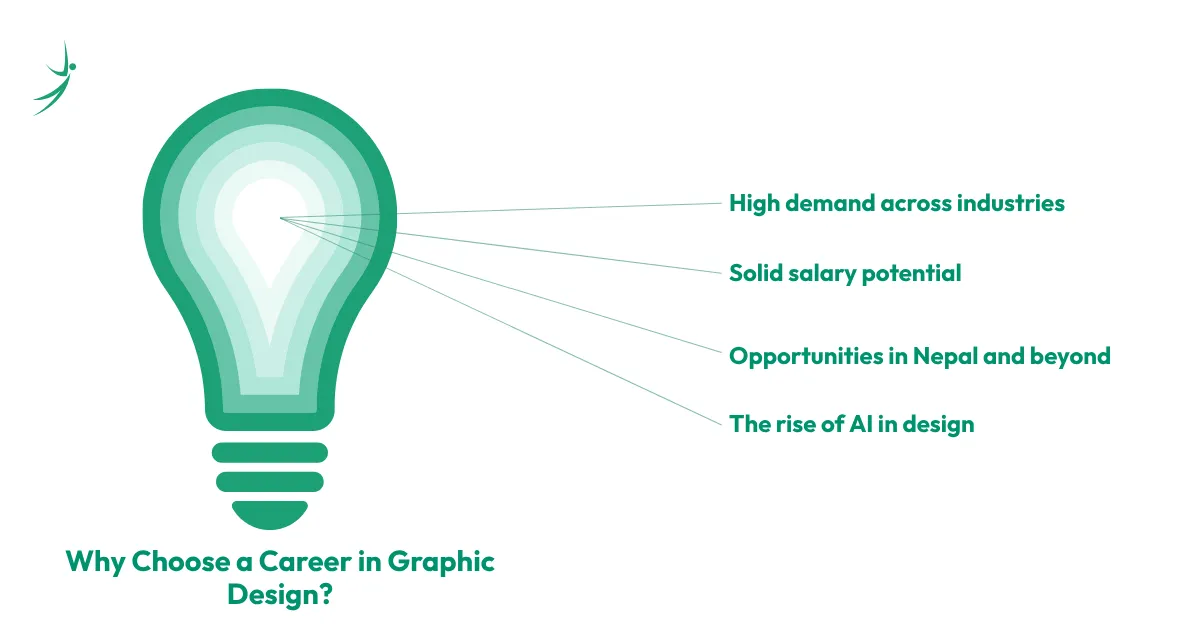
- High demand across industries: Every business from restaurants to banks to tech startups needs visual content to market itself. This universal need means design skills remain relevant regardless of economic shifts or industry trends.
- Solid salary potential: Skilled designers are well compensated for the value they bring to marketing and branding efforts. The average graphic designer salary in Nepal has climbed steadily as more agencies, e-commerce brands, and IT companies compete for design talent. Entry-level freelancers can also earn well by taking on multiple small projects simultaneously.
- Opportunities in Nepal and beyond: Graphic design in Nepal is growing fast, driven by the boom in digital marketing agencies, e-commerce, and startup branding needs. Beyond local opportunities, remote and freelance work means Nepali designers can serve international clients without ever leaving Kathmandu.
- The rise of AI in design: Graphic design AI tools like Adobe Firefly, Midjourney, and Canva's AI features are reshaping how designers work, speeding up ideation, generating quick mockups, and automating repetitive tasks. Rather than replacing designers, these tools are becoming assistants that let skilled professionals focus more on strategy, storytelling, and creative direction.
Where Do You Begin? A Step-by-Step Roadmap to Become a Graphic Designer
If you're starting from zero, following a clear roadmap keeps you from feeling overwhelmed by the sheer number of tools and techniques out there.
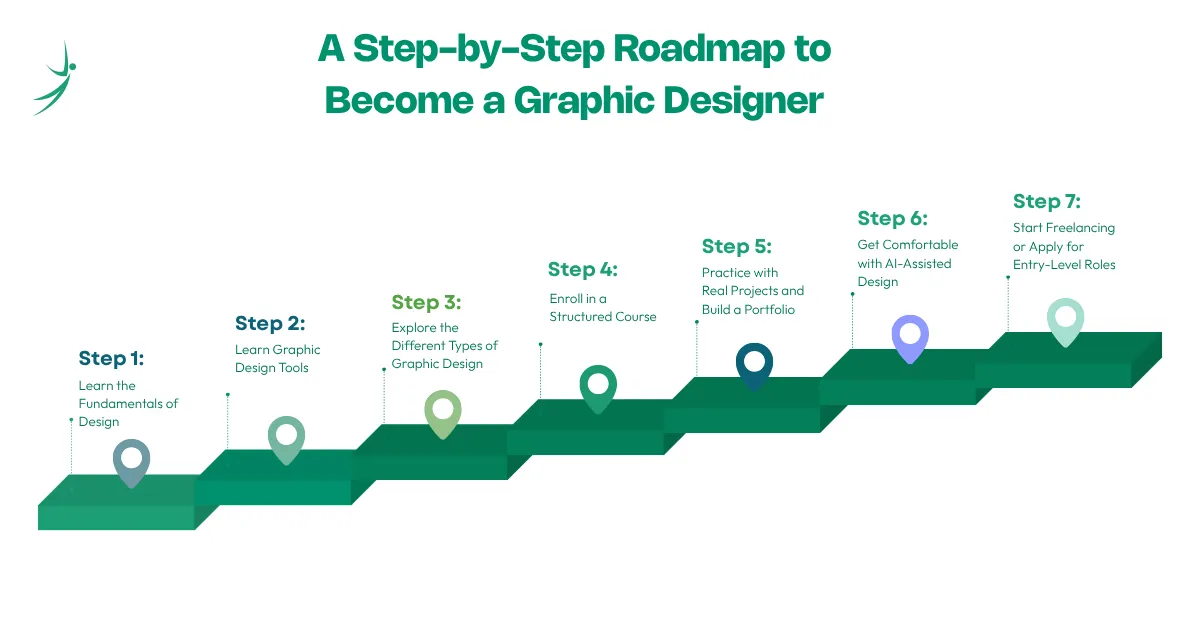
1. Learn the Fundamentals of Design
Before touching any software, you need to understand the principles that make a design work. These fundamentals apply no matter which tool or graphic design types you eventually specialize in:
- Color theory: Understanding how colors interact, evoke emotion, and support brand identity
- Typography: Choosing and pairing fonts that communicate tone and improve readability
- Layout and composition: Arranging visual elements for balance, hierarchy, and flow
- Contrast and spacing: Guiding the viewer's eye and creating visual clarity
2. Learn Graphic Design Tools
Software fluency is what turns your creative ideas into finished work. Mastering the right graphic design tools early on will save you countless hours down the line:
- Adobe Photoshop: Photo editing, retouching, and raster-based design
- Adobe Illustrator: Vector graphics, logos, and scalable illustrations
- Adobe InDesign: Multi-page layouts for brochures, magazines, and reports
- Canva: Fast, template-driven design for social media and marketing content
- Figma: Interface design, prototyping, and collaborative UI/UX work
3. Explore the Different Types of Graphic Design
Once you're comfortable with the basics, start experimenting across different graphic design types to discover where your interests lie branding, packaging, editorial layouts, motion graphics, or UI/UX. Trying a bit of everything early helps you specialize with confidence later.
4. Enroll in a Structured Course
Self-teaching only takes you so far. A well-structured graphic designing course accelerates your growth by giving you mentorship, feedback, and a clear curriculum instead of scattered YouTube tutorials. When comparing graphic design programs, look for ones that combine software training with real client-style projects, not just software tutorials.
5. Practice with Real Projects and Build a Portfolio
Employers and clients want proof of skill, not just certificates. Keep a running list of graphic design ideas redesign a local brand's logo, create a mock social media campaign, or design a fictional product package and turn each one into a portfolio piece. A strong graphic design website showcasing 8-12 polished projects is often more valuable than any certificate.
6. Get Comfortable with AI-Assisted Design
Learn how to responsibly use graphic design AI tools to speed up moodboarding, generate quick concept variations, and handle repetitive production tasks while still relying on your own judgment for final creative decisions.
7. Start Freelancing or Apply for Entry-Level Roles
Once your portfolio is solid, start taking on small freelance projects or apply for junior designer and internship roles. Real client feedback will sharpen your skills faster than practice projects alone.
Essential Skills Every Graphic Designer Needs
Succeeding in this field takes more than software knowledge it requires a blend of creative and professional skills.
- Technical Skills: Comfort with industry-standard software, an understanding of file formats and print/digital specifications, and the ability to adapt across different design types.
- Creative Thinking: The ability to generate original concepts, experiment with styles, and solve visual problems in unexpected ways.
- Attention to Detail: Small inconsistencies in spacing, alignment, or color can undermine an otherwise strong design.
- Communication Skills: You'll constantly explain design choices to clients or teams who may not think visually, so translating creative reasoning into simple language is essential.
- Time Management: Juggling multiple client projects and revisions under deadline pressure is a daily reality for most designers.
Tools Every Graphic Designer Should Learn
| Tool | Category | Primary Use Case |
|---|---|---|
| Adobe Photoshop | Raster Editing | Photo retouching, digital compositing |
| Adobe Illustrator | Vector Graphics | Logos, icons, scalable illustrations |
| Adobe InDesign | Layout Design | Brochures, magazines, multi-page documents |
| Canva | Quick Design | Social media graphics, presentations |
| Figma | UI/UX Design | Website and app interface prototyping |
| CorelDRAW | Vector Illustration | Print-focused vector artwork |
| Adobe Firefly / Midjourney | AI-Assisted Design | Concept generation, rapid mockups |
How Becoming a Graphic Designer Shapes Your Career
Learning design software is just the starting point. What this career actually delivers is creative freedom, flexible income streams, and long-term growth as your style and expertise mature.
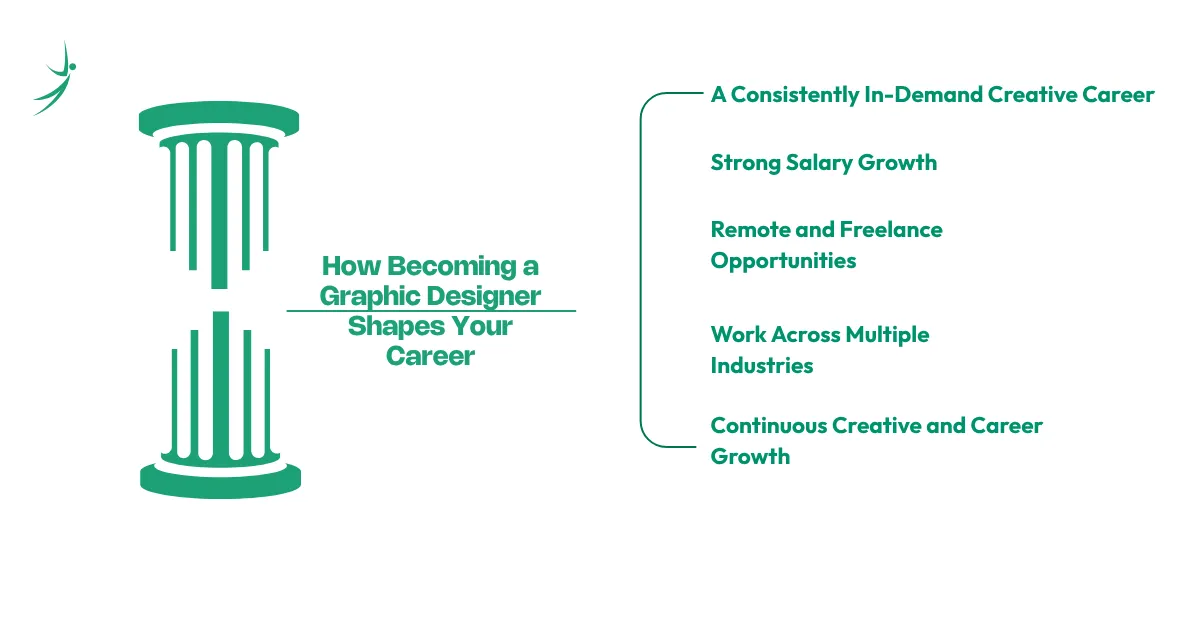
1. A Consistently In-Demand Creative Career
Businesses will always need visual communication, which keeps design roles resilient even during economic slowdowns. Every startup, agency, and enterprise needs someone who can turn ideas into polished visuals, and that steady demand makes design one of the more dependable creative careers available today.
2. Strong Salary Growth
Compensation for designers rises meaningfully with experience, specialization, and portfolio strength. Pay follows a similar curve across Nepal's other digital careers.
| Experience Level | Nepal (NPR/month) | India (INR/year) | USA (USD/year) |
|---|---|---|---|
| Entry-Level (0-1 years) | NPR 25,000 - 45,000 | ₹3 - 5 LPA | $45,000 - $60,000 |
| Mid-Level (2-4 years) | NPR 50,000 - 90,000 | ₹6 - 12 LPA | $65,000 - $90,000 |
| Senior-Level (5+ years) | NPR 1,00,000 - 2,00,000+ | ₹14 - 25 LPA+ | $95,000 - $140,000+ |
3. Remote and Freelance Opportunities
Design work is highly location-independent. With a laptop and an internet connection, you can offer graphic design online services to clients anywhere in the world, making freelancing and remote agency work a realistic path for designers based in Nepal.
4. Work Across Multiple Industries
Unlike more narrowly specialized technical roles, design skills transfer easily across sectors; fashion, tech, food and beverage, education, and healthcare all need visual storytellers. This flexibility keeps the work varied and prevents career stagnation.
5. Continuous Creative and Career Growth
Every project sharpens your instincts. Designers who keep learning move from production-level work into art direction, brand strategy, or creative leadership roles over time.
What's Next After Learning Graphic Design?
Once you've built a strong foundation, you can specialize in higher-paying, more focused roles based on your interests:
- UI/UX Designer: Focuses on designing intuitive, user-friendly digital interfaces for apps and websites
- Brand Identity Designer: Specializes in logos, brand guidelines, and cohesive visual identities
- Motion Graphics Designer: Creates animated visuals for video, social media, and advertising
- Packaging Designer: Designs product packaging that balances shelf appeal with brand consistency
- Illustrator: Produces original artwork for editorial, advertising, or publishing use
- Art Director: Oversees the creative vision and design output of a team or campaign
Learn Graphic Design with Skill Shikshya
If you want structured, mentor-led training instead of piecing together scattered tutorials, finding the right graphic design courses in Nepal is the key first step. Skill Shikshya offers a comprehensive graphic design course in Kathmandu designed to take you from complete beginner to portfolio-ready designer.
Our graphic course covers design fundamentals, industry-standard software, and real client-style projects, giving you the practical experience employers actually look for. Whether you're searching for graphic design classes near me or a well-reviewed graphic design institute near me in the Kathmandu Valley, our in-person sessions are built for hands-on, personalized learning.
Can't attend in person? Our graphic design online classes and flexible graphic design course online options bring the same structured curriculum to your screen, making quality graphic design training accessible no matter where you're based in Nepal.
Frequently Asked Questions
What is graphic design?
Graphic design is the practice of using typography, imagery, color, and layout to visually communicate ideas and messages to an audience.
What does a graphic designer do?
A graphic designer creates visual content logos, marketing materials, packaging, and digital assets that communicates a brand's message and connects with its target audience.
Is graphic design a good career in Nepal?
Yes. With the growth of digital marketing agencies, e-commerce, and startups, demand for skilled designers in Nepal continues to rise, along with strong freelance and remote opportunities.
What is the salary of a graphic designer in Nepal?
Entry-level designers typically earn between NPR 25,000 and 45,000 per month, with senior designers earning NPR 1,00,000 or more depending on experience and specialization.
Which software is used in graphic design?
Common tools include Adobe Photoshop, Illustrator, InDesign, Canva, and Figma, along with emerging AI-assisted tools like Adobe Firefly.
Can I learn graphic design online?
Yes, structured online courses can teach you design fundamentals, software skills, and portfolio-building just as effectively as in-person classes, provided the curriculum includes real project work.
How long does a graphic design course take to complete?
Most structured graphic design courses range from 3 to 6 months, depending on the depth of the curriculum and whether it includes advanced specializations like UI/UX or motion graphics.
Will AI replace graphic designers?
Unlikely. AI tools are speeding up production and ideation, but creative judgment, brand strategy, and client communication remain distinctly human skills that AI can't fully replicate.