Traditional Marketing vs Digital Marketing: Key Differences | Skill Shikshya
Every business, whether a small shop in Kathmandu or a global brand, needs to market itself. The question is no longer whether to market but how. For decades, traditional marketing was the only option. Today, businesses have a powerful alternative, and understanding the difference between traditional marketing and digital marketing is one of the most important decisions a business owner, marketer, or aspiring professional can make.
If you are looking to get started with digital marketing as a career or for your business, understanding how it compares to traditional marketing gives you the full picture before you dive in.
This article compares the two approaches side by side, what they are, how they differ, which works better in different situations, and which makes more sense for businesses in Nepal today.
What is Traditional Marketing?
Traditional marketing refers to any form of promotion that uses offline, non-digital channels to reach an audience. It is the oldest form of marketing, centuries older than the internet, and remains relevant in certain contexts today.
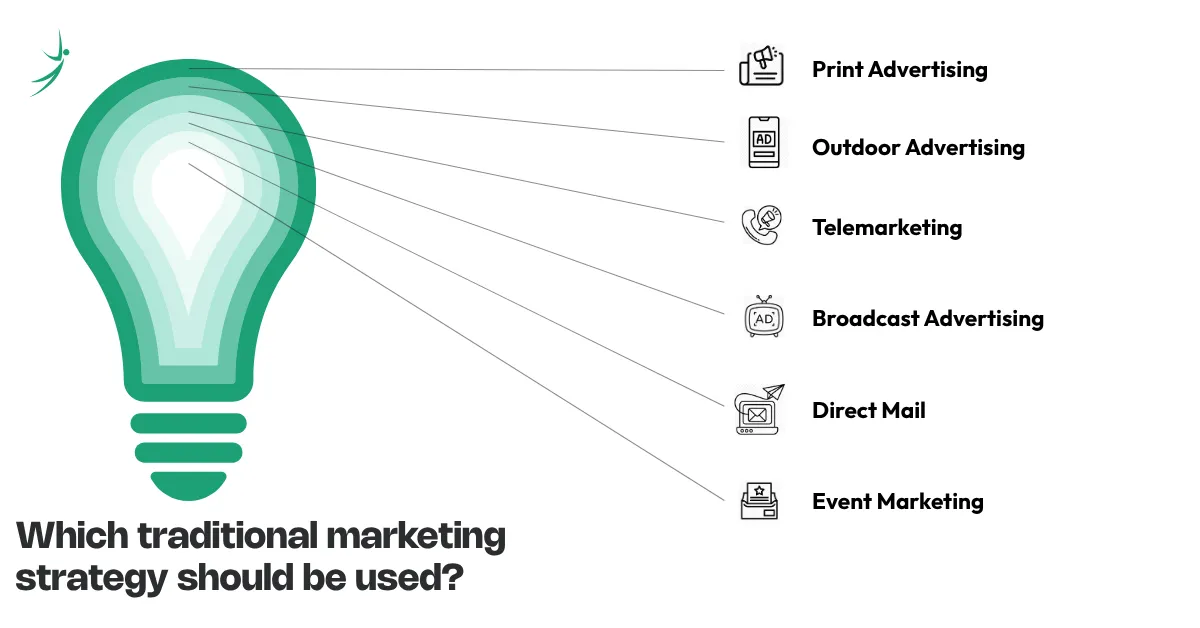
The most common types of traditional marketing include:
- Print advertising: newspapers, magazines, flyers, and brochures
- Broadcast advertising: television and radio commercials
- Outdoor advertising: billboards, banners, and hoardings
- Direct mail: physical letters, catalogues, and postcards sent to homes
- Telemarketing: reaching customers directly through phone calls
- Event marketing: trade shows, exhibitions, and in-person promotions
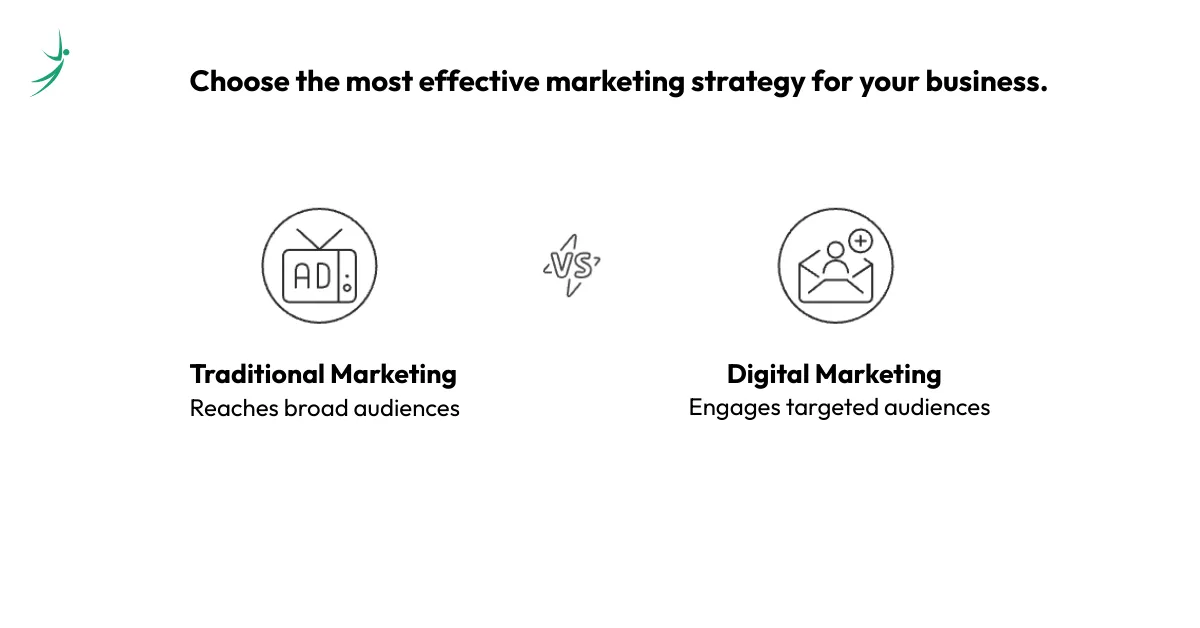
Traditional marketing works by pushing a message out to a broad audience. A TV ad airs to everyone watching that channel, and a billboard is seen by everyone who drives past it. The marketer controls the message but has very little control over who receives it.
What is Digital Marketing?
For a complete understanding of what digital marketing is and how it works, read our in-depth guide on what digital marketing is. Or if you are ready to start learning, explore our hands-on digital marketing course in Nepal at Skill Shikshya.
In simple terms, traditional marketing reaches people through offline channels, while digital marketing reaches them through the internet. The key distinction is not just the channel but the level of targeting, measurability, and control that digital marketing provides.
The Key Differences Between Traditional and Digital Marketing
The difference between digital and traditional marketing runs deeper than online versus offline. Here is a comprehensive side-by-side comparison across every major factor:
| Factor | Traditional Marketing | Digital Marketing |
|---|---|---|
| Reach | Local, regional, or mass audience | Local, national, or global, your choice |
| Targeting | Broad: limited control over who sees it | Precise: target by age, location, interest, behavior |
| Cost | High TV, print, and billboard ads are expensive | Flexible: starts free, scales with budget |
| Measurability | Difficult: hard to track exact results | Highly measurable, every action is trackable |
| Interaction | One-way: business to audience | Two-way: business and audience interaction |
| Speed | Slow: campaigns take weeks to plan and launch | Fast: campaigns can go live in hours |
| Flexibility | Rigid: once printed or aired, cannot be changed | Agile: can be adjusted in real time |
| Lifespan | Short: a newspaper ad lasts one day | Long: A blog post can drive traffic for years |
| Trust factor | High: print and TV carry perceived credibility | Growing: builds trust through content and reviews |
| Examples | TV ads, billboards, newspaper ads, flyers | SEO, social media, email, PPC, content marketing |
Traditional vs Digital Marketing Real World Examples
Understanding the difference becomes clearer with real-world traditional vs digital marketing examples:
Traditional marketing example: A newly opened restaurant in Kathmandu prints 5,000 flyers and distributes them in the surrounding neighborhoods. The flyers reach people in a 2km radius; some will visit, most will discard them. The restaurant has no way to know how many people read the flyer or how many people visited as a result.
Digital marketing example: The same restaurant creates a Google Business profile, runs a targeted Facebook ad to people within 5km who have shown interest in food and dining, and posts daily on Instagram. They can see exactly how many people clicked their ad, visited their profile, and called to make a reservation, and they only pay for the people who actually engaged.
Advantages and Disadvantages of Traditional Marketing
Advantages:
- Strong credibility: TV and print advertising carry perceived authority
- Reaches audiences who are not online: older demographics, rural areas
- Tangible: physical materials like brochures have a lasting presence
- Effective for local brand awareness: billboards and hoardings work well in high-traffic areas
- Familiar and trusted format: audiences have grown up with it
Disadvantages
- Expensive: TV commercials, print ads, and billboards require significant budgets
- Difficult to measure: no reliable way to track who saw or acted on your ad
- One-way communication: no direct interaction with the audience
- Inflexible: once published or aired, it cannot be changed
- Limited targeting: your ad reaches everyone, not just your ideal customer
- Short lifespan: a newspaper ad is gone tomorrow
Advantages and Disadvantages of Digital Marketing
Advantages
- Highly targeted: reach exactly the right person at the right time
- Measurable: track every click, view, conversion, and sale
- Cost-effective: start with a minimal budget and scale as you grow
- Two-way communication: engage directly with your audience
- Real-time optimization: adjust campaigns instantly based on performance
- Long-term assets: SEO and content marketing compound in value over time
- Global reach: a single campaign can reach audiences worldwide
- Levels the playing field: small businesses can compete with large ones
Disadvantages:
- Requires continuous learning: algorithms and platforms change constantly
- Digital fatigue: audiences are bombarded with online ads daily
- Trust barrier: digital ads are sometimes viewed with skepticism
- Skill-dependent: requires expertise across multiple digital marketing channels
- Internet dependency: ineffective where internet access is limited
Which is Better for Businesses in Nepal?
Nepal's marketing landscape is at a turning point. Traditional marketing, particularly outdoor advertising, FM radio, and print, still holds relevance, especially outside major cities where internet penetration is lower.
However, the shift is clear and accelerating:
- Internet users in Nepal crossed 20 million in recent years
- Smartphone penetration is growing rapidly, particularly among 18-35-year-olds
- Facebook remains one of the most widely used platforms in Nepal
- E-commerce and online business are expanding rapidly in Kathmandu, Pokhara, and beyond
- The demand for skilled digital marketers is rising faster than supply, creating strong career opportunities as reflected in the growing digital marketing salary in Nepal
For most Nepali businesses today, particularly those targeting urban audiences, younger demographics, or operating with limited budgets, digital marketing delivers significantly better results per rupee spent than traditional marketing.
That said, a combined approach works best for established businesses. A local brand might use FM radio for broad awareness while simultaneously running Facebook ads for targeted conversions.
Which Should You Choose?
The honest answer is it depends on your goal, audience, and budget. Here is a simple decision framework:
Choose traditional marketing if:
- Your target audience is older or less digitally active
- You are running a purely local, offline business
- You have a large budget and want broad brand awareness
- Your product or service is better experienced physically
Choose digital marketing if:
- You want measurable, trackable results
- You are working with a limited or flexible budget
- Your audience is online, which in Nepal today means most people under 40
- You want to build long-term organic assets like SEO and content
- You are building a career in marketing. The scope of digital marketing as a profession far exceeds traditional marketing today
Choose both if:
- You are an established business with a budget for multiple channels
- You want to maximize reach across both online and offline audiences
- You are building long-term brand authority
If you are starting a career in marketing, the path is clear. Traditional marketing skills are declining in demand while digital marketing expertise is accelerating. Following a structured digital marketing roadmap is the most direct route to building a relevant, future-proof skill set.
Ready to make the move? Explore our digital marketing course at Skill Shikshya, built for beginners and professionals who want job-ready skills, not just theory.
Frequently Asked Questions
What is the main difference between traditional marketing and digital marketing?
Is digital marketing better than traditional marketing?
Should I use digital or traditional marketing for my business in Nepal?
Can traditional marketing and digital marketing work together?
Which is more cost-effective, traditional or digital marketing?
Traditional marketing vs digital marketing, which one is better for a career?
About Author: