Ethical Hacking vs Cybersecurity: Differences, Scope, and Careers in Nepal
Nepal's digital economy is growing faster than most people realize. Banks are going online. Businesses are moving to the cloud. Government services are going digital. And with that growth comes a serious problem: cyberattacks are rising at an alarming rate. For anyone looking to build a career in cybersecurity in Nepal, the timing has never been better.
According to data from the Nepal Police Cyber Bureau, reported by The Kathmandu Post, Nepal registered 18,926 cybercrime cases in the fiscal year 2024–25: an average of 52 cases every single day. The year before that, the figure was 19,730. Cybercrime is now the fastest-growing category of crime in the country.
At the same time, the Nepal Rastra Bank's Payment Systems Oversight Report 2023/24 confirms that the number of mobile banking users reached 24.65 million in FY 2023/24, a 15.4% increase in a single year. Every one of those accounts is a potential target.
The demand for cybersecurity professionals in Nepal is not a trend. It is an urgent national need.
This is exactly why cybersecurity and ethical hacking have become two of the most sought-after career fields in Nepal today. But here is the question most students and professionals ask:
"What is the difference between ethical hacking and cybersecurity? And which one should I pursue? "
This guide answers that question clearly. By the end, you will know what each field involves, how they differ, what jobs they lead to, what salaries you can expect in Nepal, and how to get into cybersecurity the right way.
What is Ethical Hacking?
Ethical hacking means legally and intentionally attempting to break into a computer system, network, or application with the full permission of the owner to find security weaknesses before real attackers do.
An ethical hacker thinks like a cybercriminal. They use the same tools and techniques that real attackers use, but their goal is to expose vulnerabilities so they can be fixed, not exploited.
Ethical hackers are also called penetration testers or white-hat hackers. Companies, banks, and government agencies hire them to test their defenses, write detailed vulnerability reports, and recommend fixes.
What Does an Ethical Hacker Actually Do?
- Conduct penetration tests on websites, apps, servers, and networks.
- Identify and exploit security weaknesses in a controlled, authorized environment.
- Analyze how far a real attacker could go if a vulnerability was not patched.
- Write professional security reports with findings and remediation steps.
- Work closely with developers and IT teams to close the gaps they find.
Tools Ethical Hackers Use
Ethical hackers regularly work with industry-standard tools like:
- Metasploit: for exploitation and penetration testing
- Nmap: for network scanning and discovery
- Burp Suite: for web application security testing
- Wireshark: for network packet analysis
- Nessus: for vulnerability scanning
Ethical hacking is a highly technical, specialized field. It rewards people who enjoy problem-solving, creative thinking, and playing offense to build stronger defenses.
What is Cybersecurity?
Cybersecurity is the broader practice of protecting computers, networks, systems, data, and applications from unauthorized access, damage, or attacks.
Think of cybersecurity as the entire umbrella. Ethical hacking is one specialized tool within that umbrella.
Cybersecurity covers everything from setting up firewalls and monitoring network traffic to responding to live incidents, managing compliance, and training employees to spot phishing attacks. If you want a deeper breakdown of what cybersecurity actually involves, that guide covers it in full detail.
Core Domains of Cybersecurity
| Domain | What It Covers |
|---|---|
| Network Security | Protecting networks from unauthorized access and attacks |
| Endpoint Security | Securing laptops, phones, servers, and devices |
| Application Security | Making sure software and web apps are free from vulnerabilities |
| Cloud Security | Protecting data and workloads in cloud environments |
| Incident Response | Detecting, containing, and recovering from cyberattacks |
| Risk & Compliance | Ensuring systems meet legal and regulatory standards |
| Mobile Security | Securing smartphones, apps, and mobile network |
Who Needs Cybersecurity Professionals?
Every organization that uses digital systems needs cybersecurity, and in Nepal, that now includes:
- Banks and financial institutions regulated by Nepal Rastra Bank
- Telecom companies (Nepal Telecom, Ncell, and others)
- Government agencies and ministries
- E-commerce and digital payment platforms
- Hospitals and healthcare organizations
- Insurance companies
- IT firms and software companies
- International organizations and NGOs
Ethical Hacking vs Cybersecurity: Some Key Differences
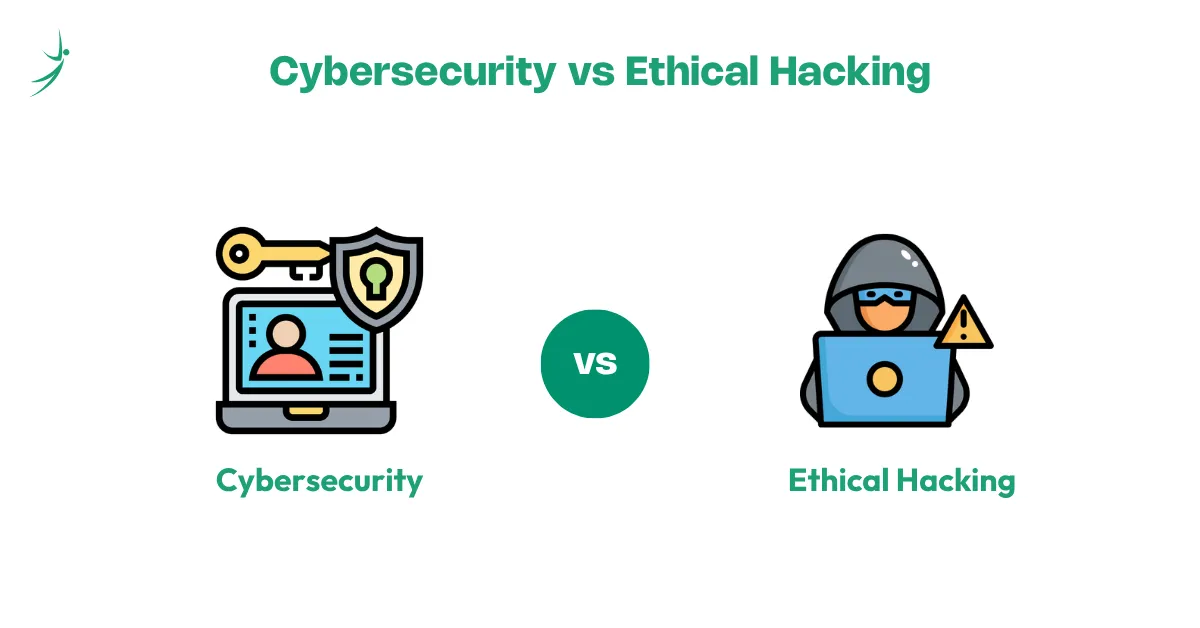
Although ethical hacking and cybersecurity are closely related, they are not the same. Here is a clear breakdown:
| Factor | Ethical Hacking | Cybersecurity |
|---|---|---|
| Primary Focus | Finding and exploiting vulnerabilities | Protecting systems from attacks |
| Approach | Offensive (simulating attacks) | Defensive (preventing and responding to threats) |
| Scope | Specific tests on specific targets | Broad, organization-wide security |
| Nature of Work | Project-based (pentests, audits) | Ongoing, continuous monitoring |
| Key Skills | Exploitation, scripting, vulnerability research | Risk management, monitoring, compliance, architecture |
| Certifications | CEH, OSCP, eJPT, PNPT | CISSP, CompTIA Security+, CISM |
| Mindset | "How can I break this?" | "How do I protect this?" |
| Typical Employers | Security firms, bug bounty programs, banks | All industries with digital infrastructure |
| Entry Difficulty | Higher (requires deeper technical skills) | More structured entry paths available |
The simplest way to understand it: Ethical hacking is one specialization within cybersecurity. A cybersecurity professional may or may not specialize in ethical hacking but an ethical hacker always works within the larger world of cybersecurity.
Both careers are in high demand. Both pay well. The right choice depends on your strengths, personality, and career goals.
The Growing Demand for Cyber Professionals in Nepal
Nepal is no longer an observer in the global cybersecurity crisis. It is right in the middle of it.
Here is what the data shows:
- Nepal's cybercrime is accelerating. According to the Nepal Police Cyber Bureau data reported by The Kathmandu Post, Nepal registered 18,926 cybercrime cases in FY 2024-25, and the year before that hit a peak of 19,730 cases, more than double the 9,013 recorded just two years prior. SP Deepak Raj Awasthi, spokesperson of the Cyber Bureau, described the situation as "still alarmingly high."
- Facebook and social media are the biggest attack vectors. Of all cybercrime cases in FY 2024-25, Facebook and Messenger alone accounted for 9,829 incidents, followed by TikTok (3,086) and WhatsApp (2,305), per the same Kathmandu Post report.
- Digital financial exposure is growing rapidly. The Nepal Rastra Bank's Payment Systems Oversight Report 2023/24 shows the number of mobile banking users reached 24.65 million in FY 2023/24, growing 15.4% in a single year. Mobile banking transaction volumes grew more than tenfold in five years, according to New Business Age citing NRB data.
- Nepal has 16.5 million internet users. According to Gurkha Tech's digital landscape report citing DataReportal data, Nepal had 16.5 million internet users by January 2025, with online penetration reaching 55.8% of the population.
- The global cybersecurity job market is booming. The U.S. Bureau of Labor Statistics projects 29% employment growth for information security analysts from 2024 to 2034, nearly 10 times the national average growth rate for all occupations. The BLS's own Monthly Labor Review 2026 puts the exact figure at 28.5%, making it the fastest-growing computer occupation in the world.
Despite these threats, Nepal has a critical shortage of trained cybersecurity professionals. The scope of cybersecurity in Nepal is expanding across every sector and the timing to enter this field has never been better.
Career Roles & Job Market in Nepal
Common Cybersecurity Job Titles
| Job Title | What You Do |
|---|---|
| Security Analyst | Monitor systems for threats, investigate incidents, implement defenses |
| Network Security Engineer | Design and maintain secure network infrastructure |
| SOC Analyst | Detect and respond to real-time security alerts |
| Cloud Security Specialist | Protect cloud environments (AWS, Azure, GCP) |
| Incident Responder | Manage and contain active cyberattacks |
| Security Architect | Design comprehensive security frameworks for organizations |
| Compliance Manager | Ensure organizations meet legal and regulatory security requirements |
| CISO | Senior leadership role overseeing an organization's entire security strategy |
Common Ethical Hacking Job Titles
| Job Title | What You Do |
|---|---|
| Penetration Tester | Conduct authorized attacks on systems to find vulnerabilities |
| Vulnerability Assessment Analyst | Scan and analyze systems for known security weaknesses |
| Red Team Specialist | Simulate sophisticated, multi-stage attacks on organizations |
| Bug Bounty Hunter | Find and report vulnerabilities to companies for rewards |
| Web Application Security Tester | Specialize in finding flaws in websites and APIs |
| Digital Forensics Investigator | Analyze cybercrimes and collect digital evidence |
| Security Consultant | Advise organizations on their security posture and risks |
Cybersecurity & Ethical Hacking Salary in Nepal
Salary expectations below are based on figures reported by Nepal's job portals KumariJob and NecoJobs, cross-referenced against industry data.
Cybersecurity Salary in Nepal (2026)
| Experience Level | Monthly Salary (NPR) |
|---|---|
| Entry-Level (0–2 years) | NPR 25,000 – 50,000 |
| Mid-Level (2–5 years) | NPR 60,000 – 1,20,000 |
| Senior-Level (5+ years) | NPR 2,00,000+ |
| CISO / Leadership Roles | NPR 2,00,000 – 6,00,000+ |
Ethical Hacking Salary in Nepal (2026)
| Experience Level | Monthly Salary (NPR) |
|---|---|
| Entry-Level / Junior Pentester | NPR 30,000 – 50,000 |
| Mid-Level (2–5 years) | NPR 60,000 – 1,20,000 |
| Senior / Certified (5+ years) | NPR 1,50,000+ |
| Remote (International clients, USD) | NPR 1,30,000 – 6,50,000+ |
Key salary factors:
- Certifications like CEH and OSCP directly impact your pay, certified professionals consistently command higher salaries than non-certified peers at the same experience level.
- Remote work for international companies significantly expands earning potential.
- Cybersecurity salaries in Nepal grow faster than most other IT roles, many professionals see their first raise within year one.
- Banks and fintech companies tend to pay more than average because of the sensitivity of their data.
Which One is Right for You? (A Quick Decision Guide)
Choose Ethical Hacking If You:
- Enjoy solving complex puzzles and thinking like an attacker.
- Have a strong interest in how systems can be broken and exploited.
- Want to specialize deeply in one highly technical area.
- Are interested in bug bounty programs and freelance security work.
- Are building programming and scripting skills (Python, Bash).
- Prefer project-based work over continuous monitoring.
- Want maximum earning potential through remote and international work.
Choose Cybersecurity (Broader Path) If You:
- Want a wider range of career options across more industries.
- Are interested in both offense and defense.
- Want to work in management, compliance, or security architecture.
- Prefer a structured, organization-wide security role.
- Are interested in cloud security, SOC operations, or risk management.
- Want a clear path into senior leadership (Security Manager, CISO).
The Honest Answer
You do not need to choose one and ignore the other. The best cybersecurity professionals understand both sides. A strong foundation in cybersecurity principles makes you a better ethical hacker. And hands-on hacking experience makes you a much more effective security defender.
The smartest move is to build both; start with the fundamentals, add ethical hacking and penetration testing skills, and let your interests and the job market guide your specialization from there.
How to Kickstart Your Career: Selecting the Best Course in Nepal
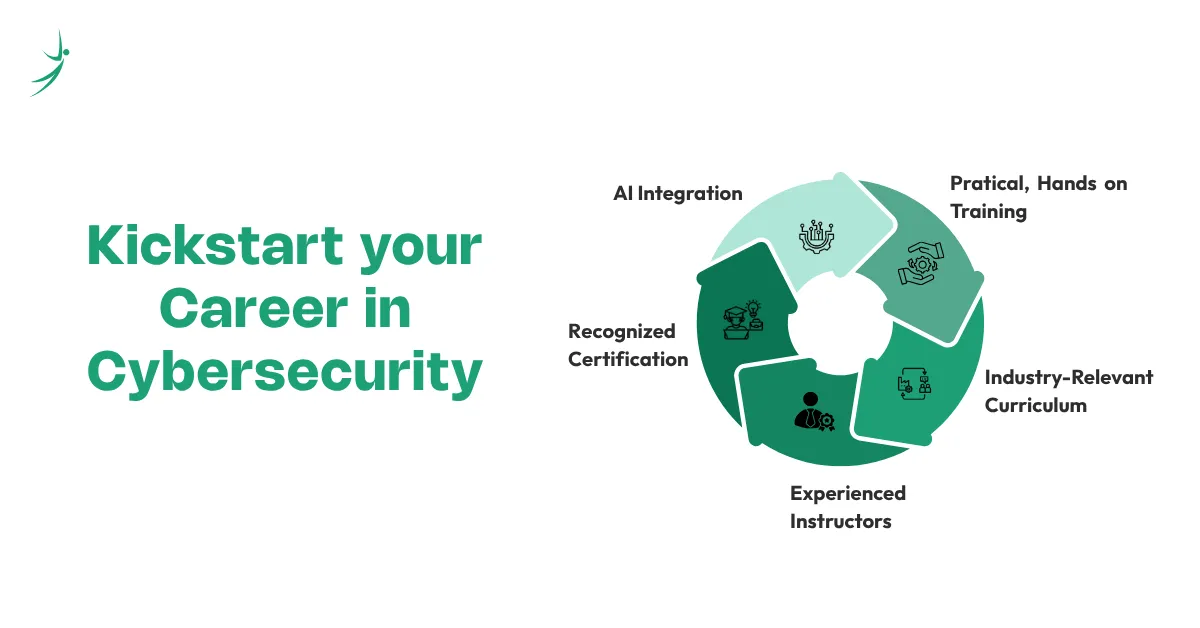
Choosing the right course is arguably the most important decision in this journey. Here is what to look for:
Practical, Hands-On Training
Theory alone does not get you hired. The best programs give you real labs, live attack simulations, and a portfolio you can show employers. Specifically look for courses covering Metasploit, Burp Suite, Wireshark, Nmap, and Nessus.
Industry-Relevant Curriculum
The cybersecurity landscape changes fast. Your course should cover network security, ethical hacking fundamentals, web application security, cloud and wireless security, malware analysis, incident response, and professional reporting.
Experienced Instructors
Your instructors should be active industry professionals, people currently working in penetration testing, vulnerability research, or network security. Not academics who have only read about it.
Recognized Certification
A diploma-level certification dramatically improves your job prospects and salary. Verify what you receive and whether Nepal's top IT employers recognize it.
Placement Support
Does the institute help you get a job after completing the course? This is the single most important factor separating strong institutes from weak ones in Nepal.
AI-Integrated Learning
In 2026, any cybersecurity course that does not include AI-powered threat detection, predictive security tools, and AI-integrated workflows is already behind the industry.
Boost Your Career with Skill Shikshya's Cybersecurity & Ethical Hacking Training
If you are serious about building a career in cybersecurity or ethical hacking in Nepal, Skill Shikshya's Cyber Security Diploma Course is built exactly for that purpose.
What You Learn at Skill Shikshya
- Strong foundation in cybersecurity principles, ethical hacking, and real-world attack simulations.
- Hands-on mastery of Wireshark, Nmap, Metasploit, Burp Suite, and Nessus.
- Network security, web application security, wireless security, and cloud platform protection.
- Incident response, malware analysis, scripting, and professional security reporting.
- AI-integrated cybersecurity training covering threat detection, malware defense, and predictive AI for securing networks.
- Dedicated revision and doubt-solving sessions built into every batch.
Why Skill Shikshya Stands Apart
Real instructors. Real experience. Skill Shikshya's cybersecurity mentors include:
- Abiral Timilsina: Customer Operations Lead with 5+ years in service delivery, holding CompTIA Security+ certification with hands-on expertise in GRC (Governance, Risk, and Compliance), project management, and client assurance.
- Sugam Dangal: CSOC Analyst certified in eJPTv2, ISC2 CC, and Cisco CyberOps, with practical experience in both defensive (SOC) and offensive security including penetration testing and bug bounty hunting.
These are not academics. These are working professionals who bring live industry problems into the classroom.
What you get when you enroll:
- Diploma-level certification recognized by Nepal's leading IT employers.
- Internship Certificate in Cybersecurity & Ethical Hacking upon completion.
- Job or internship guaranteed through Skill Shikshya's Job Ready Program (JRP).
- Flexible batches: morning, evening, weekend, and online options.
- AI-enhanced curriculum aligned with 2026 industry standards.
- Project-based learning with a portfolio you can show employers from day one.
Conclusion
Cybersecurity and ethical hacking are not competing career paths; they are two sides of the same coin. Both are in critical demand in Nepal. Both offer strong salaries, fast career growth, and the opportunity to work with international clients from right here in Nepal.
The question is not which field is better. The question is: which path fits your strengths, your interests, and your goals?
If you enjoy finding weaknesses before attackers do and want a highly technical, specialized career, ethical hacking is your path. If you want a broader role protecting organizations, managing risk, and eventually leading security strategy, the wider cybersecurity field is the right fit.
Nepal's digital economy is growing fast. And it needs skilled people to protect it.
Frequently Asked Questions
Is ethical hacking legal in Nepal?
What is the difference between cybersecurity and ethical hacking?
Do I need a programming background to learn cybersecurity?
Which is better for freshers: cybersecurity or ethical hacking?
What certifications should I pursue?
Can I work remotely for international cybersecurity clients from Nepal?
How long does it take to get job-ready in cybersecurity in Nepal?
Is cybersecurity a good career in Nepal in 2026?
About Author: