Essential Cybersecurity Skills - Complete Guide
The digital landscape is moving at a breakneck speed, and with it, the strategies required to defend it. Whether you are looking for cybersecurity courses in Nepal, trying to map out a clear cybersecurity roadmap, or aiming to level up your existing technical capabilities, knowing where to focus your energy is half the battle won.
The cybersecurity job market has fundamentally shifted. Securing systems is no longer just about setting up a rigid firewall and checking a box. Today, a successful cybersecurity specialist needs a balanced combination of deep technical expertise and strong workplace skills to navigate complex, modern digital environments.
Key Takeaways
- Cybersecurity is evolving rapidly with the integration of cybersecurity ai, cloud computing, and Zero Trust architectures.
- Employers now expect both deep technical expertise and strong workplace skills from every cybersecurity engineer.
- Cloud security, SIEM, incident response, and DevSecOps are among the most in-demand technical fields.
- Soft skills like communication, adaptability, and critical thinking are becoming equally important to land cybersecurity jobs near me.
- Continuous learning, certifications, and hands-on labs are essential for career growth and commanding a competitive cybersecurity salary in nepal.
Why Cybersecurity Skills Matter More Than Ever in 2026
The global cybersecurity demand is at an all-time high. With over 20 million internet users in Nepal alone and the rapid adoption of digital wallets (like eSewa and Khalti), e-commerce, and mobile banking, our local digital footprint has exploded.
This rapid expansion has brought a massive wave of sophisticated cybersecurity threats. Sophisticated ransomware, localized phishing schemes, and corporate data breaches mean that businesses, governments, and individuals are under constant attack. Furthermore, the expansion of remote work and cloud infrastructure has completely dissolved the traditional network perimeter.
What’s Changing in Modern Cybersecurity?
If you want to know where to start cybersecurity planning, you have to understand the fundamental tectonic shifts happening right now:
- AI & Machine Learning in Cybersecurity: AI is a double-edged sword. Threat actors are using cybersecurity ai to generate polymorphic malware and automate phishing at scale. Conversely, defenders rely on AI for automated threat detection and predictive analysis.
- Cloud-First Security Environments: Legacy on-premise infrastructure is rapidly becoming history. Companies are operating in hybrid or multi-cloud environments, moving the battlefield directly to cloud asset protection.
- Zero Trust Security Models: The old rule of "trust but verify" is dead. The modern paradigm is "never trust, always verify," which underpins all modern infrastructure.
- Security Automation, SIEM & XDR Platforms: Data volumes are too vast for human sorting. Security operations rely heavily on automated workflows, Security Information and Event Management (SIEM), and Extended Detection and Response (XDR) platforms to isolate threats in real-time.
- Compliance & Regulatory Pressure: With strict rules enforced by central banks (like Nepal Rastra Bank guidelines) and international frameworks, organizations face massive legal penalties if their data governance fails.
Essential Cybersecurity Skills You Need to Succeed
If you want to master the cybersecurity basics and scale up to high-paying specialized roles, here is the definitive checklist of skills for cyber security you must develop.
Technical Cybersecurity Skills
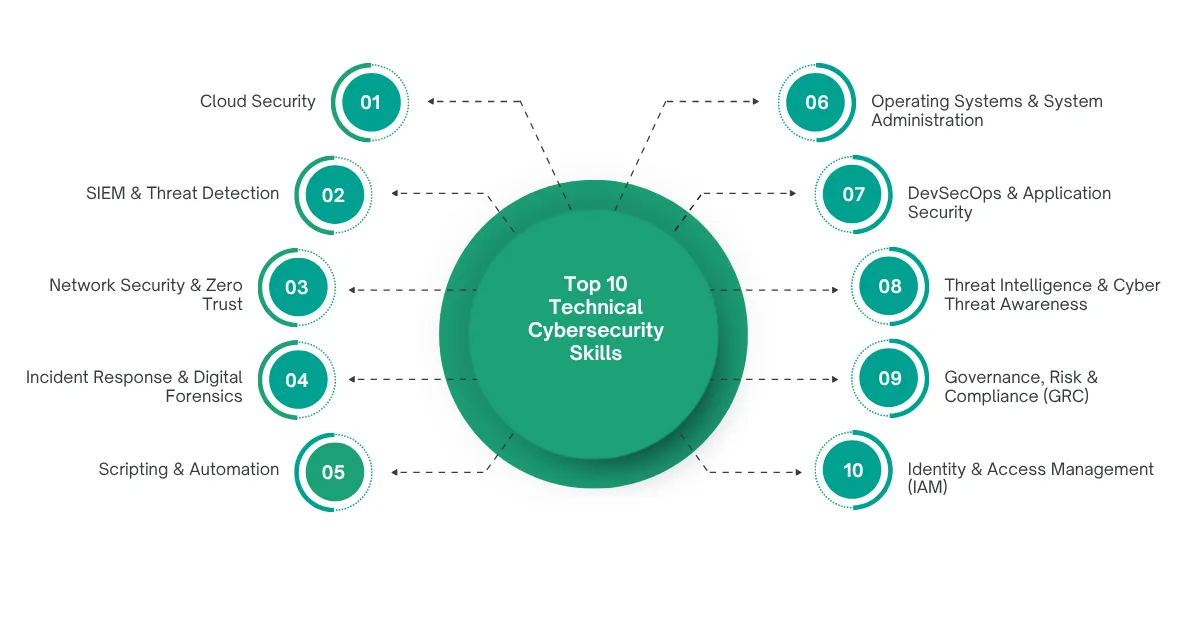
Discover the top technical cybersecurity skills shaping modern cybersecurity careers and security operations.
1. Cloud Security
With companies migrating workloads to the cloud, you must understand AWS, Azure, and Google Cloud security fundamentals. Focus on configuring Identity and Access Management (IAM) correctly and discovering how to prevent cloud misconfigurations, the number one cause of cloud data breaches today.
2. SIEM & Threat Detection
A core responsibility of a cybersecurity analyst is monitoring logs. You need hands-on experience working with SIEM tools like Splunk, ELK Stack, or Microsoft Sentinel. You must know how to perform log monitoring and correlation to spot anomalies before they turn into full-scale breaches, forming the bedrock of threat hunting fundamentals.
3. Network Security & Zero Trust
Traditional skills like managing firewalls, VPNs, and IDS/IPS remain foundational. However, you must pair them with modern network segmentation tactics and Zero Trust architecture basics to ensure that a breach in one department doesn't compromise your entire network.
4. Incident Response & Digital Forensics
When a breach occurs, every second counts. You must know the incident handling lifecycle inside out. This includes knowing how to isolate an infected system, conduct a malware investigation without destroying digital evidence, and draft comprehensive post-incident reporting for executives and regulatory bodies.
5. Scripting & Automation
If you can't code, you will struggle to scale your defense. Learning Python, Bash, and PowerShell basics allows you to write scripts for automating repetitive security tasks. This is a massive component of Security Orchestration, Automation, and Response (SOAR) concepts used in top-tier security operations centers (SOCs).
6. Operating Systems & System Administration
You cannot secure what you do not understand. You need a deep mastery of Windows and Linux security fundamentals. This includes system hardening (disabling unnecessary services and ports) and rigid user privilege management to enforce the principle of least privilege.
7. DevSecOps & Application Security
Security cannot be an afterthought left for the final day of a software launch. Modern organizations implement a Secure Software Development Lifecycle (SSDLC). You need to know how to inject security checks into automated CI/CD pipelines and understand the fundamentals of container and Kubernetes security.
8. Threat Intelligence & Cyber Threat Awareness
To beat a hacker, you have to think like one. You must stay ahead by understanding attacker tactics, techniques, and procedures (TTPs). Familiarize yourself with the MITRE ATT&CK framework and keep a vigilant eye on emerging ransomware and phishing trends.
9. Governance, Risk & Compliance (GRC)
Cybersecurity isn't just a technical problem; it’s a business framework. You should learn to audit systems against international standards like ISO 27001, NIST, and CIS Controls. Developing risk assessment methodologies and regulatory compliance awareness makes you incredibly valuable to banks and corporate enterprises.
10. Identity & Access Management (IAM)
Identity is the new perimeter. Organizations require experts who can roll out robust Multi-Factor Authentication (MFA) schemes, manage administrative overhead using Privileged Access Management (PAM) tools, and implement architectural barriers for identity-based attack prevention.
Workplace Skills Every Cybersecurity Professional Needs
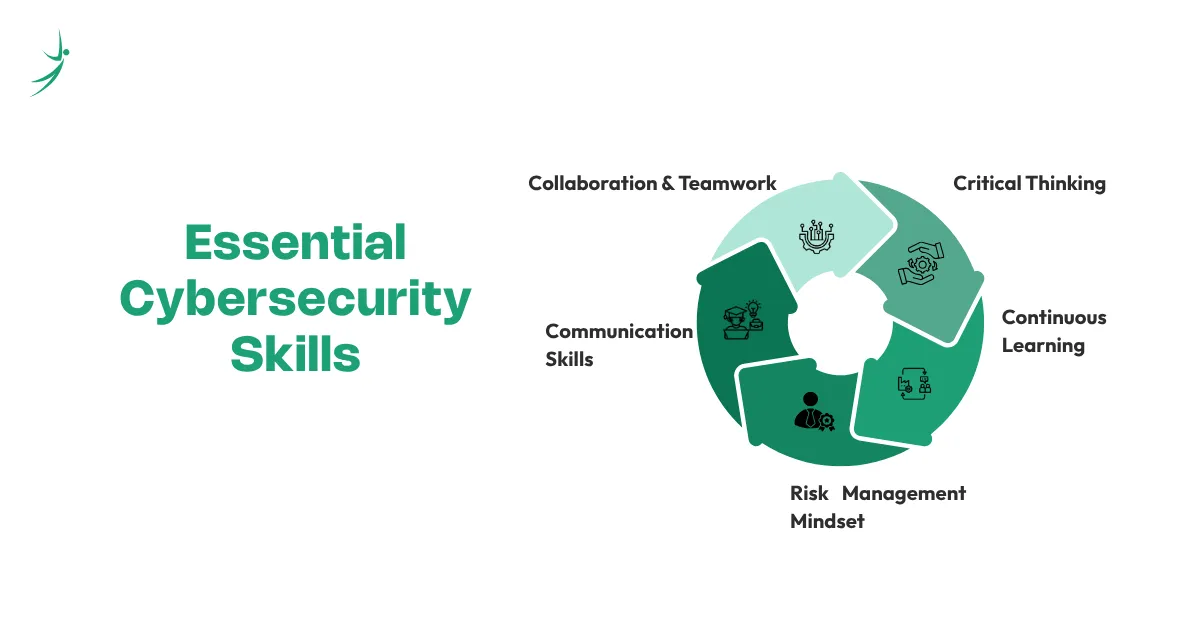
Learn the soft skills that help cybersecurity professionals handle incidents, collaborate effectively, and grow their careers.
1. Communication Skills
What good is finding a vulnerability if you cannot convince your board of directors to fund the fix? You must master the art of explaining technical risks to non-technical teams and writing clear, concise incident reports and documentation.
2. Collaboration & Teamwork
Cybersecurity professionals do not work in a dark room alone. You will constantly be working alongside IT, DevOps, and executive leadership teams, demanding excellent cross-functional incident coordination during high-stress situations.
3. Critical Thinking & Problem Solving
When an alert triggers at 2:00 AM, there is no manual that covers every exact scenario. Investigating suspicious activity requires connecting faint, seemingly unrelated dots and making fast, calculated decisions during active security incidents.
4. Adaptability & Continuous Learning
The tools you use today might be obsolete in two years. Keeping up with evolving threats means you must possess a natural curiosity and the ability to learn new tools and technologies quickly without waiting for formal corporate training.
5. Risk Management Mindset
You will never have enough time or budget to fix every single software bug. A great professional knows how to practice proper prioritizing of vulnerabilities based on actual business impact and operational risk, protecting the assets that matter most first.
The Most In-Demand Cybersecurity Roles in 2026
As you navigate our cybersecurity roadmap, these are the primary job titles dominating the global and local cybersecurity job market:
- Security Analyst: The frontline defender keeping an eye on internal controls and assessing vulnerabilities.
- SOC Analyst: Operates within a Security Operations Center, triaging real-time alerts and malicious network activity.
- Cloud Security Engineer: Specializes entirely in architecting and defending cloud-native deployments (AWS/Azure/GCP).
- Threat Intelligence Analyst: Researches global cyber threats and cybercrime syndicates to prepare corporate defenses before an attack occurs.
- Incident Response Specialist: The emergency responder called in to handle, mitigate, and remediate active cyber breaches.
- DevSecOps Engineer: Bridges the gap between software development and security operations by automating secure code practices.
- GRC & Compliance Analyst: Focuses on documentation, risk alignment, corporate governance, and legal frameworks.
How to Improve Your Cybersecurity Skills
Wondering what cybersecurity do to stay sharp, or what skills should i learn for cyber security superiority? Follow this practical improvement framework:
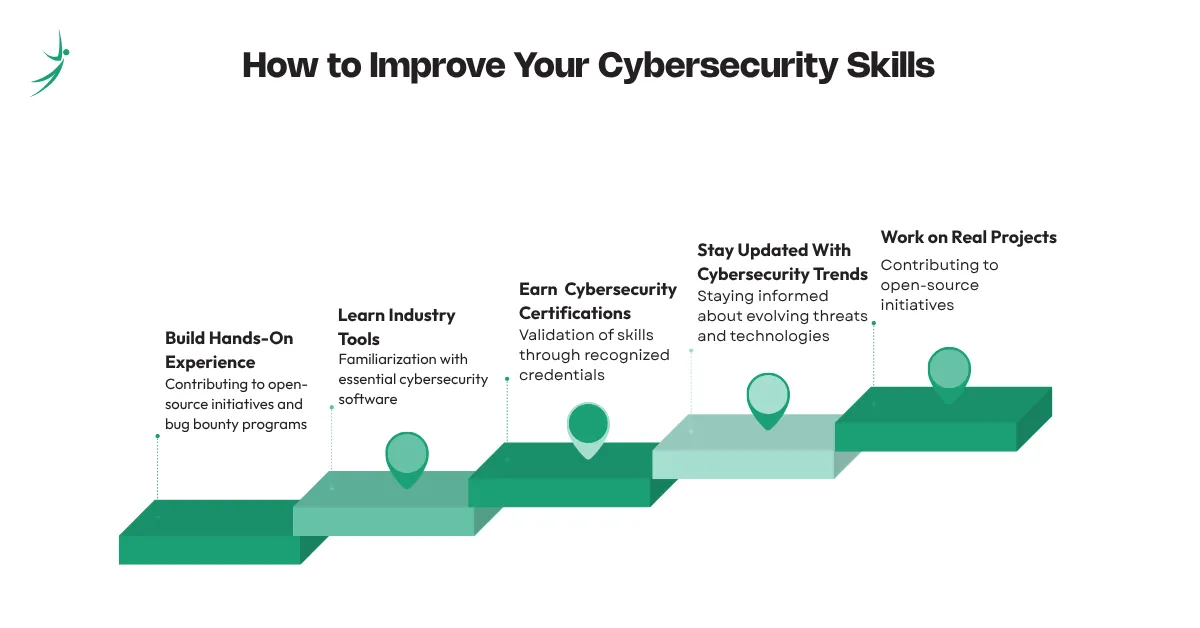
- Build Hands-On Experience: Theory will only get you so far. Set up your own virtual home labs using hypervisors like VirtualBox to practice hacking and defending systems safely. Participate regularly in Capture The Flag (CTF) challenges, and spend time on gamified learning platforms like TryHackMe and Hack The Box.
- Learn Industry Tools: Familiarize yourself with a comprehensive cybersecurity tools list. Get your hands dirty with SIEM platforms, vulnerability scanners (like Nessus or OpenVAS), and Endpoint Detection and Response (EDR) tools.
- Earn Relevant Cybersecurity Certifications: Cybersecurity certifications validate your skills and improve your career opportunities. Beginners can start with CompTIA Security+ or ISC2 CC, while intermediate learners can pursue CEH, Microsoft Security certifications, or AWS Certified Security – Specialty. For advanced professionals, CISSP remains one of the most respected cybersecurity certifications worldwide.
- Stay Updated With Cybersecurity Trends: Bookmark reputable security blogs (like Krebs on Security, Dark Reading, or BleepingComputer) and read annual threat reports published by Mandiant, CrowdStrike, or Palo Alto Networks. Join local cybersecurity communities, attend local meetups, and tune into industry conferences and webinars.
- Work on Real Projects: Contribute to open-source security projects on GitHub. If you feel confident in your testing abilities, test your skills safely through verified bug bounty programs (like Bugcrowd or HackerOne) or practice building your own security automation scripts to streamline tedious tasks.
Conclusion
Cybersecurity in 2026 goes far beyond traditional network protection. Modern organizations need professionals skilled in cloud security, SIEM, DevSecOps, incident response, and AI-driven threat detection, alongside strong communication and problem-solving abilities.
Whether you want to become a SOC Analyst, Ethical Hacker, Cloud Security Engineer, or GRC specialist, continuous learning and hands-on practice are the keys to success. As cybersecurity demand continues to grow across Nepal and globally, building practical skills today can open the door to high-growth career opportunities tomorrow.
Ready to start your cybersecurity career? Build in-demand cybersecurity skills with hands-on training, real-world projects, industry tools, and expert mentorship through Skill Shikshya’s practical cybersecurity training programs designed for aspiring cybersecurity professionals.