MERN Stack Projects: From Beginner Builds to Job-Ready Portfolio (2026 Guide)
In the modern technology landscape, reading books and watching endless video tutorials can only take you so far. To transition from an aspiring learner to a hired professional, your greatest asset is a collection of high-quality, fully realized mern stack projects. Theoretical knowledge provides a foundation, but building production-grade software demonstrates that you can solve real engineering challenges.
Whether you are deciding whether to specialize in frontend vs backend vs full stack engineering or mapping out your progression using a structured guide on how to get into MERN stack, your portfolio serves as your absolute proof of competence.
This comprehensive guide breaks down 17 meticulously curated project ideas categorized by difficulty tier, explains how to present them to capture the attention of tech recruiters, maps them onto the expanding local job ecosystem, and walks you through essential workflows to streamline your development process. If you want structured guidance while building these applications, a MERN Stack Course in Nepal can help you gain hands-on experience with real-world projects and industry-standard development practices.
What Makes a MERN Stack Project Worth Building?
Not all web projects carry equal weight on a resume. Many beginners fall into the trap of deploying basic frontend clones that pull static data from a hardcoded array. While those are fine for your first few days of practicing basic syntax, companies looking for capable developers want to see a mern stack complete project that behaves like a modern production application.
A project is truly worth building when it exercises the full communication lifecycle of the MERN stack:
- The Frontend Presentation: Building intuitive user interfaces with React, managing state cleanly, and handling user inputs safely.
- The API Layer: Designing RESTful endpoints with Express and Node.js that parse incoming requests, validate payloads, and respond with proper HTTP status codes.
- The Database Persistence: Storing data efficiently using MongoDB, building robust relational schemas via Mongoose, and minimizing server load with smart queries.
By engaging with comprehensive mern stack web development projects, you prove to potential employers that you understand data flow, state validation, security, and persistence.
MERN Stack Projects for Beginners: Start Here
If you are just finishing your initial exploration into what is MERN stack, your immediate priority is to understand how the components tie together. Start with this foundational mern stack projects list to practice basic CRUD (Create, Read, Update, Delete) operations.
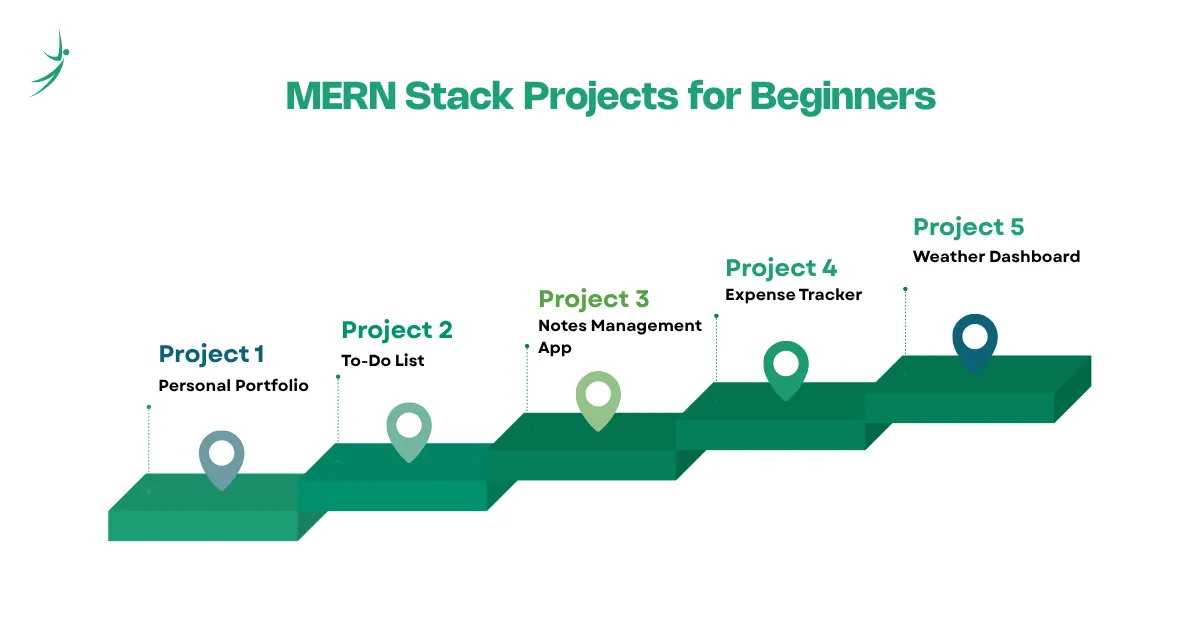
1. Personal Portfolio Website with Admin Dashboard
A standard static portfolio page can feel generic. Elevate yours by transforming it into a full-stack platform where you can manage your work dynamically.
- What you learn: You learn how to set up client-side views using a library like React, configure express routes to serve portfolio items, connect your backend to a MongoDB instance to save your project metadata, and secure your dashboard so only you can add, modify, or delete showcase items.
2. To-Do List Application with User Authentication
Move past local storage by creating an authenticated, multi-user assignment and chore organizer.
- What you learn: You master password hashing with Bcrypt, cookie or header-based authorization using JSON Web Tokens (JWT), building database records that strictly belong to specific user IDs, and refreshing the interface immediately when items are added or marked complete.
3. Notes Management App
Build a cloud-based notebook where users can create, categorize, edit, and filter daily records or text clippings.
- What you learn: Handling text inputs securely, constructing regex-based database search queries in Node.js, engineering tags or categorical filtering, and persisting active user layouts across page updates.
4. Expense Tracker Application
Develop a personal finance tracker where users input cash inflows and outflows to monitor their monthly financial health.
What you learn: Handling numerical values safely, writing MongoDB aggregation functions to compute net balances, formatting transaction times dynamically, and mapping structural statistics into visual bars or pie graphics.
5. Weather Dashboard Using External APIs
Construct a localized application where a user types in a city name and views live atmospheric metrics.
What you learn: Making asynchronous HTTP queries from your server using Axios, processing response models, shielding private api keys by keeping third-party requests on the backend, and rendering weather icons based on server returns.
Intermediate MERN Stack Projects: Build Real-World Skills
Once the fundamentals become second nature, it’s time to move towards intermediate builds that involve complex system relationships, file handling, and asynchronous data syncs.
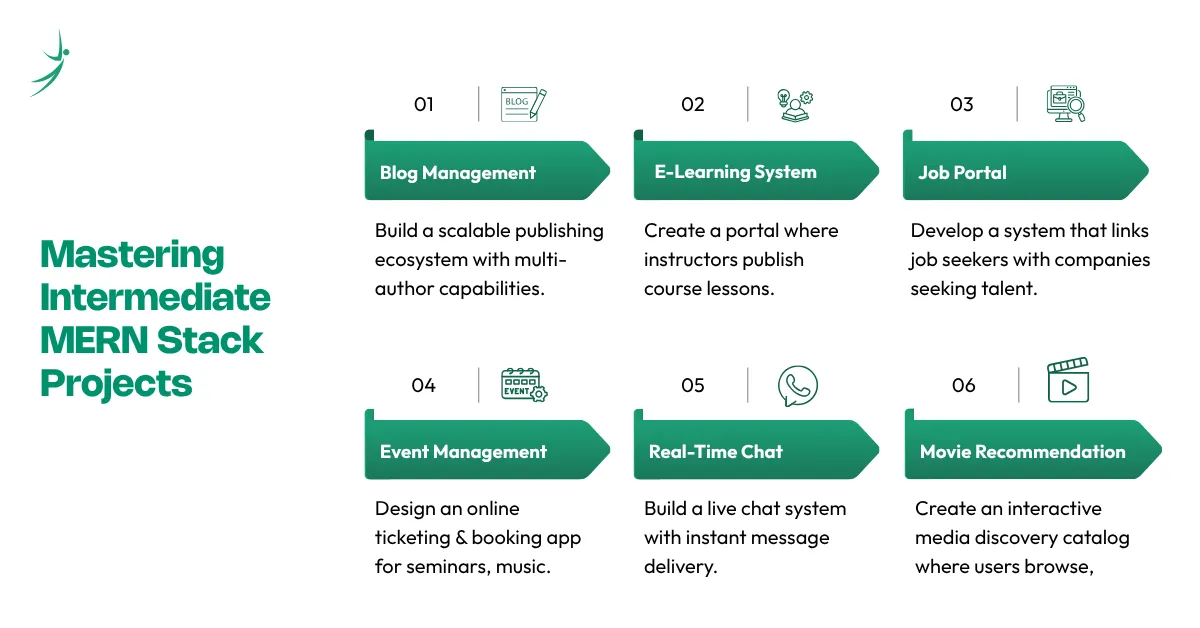
1. Blog Management Platform
Build scalable publishing ecosystem with multi-author capabilities.
- What you learn: You integrate rich text editing tools on the frontend, handle multi-part file uploads (like blog headers) using libraries like Multer, store digital assets via cloud management platforms like Cloudinary, and format relational database models to track reader engagement metrics like likes, nested comments, and tags.
2. E-Learning Management System
A portal where instructors publish course lessons and students consume educational modules.
- What you learn: Managing multi-tier user role access schemas, streaming media items through server channels efficiently, recording student lesson tracking stats, and organizing complex parent-child database relationships (Course $\rightarrow$ Chapter $\rightarrow$ Lesson).
3. Job Portal Application
A system that links job seekers with companies seeking talent, echoing local employment engines.
- What you learn: Formulating advanced compound filters (handling multiple variations like salary range, employment type, and location simultaneously), managing PDF file processing for resume attachments, and designing multi-role user workflows.
4. Event Management System
Develop an online ticketing and booking app for seminars, music shows, and community workshops.
- What you learn: Designing date and time-sensitive database validation scripts, handling strict countdown logic to prevent booking over-capacity, and triggering automatic confirmation tracking notifications.
5. Real-Time Chat Application with Socket.io
Create a live chat system featuring instant message delivery, chat rooms, and online status indicators.
- What you learn: Diving beyond standard HTTP request-response behavior into bidirectional WebSocket connections with Socket.io, handling real-time typing events, storing message histories, and cleaning up persistent connection pools.
6. Movie Recommendation Platform
Build an interactive media discovery catalog where users browse, rate, and comment on movies.
- What you learn: Working with external web databases (like TMDB), constructing pagination or infinite scrolling interfaces in React, computing aggregate rating averages, and filtering media based on categorical parameters.
Advanced MERN Stack Projects: Portfolio-Level Builds
If you want to construct definitive mern stack project ideas for resume optimization, you need to build apps that show you can handle large data volumes, payment transactions, and multi-layered access permissions.
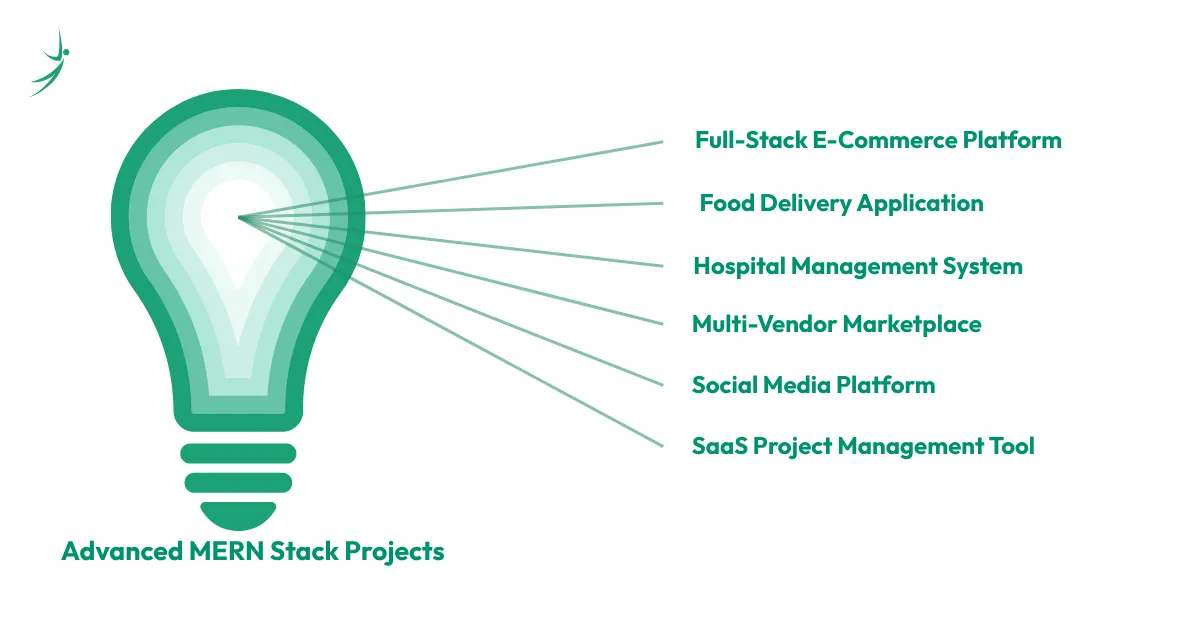
1. Full-Stack E-Commerce Platform
A digital storefront complete with a shopping cart, payment integration, inventory management, and an admin console.
- What you learn: Managing global frontend state via context or state manager libraries, implementing strict payment integrations (such as eSewa, Khalti, or Stripe) on the backend, processing transactional safety protocols, updating product quantities on confirmed orders, and building admin consoles to track sales trends.
2. Food Delivery Application
A multi-faceted platform connecting food enthusiasts, local restaurant managers, and delivery agents.
- What you learn: Managing sophisticated multi-user communication protocols, coordinating location data fields, building active order-tracking systems, and auditing order step updates from receipt to final drop-off.
3. Hospital Management System
An enterprise-grade platform to coordinate physician schedules, track patient data, and organize clinic rooms.
- What you learn: Enforcing strict data isolation, designing advanced slot-booking validation routines to avoid appointment overlap, building role-based dashboard states, and auditing administrative record mutations.
4. Multi-Vendor Marketplace
A digital marketplace where multiple distinct vendors set up online stalls to sell products to general buyers.
- What you learn: Structuring interconnected MongoDB databases, engineering financial distribution calculations to handle vendor payouts, mapping isolated storefront paths dynamically, and designing composite reviews for products and sellers.
5. Social Media Platform
Build an interactive social network featuring news feeds, profile networks, user connections, and media posts.
- What you learn: Designing high-performance database schemas to handle follow/unfollow graph relationships, creating continuous feed delivery pipelines sorted by chronological algorithms, and streaming instant engagement notifications.
6. SaaS Project Management Tool (Trello Clone)
A dynamic dashboard containing columns, tasks, assignment deadlines, and collaborative team cards.
- What you learn: Implementing complex drag-and-drop frontend actions, managing state changes across workspace views, tracking workspace activity timelines, and ensuring cross-client data updates are accurate.
How to Present Your MERN Stack Projects (That Recruiters Notice)
Building software is only half the battle; presenting it effectively to potential employers is what secures interviews. Recruiters and engineering managers have limited time, so your presentation needs to be professional and clear.
GitHub Repository Checklist
- Clean Code Separation: Avoid dumping everything into a single root folder. Maintain explicit /client and /server or /api directories.
- No Secret Exposures: Ensure your .gitignore file includes .env and node_modules configurations. Provide an explicit .env.example file displaying necessary variable shapes without exposing actual security tokens.
- Logical Commit Patterns: Show your building process by committing code incrementally with clear messages (e.g., feat: integrate JWT authentication endpoint) instead of a single massive commit named project finished.
What to Include in Your Project Documentation
A bare README.md file often signals a lack of thoroughness. Craft an organized document featuring:
- An Actionable Summary: Explain the precise problem your system resolves.
- Tech Stack Badges: List the exact node packages, UI tools, and database systems utilized.
- Architecture Diagrams: Provide a textual or visual chart describing data flows.
- Step-by-Step Instructions: Clearly lay out how to set up the environment variables, populate mock collections, and run the applications locally.
How to Write Strong Project Descriptions for Your Resume
Avoid passive summaries like "I built an e-commerce platform using React and Node." Instead, use action verbs and highlight specific architectural choices or technical metrics:
- "Engineered a multi-vendor digital storefront utilizing the MERN stack, designing strict Mongoose schemas with compound indexes that improved query execution speeds by 35%."
- "Implemented secure authorization routes using JSON Web Tokens (JWT) and HTTP-only cookies, reducing unauthorized endpoint requests to zero during QA evaluations."
MERN Stack Projects in the Nepal Job Market Context
The tech sector in Nepal is growing rapidly, with tech hubs across Kathmandu, Lalitpur, and Pokhara continuously seeking full-stack engineers. Local software companies, offshore agencies, and startups heavily favor the JavaScript ecosystem due to its development speed and versatility.
Skills Nepali Companies Expect from MERN Developers
When software houses review junior applicants, they look for specific capabilities:
- Absolute fluency with modern JavaScript and React principles.
- Deep knowledge of RESTful API architectures, proper routing setups, and middleware implementations.
- Clean folder architectures, environment variable isolation, and defensive data validation.
Understanding the collection of MERN stack skills required by local employers helps ensure your projects focus on the right technical areas.
Projects That Increase Internship Opportunities
If you are looking for your first tech role, building targeted applications can give you an edge:
- A polished personal portfolio with a functional CRUD admin panel.
- An authenticated corporate portal layout or a robust expense coordinator dashboard.
These projects show local development firms that you can handle standard business requirements right from day one.
Projects That Help You Land a Junior Developer Role
To secure full-time engineering roles without extensive prior experience, your portfolio must show that you can build reliable, production-ready software:
- A fully integrated e-commerce application with localized online payment triggers.
- A live chat module or a SaaS workspace organizer.
Demonstrating that you can successfully implement these features helps build trust with engineering managers.
Technologies You'll Use Across These Projects
As you work through your portfolio builds, you will gain hands-on experience with a modern full-stack developer ecosystem:
Frontend Technologies
- React & Vite: For building fast, component-driven client user interfaces. To understand the underlying library mechanics, read our complete guide explaining what is React.
- Tailwind CSS & Shadcn UI: For styling modern, responsive, and professional user interfaces quickly.
- Axios & TanStack Query: For handling data fetching, server state synchronization, and caching.
Backend Technologies
- Node.js & Express.js: The core server runtime environment and backend framework layer. For a deep dive into runtime features, see our analysis of what is Node.js, and explore the broader MERN stack frameworks landscape.
- Bcrypt & JSON Web Tokens (JWT): For password security, hashing, and token-based stateless user authorization.
Database Technologies
- MongoDB Atlas: A flexible, cloud-hosted document database for modern web applications.
- Mongoose ORM: For creating structured schemas, validation rules, and relational data modeling within MongoDB collections.
Deployment & DevOps Tools
- Vercel / Netlify: For fast, global deployment of frontend React build folders.
- Render / Railway: For hosting live, continuous-deployment Node.js backend servers.
- Docker & GitHub Actions: For containerizing application environments and automating test pipelines.
MERN Stack Certifications and Courses That Complement Your Projects
While building solo projects is highly valuable, working through an unstructured roadmap can sometimes feel overwhelming. Complementing your hands-on coding with an industry-recognized, instructor-led training program can help streamline your learning.
Enrolling in a structured program like the professional MERN stack training at Skill Shikshya connects you with senior engineers who provide code reviews and architectural guidance. Choosing the best MERN stack course in Nepal ensures you learn clean code architectures, industry best practices, and receive career placement support to help turn your portfolio projects into a full-time software engineering role.
Here are the top global certifications that pair perfectly with a full-stack portfolio:
- MongoDB Certified Developer Associate: This official certification validates your ability to design database schemas, manage collections, and write highly optimized queries. For advanced portfolio pieces like a Multi-Vendor Marketplace or E-Commerce platform, this credential proves to employers that you know how to properly index fields and execute advanced aggregation pipelines under heavy traffic conditions.
- OpenJS Node.js Application Developer (JSNAD): Provided by the Linux Foundation, this is the industry-standard certification for backend JavaScript development. Earning it demonstrates that you possess a deep command over the Node.js runtime, asynchronous control flows, file systems, security practices, and RESTful API structures.
- AWS Certified Developer – Associate: Because deploying a full-stack application requires a strong understanding of modern cloud infrastructure, an AWS certification can give you a massive competitive edge. It shows hiring managers that you know how to securely host an Express backend, configure environment variables, manage object storage for file uploads, and containerize applications using Docker.
- Meta Front-End Developer Professional Certificate: This widely recognized certification ensures your foundational client-side engineering skills are rock solid, focusing heavily on semantic UI architectures, deep React component life cycles, state management, and modern user-experience principles.
What Hiring Managers Look for in MERN Stack Developer Candidates
When technical leaders evaluate portfolios, they look at several key factors to determine code quality and engineering maturity:
- Clean Code Structure: Managers look for well-organized project structures. They prefer clean directory separation, meaningful component naming conventions, reusable hooks, and explicit middleware isolation over cluttered, unorganized files.
- Authentication & Security: Your projects should demonstrate secure coding practices. Always encrypt sensitive user data, protect api routes with verification checkpoints, use HTTP-only cookies to help mitigate XSS vectors, and sanitize incoming parameters before running queries.
- API Design Skills: Build clean RESTful APIs that use correct semantic HTTP methods (GET, POST, PUT, DELETE). Always include informative, standardized JSON payload formats and return appropriate HTTP status codes (such as 200 OK, 400 Bad Request, 401 Unauthorized, and 500 Server Error).
- Database Optimization: Hiring managers want to see that you understand database design. This includes building efficient document relationships, using references properly, creating index fields on frequent search terms, and writing clean aggregation queries to keep database interactions fast.
- Deployment Experience: A live, working link is one of the best ways to showcase your work. Deploying your apps to platform servers shows that you understand production configuration steps, environment variable management, and client-server CORS setups.
Common Mistakes Beginners Make While Building MERN Projects
- Hard coding Secret Values: Accidentally committing database access links, tokens, or API credentials to public repositories instead of isolating them inside .env configuration frameworks.
- Poor Error Handling: Leaving empty catch blocks or omitting defensive try-catch statements in asynchronous routines, which can cause your server to crash on unexpected inputs.
- Over complicating Global State: Using heavy global state managers for minor interactions that could be handled cleanly with simple local React state variables or prop-drilling patterns.
- Ignoring Database Performance: Creating deep database schemas without using proper indexes, which can lead to slow query performance as your collection grows.
Getting Started This Week
Don't let analysis paralysis stall your progress. Choose a project that matches your current skill level and get started:
- Initialize your local repository, set up standard directory layouts for your client and server, and make your first Git commit.
- Design your core database schemas, build your Express API routes, and verify your endpoints using API testing tools.
- Create your frontend React layout views, integrate your data fetching functions, and set up your application's global state.
- Handle remaining edge cases, write your project's README documentation, and deploy the application to live cloud servers.
Conclusion
Building your engineering portfolio is a journey that moves from basic single-user CRUD applications to complex, production-ready platforms. Every fully completed project you build helps reinforce your full-stack development skills and deepens your understanding of data flow, security, and application architecture.
The job market favors developers who back up their technical claims with clear proof of work. Explore the expanding scope of MERN stack career paths, stay consistent with your coding, and build applications that demonstrate your technical capabilitie
Frequently Asked Questions
Why use MERN stack?
How to setup mern stack project?
How to run mern stack project?
How to run mern stack project in VS Code?
How to deploy mern stack project?
About Author:

Mr. Asim Chaulagain, Full Stack MERN mentor at SkillShikshya and developer at Vrit Technologies, empowers learners to build real-world web applications. Through hands-on projects, he turns coding skills into practical, career-ready expertise.