JRP Success Blueprint: The Skills That Guarantee Employment in Nepal 2026
Nepal's job market in 2026 has one defining characteristic: the gap between what training programs teach and what companies actually need has never been wider. Graduates with certificates are everywhere. Graduates who can walk into a role and contribute from day one are rare. This gap is exactly where the Job Ready Program was built to operate.
JRP does not teach skills for the sake of teaching. Every skill, every tool, and every project inside JRP's curriculum was selected because Nepal's hiring companies demand it right now, not because it looks good on a syllabus. The result is a program where graduates do not search for jobs after completing their training. Jobs find them.
This blog is the complete JRP skills blueprint, a track-by-track breakdown of exactly what you learn across JRP's 11 programs, organized into 4 career groups: Design, Development, Marketing, and Tech and Testing. By the end, you will know precisely which track matches your strengths, what skills it builds, what tools you will master, and what your career looks like on the other side. Enroll in Job Ready Program today if you already know your track. If you are still deciding, read every section; the answer will become clear.
JRP's skills are not taught in isolation. They are built through real client projects, refined through industry mentor feedback, and proven through a guaranteed internship placement after course completion.
WHY JRP SKILLS ARE DIFFERENT FROM EVERY OTHER COURSE IN NEPAL
The difference between a JRP skill and a course skill is not the subject matter. It is the depth at which it is built and the context in which it was learned.
Most training programs in Nepal teach skills through theory and simulated practice. A student learns how something works, applies it to a practice exercise, receives a grade, and moves on. By the end of the course, they have knowledge. What they do not have is experience, the ability to apply that knowledge under real professional conditions with real consequences.
JRP teaches every skill through real client work from week one. When a JRP student learns SEO, they are optimizing a real website for a real client with real ranking goals. When a UI/UX student learns Figma, they are designing real interfaces for real products that real users will interact with. When a developer learns React, they are building real features in a real codebase. The skill is not learned and then applied later. It is built through application from the beginning.
This is what makes JRP skills employment-ready rather than just course-complete. A hiring manager reviewing a JRP graduate's portfolio does not see practice work. They see documented professional outcomes, the same evidence they would expect from a candidate with 6 months of actual work experience. See how JRP's guarantee works in detail and understand why the skills framework is the foundation that makes 100% internship placement possible
The other distinction is that JRP skills are taught by people who use them professionally every day. Industry mentors bring current market standards into the classroom. What students learn in week 3 is what companies are hiring for in week 13. There is no curriculum lag. No outdated tools. No theoretical frameworks disconnected from real workflows.
Why choosing the right track matters
Before breaking down each track, it is worth understanding why track selection is one of the most important decisions a JRP student makes.
JRP's 11 programs span four distinct career groups. Each group requires a different type of thinking, attracts different personality types, and leads to different career trajectories and salary ranges. Choosing the wrong track does not just waste 3 months; it puts you on a career path that does not fit how you think or what you enjoy.
The good news is that JRP accepts students at the beginner level for every track. No prior experience is required in any program. What matters is understanding which type of work genuinely interests you so that the 3 months of real project work feel like building something meaningful rather than completing an obligation.
If you are still comparing whether JRP is the right choice overall before deciding on a specific track, understand why JRP outperforms traditional courses for a complete side-by-side breakdown of outcomes across every factor that matters.
The following sections break down each of JRP's four career groups, what they teach, what tools they use, what the internship looks like, and what your career looks like after completion.
DESIGN and Editing GROUP: UI/UX DESIGN, GRAPHIC DESIGN, and Video Editing
The design group at JRP covers two tracks built for people who think visually, care deeply about how things look and feel, and want to build careers creating the interfaces and visuals that define how users experience products and brand.
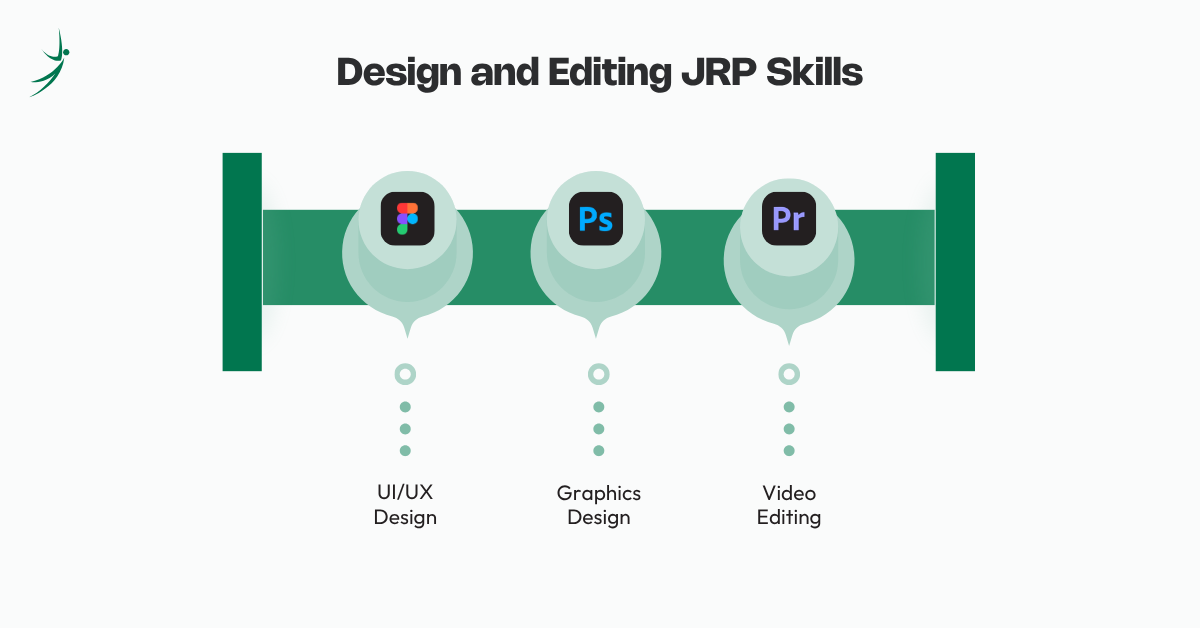
UI/UX Design Job Ready Program
UI/UX design is one of the fastest-growing roles in Nepal's tech industry. Every product, every app, and every digital platform needs designers who can create intuitive, beautiful experiences that users actually want to engage with. The demand for skilled UI/UX designers in Nepal is significantly outpacing the supply of qualified candidates.
- Skills built in this track: User research and persona development, wireframing and prototyping, design systems creation, interaction design, usability testing, and design handoff to development teams.
- Tools mastered: Figma, Adobe XD, Webflow, Maze for user testing, and design system frameworks used by product companies across Nepal.
- What the real projects look like: Students design complete product interfaces for real client briefs, mobile app flows, web platform dashboards, and redesign projects for existing products. By week 8, the portfolio contains 3 to 5 complete case studies with documented user research, design decisions, and outcome metrics.
- Career outcome: Junior UI/UX designer roles in software companies, product startups, and digital agencies. Average starting salary 25,000 to 35,000 NRs per month.
Graphic Designing Job Ready Program
Graphic design remains one of the most consistently hired creative roles in Nepal's market. From brand identity to social media content to marketing materials, every business needs skilled graphic designers who can produce professional visual communication.
- Skills built in this track: Brand identity design, typography, layout and composition, digital illustration, social media design, print design, and packaging design.
- Tools mastered: Adobe Photoshop, Adobe Illustrator, Adobe InDesign, and Canva Pro for client-facing deliverables.
- What the real projects look like: Students work on actual brand identity projects, social media content calendars, and marketing material production for real clients. Portfolio contains complete brand projects with multiple deliverables documented from brief to final output.
- Career outcome: Junior graphic designer roles at agencies, in-house design teams, and freelancing with an established client portfolio. Average starting salary 20,000 to 30,000 NRs per month.
Video Editing Job Ready Program
Video content is Nepal's fastest-growing digital format. Every brand, every agency, and every content creator needs video editors who can produce professional, engaging content efficiently.
- Skills built in this track: Professional video editing workflow, color grading, motion graphics, audio design, cinematic storytelling, and content creation for digital platforms.
- Tools mastered: Adobe Premiere Pro, After Effects, Adobe Photoshop, and DaVinci Resolve, the exact tools used by professional video production teams.
- Career outcome: Junior video editor and content creator roles at media companies, agencies, and in-house creative teams. Strong freelancing potential. Average starting salary 20,000 to 30,000 NRs per month.
View JRP design program details to see the complete curriculum, batch schedule, and enrollment information for both design tracks.
DEVELOPMENT GROUP: FRONTEND, FULL STACK MERN, PYTHON DJANGO, FLUTTER
The development group is JRP's largest career group, covering four tracks that build the technical skills to create the websites, applications, and digital products that power Nepal's growing tech economy.
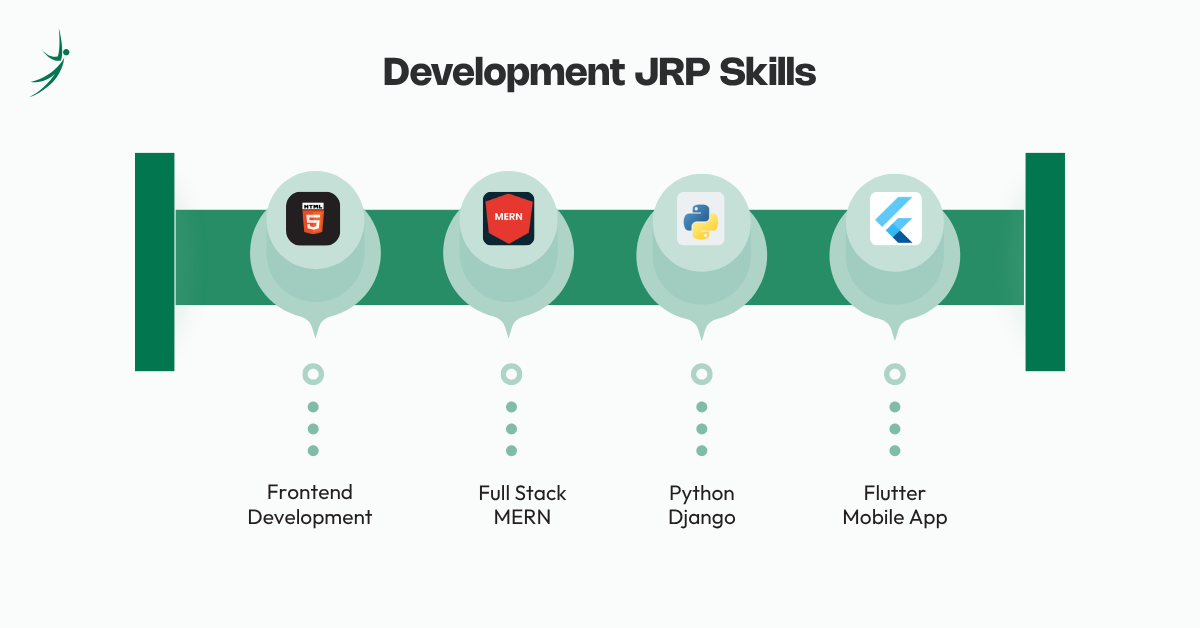
Frontend Development Job Ready Program
Frontend development is the entry point into Nepal's software industry for most new developers. Every website and web application needs frontend developers who can build fast, responsive, visually polished interfaces.
- Skills built in this track: HTML5, CSS3, JavaScript fundamentals, React.js, responsive design, component architecture, version control with Git, and performance optimization.
- Tools mastered: VS Code, React, JavaScript ES6+, CSS frameworks, Git and GitHub, and browser developer tools used in professional development workflows.
- Career outcome: Junior frontend developer roles at software companies, digital agencies, and product startups. Average starting salary 25,000 to 35,000 NRs per month with a strong growth trajectory.
Full Stack MERN Development Job Ready Program
Full-stack MERN development is one of the most in-demand and highest-paid tracks in JRP's entire program portfolio. MERN stack developers can build complete web applications independently from database to interface, making them extremely valuable to Nepal's growing startup ecosystem.
- Skills built in this track: MongoDB database design, Express.js backend development, React.js frontend development, Node.js server-side programming, REST API development, authentication systems, and deployment workflows.
- Tools mastered: The complete MERN stack, Postman for API testing, MongoDB Atlas, Git and GitHub, and cloud deployment platforms.
- Career outcome: Junior full-stack developer roles with the highest starting salaries in JRP's development group. Average starting salary 35,000 to 50,000 NRs per month.
Python Django Job Ready Program
Python is the most versatile programming language in Nepal's current hiring market, used for web development, data science, automation, and backend systems. Django adds the framework that lets developers build powerful, scalable web applications efficiently.
- Skills built in this track: Python fundamentals, Django framework, database management with PostgreSQL, REST API development with Django REST Framework, authentication, and deployment.
- Tools mastered: Python, Django, PostgreSQL, Git, GitHub, and backend deployment tools.
- Career outcome: Junior backend developer and Python developer roles. Average starting salary 30,000 to 45,000 NRs per month.
Flutter Mobile App Development Job Ready Program
Mobile app development is one of the highest-demand skills in Nepal's tech market. Flutter allows developers to build both Android and iOS applications from a single codebase, doubling the value delivered per developer.
- Skills built in this track: Dart programming language, Flutter UI development, state management, Firebase integration, API integration, and app store deployment for both Android and iOS.
- Tools mastered: Flutter, Dart, Firebase, Android Studio, and Xcode for deployment workflows.
- Career outcome: Junior mobile app developer roles at software companies and product startups. Average starting salary 30,000 to 45,000 NRs per month.
View JRP development program details to compare all four development tracks and identify which one matches your technical interests and career goals.
MARKETING AND MANAGEMENT GROUP: DIGITAL MARKETING, ADVANCED SEO, PROJECT MANAGEMENT
The marketing and management group covers the skills that drive growth, visibility, and organizational effectiveness for Nepal's businesses, with three tracks that produce graduates with immediately deployable professional skills.
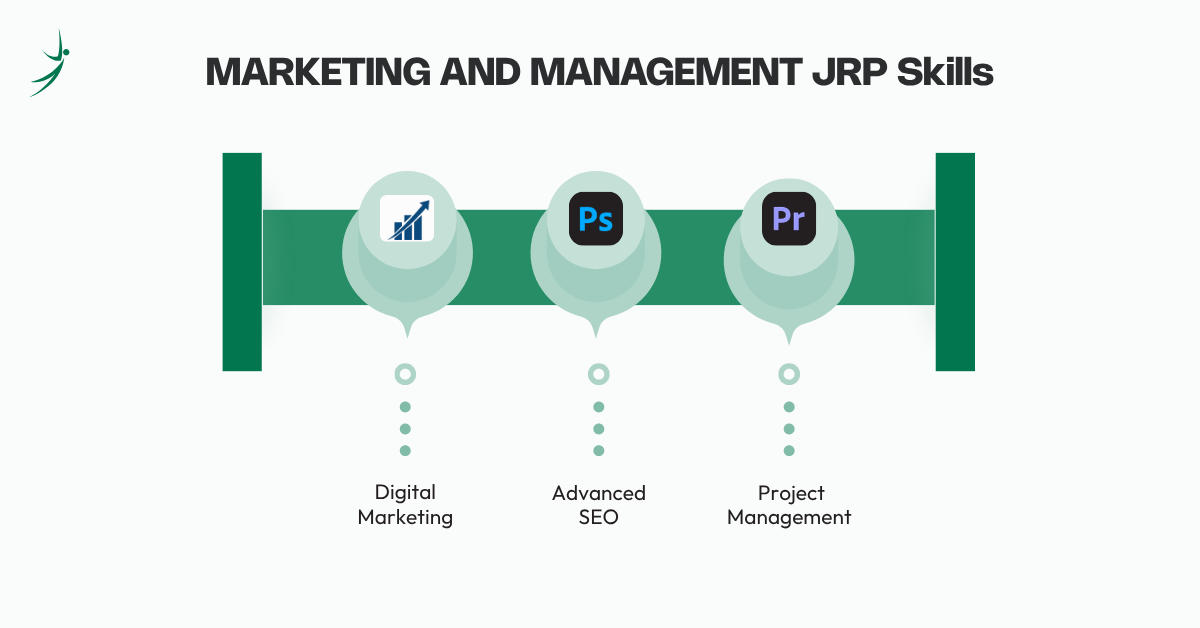
Digital Marketing Job Ready Program
Digital marketing is JRP's most enrolled track and one of the most consistently hired roles across every industry in Nepal. Every business with an online presence needs marketers who can drive traffic, generate leads, and convert audiences into customers.
- Skills built in this track: SEO fundamentals, social media marketing, Google Ads and Meta Ads campaign management, email marketing, content marketing strategy, Google Analytics 4, and marketing performance reporting.
- Tools mastered: Google Ads, Meta Ads Manager, Google Analytics 4, SEMrush, WordPress, Mailchimp, and social media scheduling platforms used by professional agencies.
- What the real projects look like: Students manage real ad campaigns with real budgets for real clients. They run SEO audits on actual websites, create content strategies for real brands, and build analytics dashboards tracking real performance data. The portfolio demonstrates measurable results, not simulated outcomes.
- Career outcome: Junior digital marketer, social media manager, and paid ads specialist roles at agencies, startups, and corporate marketing teams. Average starting salary 25,000 to 35,000 NRs per month with strong freelancing potential.
Advance SEO Job Ready Program
Advanced SEO is a specialized track for students who want to build deep expertise in search engine optimization, one of the most valuable and increasingly technical skills in Nepal's digital marketing industry.
- Skills built in this track: Technical SEO auditing, keyword research and content strategy, on-page and off-page optimization, link building, local SEO, SEO analytics and reporting, and Core Web Vitals optimization.
- Tools mastered: Ahrefs, SEMrush, Google Search Console, Screaming Frog, and advanced analytics platforms.
- Career outcome: SEO specialist and technical SEO consultant roles. Strong freelancing potential with international clients. Average starting salary 25,000 to 40,000 NRs per month.
Project Management Job Ready Program
Project management is the track for students who think in systems, lead teams naturally, and want to build careers coordinating the delivery of tech products and business initiatives.
- Skills built in this track: Agile and Scrum methodologies, sprint planning, stakeholder communication, risk management, project documentation, team leadership, and delivery tracking.
- Tools mastered: Jira, Trello, Slack, SAP basics, and modern project management platforms used by tech teams across Nepal.
- Career outcome: Junior project manager and Scrum master roles at software companies and tech-enabled businesses. Average starting salary 30,000 to 45,000 NRs per month.
View JRP marketing program details to see complete curriculum details and batch availability for all three marketing and management tracks.
TECH AND TESTING GROUP: QUALITY ASSURANCE, DATA SCIENCE & MACHINE LEARNING and Cybersecurity
The tech and testing group covers three specialized tracks that address specific high-demand roles in Nepal's evolving job market.
Quality Assurance Job Ready Program
QA testing is one of the most consistently hired roles in Nepal's software industry and one that most training programs completely ignore. Every software product needs testers who can ensure quality before release, making QA skills immediately employable.
- Skills built in this track: Manual testing fundamentals, test case design, automation testing with Cypress and Playwright, performance testing with JMeter, bug reporting, and QA process management.
- Tools mastered: Selenium, Cypress, Playwright, JMeter, PostgreSQL for database testing, and Trello for test management.
- Career outcome: Junior QA engineer and software tester roles at software companies. Average starting salary 25,000 to 35,000 NRs per month with strong growth potential as automation skills become more valuable.
Data Science and Machine Learning Job Ready Program
Data science is the highest-ceiling career track in JRP's entire portfolio in terms of long-term earning potential. As Nepal's businesses become more data-driven, the demand for professionals who can extract insight from data and build predictive models is growing rapidly.
- Skills built in this track: Python for data analysis, data visualization, statistical analysis, machine learning algorithms, model building and evaluation, and AI model deployment.
- Tools mastered: Python, Pandas, NumPy, Scikit-learn, TensorFlow, SAS, and data visualization platforms.
- Career outcome: Junior data analyst and machine learning engineer roles. Average starting salary 35,000 to 55,000 NRs per month, the highest starting salary range across all JRP tracks.
Cybersecurity Job Ready Program
Cybersecurity is one of the most urgent hiring needs in Nepal's growing digital economy. As businesses move their operations online and digital transactions increase, the demand for professionals who can protect systems, identify vulnerabilities, and respond to threats is growing faster than any other tech role in the country. Yet Nepal's training market has almost no programs that teach cybersecurity at a professional level. This gap makes JRP's cybersecurity track one of the most strategically valuable programs in the entire portfolio.
- Skills built in this track: Network security fundamentals, ethical hacking and penetration testing, vulnerability assessment, threat analysis and incident response, security auditing, cryptography basics, web application security, and security compliance frameworks.
- Tools mastered: Kali Linux, Metasploit, Wireshark, Nmap, Burp Suite, and industry-standard security testing platforms used by professional cybersecurity teams across Nepal and internationally.
- What the real projects look like: Students perform actual security audits on test environments, conduct penetration testing exercises on real systems under controlled conditions, and produce professional vulnerability assessment reports that mirror the deliverables a junior security analyst would produce in a real role. The portfolio demonstrates both technical depth and professional reporting capability, two things hiring managers in cybersecurity specifically look for.
- Career outcome: Junior cybersecurity analyst, ethical hacker, and security operations center roles at software companies, financial institutions, government agencies, and cybersecurity firms. Average starting salary 35,000 to 55,000 NRs per month — placing cybersecurity among the highest-paying entry-level roles in JRP's entire program portfolio alongside Data Science and Full Stack MERN development.
WHICH JRP TRACK IS RIGHT FOR YOU
With 11 tracks across 4 groups, the most common question is simple: which one should I choose?
Here is a straightforward guide based on how you naturally think and what genuinely interests you.
- Choose the Design group if you think visually, care deeply about aesthetics and user experience, and find yourself noticing good and bad design in every app and website you use. UI/UX is for people who want to shape how products feel. Graphic design is for people who want to shape how brands look.
- Choose the Development group if you enjoy logical problem-solving, find satisfaction in building things that work, and want the highest technical depth and strongest long-term salary trajectory. Full-stack MERN and Python Django offer the highest earning potential. Frontend and Flutter offer the clearest entry path for beginners.
- Choose the Marketing and Management group if you are naturally strategic, enjoy understanding consumer behavior, and want to build careers driving business growth rather than building technical products. Digital marketing offers the broadest career options. Advanced SEO offers deep specialization. Project management offers leadership and coordination.
- Choose the Tech and Testing group if you want specialized skills with strong immediate hiring demand and less competition from other candidates. QA testing is consistently underserved in Nepal's training market. Data science offers the highest long-term salary ceiling of any JRP track. Video editing offers the strongest freelancing pathway.
CONCLUSION
JRP's 11 tracks across design, development, marketing, and tech represent the most complete portfolio of job-guaranteed training programs in Nepal. Every track was built around one non-negotiable standard skill that is immediately deployable in Nepal's 2026 job market, taught by professionals who use them every day, and proven through a guaranteed internship that turns training into employment.
The skills in this blueprint are not aspirational. They are the documented outcomes of 10,000+ students who have already completed JRP programs and entered Nepal's workforce with real portfolios, real internship records, and real job offers in hand.
Your track is in this list. Your career starts with 3 months of real work, a guaranteed internship, and a job offer at the end. Begin your JRP journey and secure your internship before the next batch closes.
About Author: