Master Class · 2026 Cohort
Learn to legally register and run a business in Nepal. Cover company registration, legal & tax compliance, governance, trademarks, and strategies to scale your business confidently and stay fully compliant.


2+ Students have already registered
Trusted by 1,000+ Professionals, Companies & Institutions Across Nepal — Nepal's growing home for intermediate level professional courses Kathmandu and specialized training.
5,000+
Professionals Trained
4.9/5
Learner Rating (350+ Reviews)
2,000+
Masterclass Sessions Delivered
Business Legalization Masterclass: From Registration to Compliance
Numbered by day because that's genuinely how the class runs: a step-by-step build, one skill layered on the next.
How businesses are structured and regulated in Nepal
Key institutions involved in business registration and regulation
Understanding the founder's responsibilities vs professional responsibilities
Proprietorship vs Private Limited vs Public Limited
Advantages and limitations of each structure
When should a founder choose a Private Limited?
Ownership, shareholders and directors — who does what?
Understanding capital and shareholding structure
Choosing the right company name
Company-name rules and common rejection reasons
Business objectives and activities
Registered office/address
Shareholders and ownership
Authorised, issued and paid-up capital
Brand and trademark availability
Domain and digital presence readiness
Founder should leave knowing:
“What type of company should I create, what should I decide before registration, and what decisions should I leave to my legal/company-registration professional?”
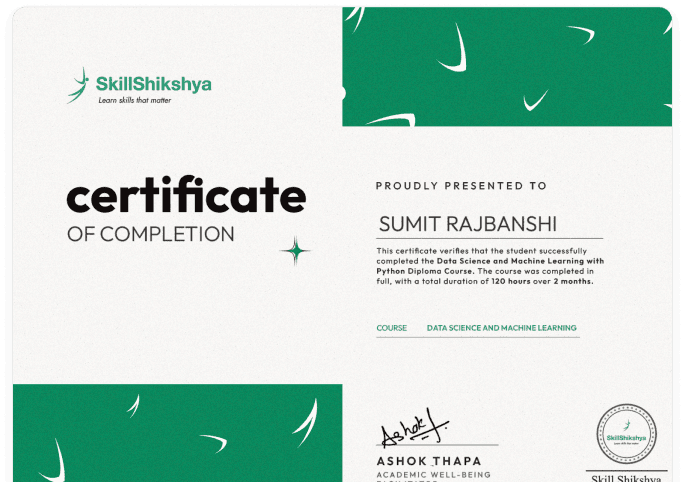
After completing the program, you will receive a certification from At Skill shikshya, the best online learning institute in Nepal. This certification helps demonstrate your professional skills when applying for jobs or freelance opportunities.

Our advisors will help you
Book a call today and start your journey into professional training.
Connect with our team to design a training plan tailored to your organization's goals, challenges, and workforce needs.

50+
Corporate & Institutional Partners
1. The OCR Registration Journey
Complete company-registration process at OCR
What happens before, during and after registration
Role of the founder
Role of company secretary/legal professionals
What the OCR checks
Common registration problems and rejection points
MOA — what it is and why it matters
AOA — what it is and why it matters
Certificate of Incorporation
Shareholder and director information
Registered office information
Not: How to draft an MOA/AOA.
Instead: What founders need to understand before approving/signing them.
Government fees and revenue
Professional/service costs
Expected timeline
Common hidden delays and mistakes
What happens immediately after company registration
Initial corporate requirements
Company records
Share structure
Founder responsibilities after incorporation
When conversion makes sense
What changes after conversion
Ownership and structural implications
Practical considerations before conversion
1. PAN & VAT
PAN registration
VAT registration
PAN vs VAT
When VAT becomes relevant
What changes after VAT registration
Founder responsibilities regarding tax registration
What EXIM Code is
Who needs it
Import/export implications
Registration process overview
Documents and parties involved
Why some businesses need additional licenses
Understanding sector-specific approvals
Examples of industries requiring additional approvals
Who handles these registrations
What founders need to monitor
Understanding the relationship between:
OCR → PAN → VAT → EXIM → Industry/Sector Approvals
1. The First Things a Founder Must Know After Registration
10 key rules after company registration
Company office requirements
Registered address
Address updates — Section 184
Company signboard
Company records
Share allotment — Section 31
Understanding shareholder records
Changes in shareholding
What founders should check before approving share-related changes
When amendments become necessary
Section 21
What can trigger an amendment
Founder approval and decision-making
Role of professionals in the amendment process
What founders must personally monitor
What can be delegated
What should never be ignored
How to know whether your company is compliant
1. Annual Company Reporting
AGM requirements — Section 76
Annual Return — Section 80
Audited financial statements
What information founders receive
What founders should review before approval
Fines and penalties — Section 81
Consequences of late/non-filing
Corporate and financial risks
How founders can prevent compliance failures
What TDS is
When TDS applies
Understanding TDS rates
TDS calculation — founder-level understanding
TDS return filing
Who normally handles TDS
What founders should monitor
VAT registration
VAT calculation
Input and output VAT
VAT returns
VAT adjustments
Founder-level VAT monitoring
What an audited financial statement contains
Balance Sheet
Profit & Loss
Cash Flow
What founders should look at
Understanding the financial health of the company
Focus: The founder doesn't prepare the return or financial statements. The founder understands what is being filed and whether the numbers make sense.
1. Directors
Appointment of directors — Section 92
Director disclosure requirements
Responsibilities of directors
What directors can and cannot do
Founder vs director responsibilities
Role of Company Secretary — Section 107
Why companies need one
What the Company Secretary handles
What founders should expect from the Company Secretary
Auditor appointment — Section 110
Role of the auditor
Auditor's responsibilities
What an auditor checks
Understanding the audit process
What founders should ask their auditor
Shareholder records
Debenture records
Director records
Corporate documents
Why maintaining accurate records matters
Founders should know:
Who is responsible → What they do → What document is produced → What the founder needs to approve/check
1. Labour Law
Labour law applicable to businesses in Nepal
Employer responsibilities
Employee rights
Employment documentation
Working conditions
Leave and working hours
Employee-related compliance requirements
What records a company should maintain
Employee documentation
Payroll-related compliance
What founders should monitor
Understanding applicable social-security requirements
Employer responsibilities
Employee contribution responsibilities
Compliance timeline
Consequences of non-compliance
What HR/accounting professionals handle
What the founder must understand
What founders should regularly review
Common compliance mistakes
1. Business Banking
Setting up business banking
Company bank accounts
Business vs personal transactions
Banking records
Banking relationships
What banks look for in a business
Why businesses require financing
Different business financing requirements
Working capital requirements
Understanding business loans
Debt and repayment obligations
How the loan process works
What banks evaluate
Financial statements
Business performance
Tax compliance
Banking history
Collateral
Promoter contribution
Approval and disbursement process
Repayment and monitoring
Not:
“How to prepare a loan application.”
Instead:
“What is the bank asking for, why are they asking for it, who prepares it, what should I review, and what am I committing the company to?”
1. Scaling Operations
What changes when a company grows
Increased compliance requirements
Changes in ownership
Changes in capital
Changes in business activities
Maintaining compliance while scaling
What bonus shares are
Section 179
Why companies issue bonus shares
When it makes sense
Founder/shareholder implications
Understanding M&A in Nepal
Section 177
Why companies merge/acquire
What happens during an M&A
Founder/shareholder implications
Regulatory considerations
Growing without proper compliance
Poor company records
Incorrect share structures
Ignoring statutory requirements
Weak documentation
Poor financial controls
1. Trademark & Brand Protection
Why trademark registration matters
Trademark registration process
Costs
Intellectual property considerations
Preventing brand duplication
Brand disputes
Bring together everything learned:
Registration
↓
Tax & Regulatory Setup
↓
Corporate Compliance
↓
Financial Reporting
↓
Governance
↓
Labour Compliance
↓
Banking & Financing
↓
Growth
From Business Idea → Registration → Compliance → Growth
Participants follow a fictional Nepalese company through:
Choosing its structure
Registering the company
Setting up PAN/VAT
Managing corporate compliance
Handling annual reporting
Managing directors/shareholders
Managing employee compliance
Working with the bank
Taking business financing
Protecting the brand
Issuing bonus shares
Considering an M&A opportunity
Scaling while remaining compliant
At the end of the course, the founder should be able to answer:
What is happening?
Why is it required?
Who handles it?
What document is involved?
What decision do I need to make?
What should I review?
What happens if we don't comply?
DAY | Pillar | Founder Learns |
01 | REGISTRATION | What business structure to choose and what decisions to make |
02 | REGISTRATION | How company registration works and what the registration documents mean |
03 | REGISTRATION | PAN, VAT, EXIM and sector-specific approvals |
04 | COMPLIANCE | What must happen after company registration |
05 | COMPLIANCE | Tax, VAT, TDS, AGM, annual returns and financial reporting |
06 | COMPLIANCE | Directors, Company Secretary, Auditor and corporate records |
07 | COMPLIANCE | Labour and employee-related compliance |
08 | GROWTH | Business banking and how the loan process works |
09 | GROWTH | Bonus shares, M&A and scaling while staying compliant |
10 | GROWTH | Trademark, brand protection and the complete company lifecycle |