How to Get Started in DevOps: Beginner's Guide | Skill Shikshya
Career Guide •1 Jun 2026•12 min Read
DevOps is one of the most in-demand and fastest-growing disciplines in today's software industry. Whether you are a student exploring tech career options, a developer ready to go from code to deployment with a hands-on DevOps training programme, or an IT professional looking to modernize how you work, understanding DevOps gives you a genuinely future-proof advantage.
This guide is your starting point. You will learn what DevOps is at its core, why companies across Nepal and globally adopt it at scale, and how it translates into real career success, from entry-level roles in Kathmandu to remote positions with international clients.
Basics of DevOps
At its simplest, DevOps is the practice of uniting software development (Dev) and IT operations (Ops) into a single, continuous workflow. The goal is straightforward: ship software faster, more reliably, and with fewer failures.
Before DevOps, development teams wrote code and handed it to operations teams who then struggled to deploy it. DevOps tears that wall down. Both teams work together from day one, sharing responsibility for everything from writing code to keeping applications running in production.
DevOps meaning goes deeper than collaboration, though. It is a culture, a set of practices, and a collection of tools that all work together to automate and streamline how software gets built and delivered.
What Makes DevOps Different?
Most IT careers focus on building things. DevOps focuses on how those things get built, tested, deployed, and kept running, continuously and automatically.
Think about traditional software delivery. A team spends months writing code, hands it off for testing, waits weeks for a deployment window, and then scrambles when something breaks in production. DevOps replaces that entire cycle with automated pipelines that move code from a developer's laptop to live production in minutes, with tests running at every step.
That shift in how software gets delivered is what makes DevOps engineering one of the most valuable disciplines in modern IT.
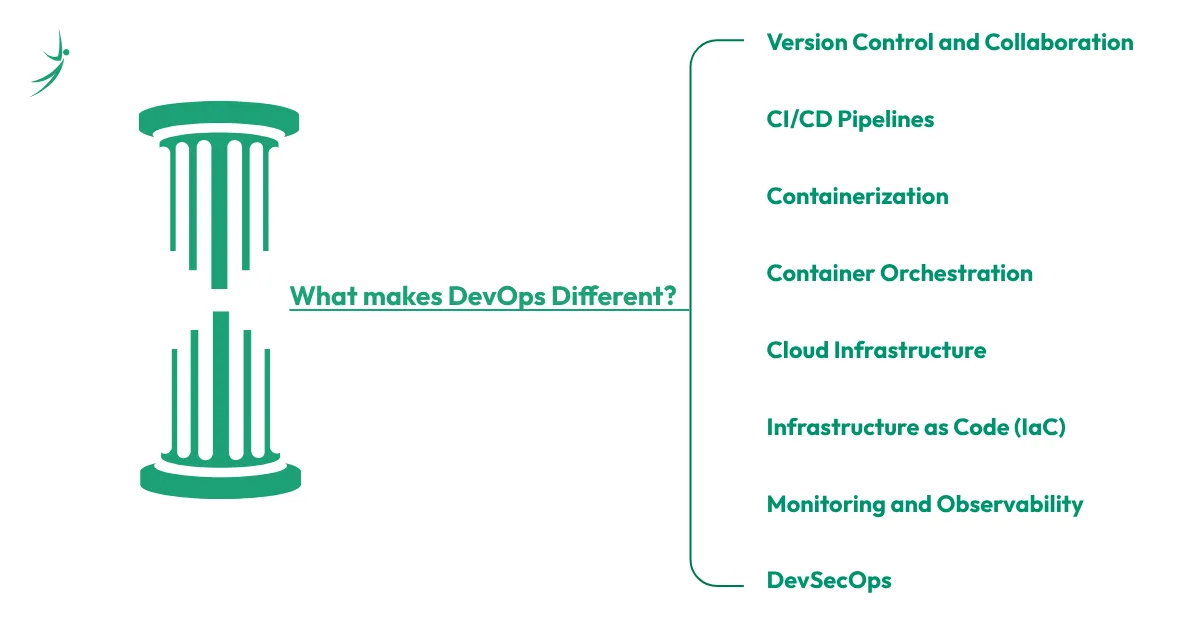
Here are the core pillars every aspiring DevOps engineer needs to understand:
- Version Control and Collaboration: Managing code changes with Git and enabling teams to work on the same codebase without overwriting each other's work.
- CI/CD Pipelines: Automating the process of building, testing, and deploying code every time a developer makes a change, using tools like Jenkins and GitHub Actions.
- Containerization: Packaging applications and their dependencies into portable containers using Docker so they run consistently across any environment.
- Container Orchestration: Managing, scaling, and automating containers at production scale using Kubernetes.
- Cloud Infrastructure: Provisioning and managing servers, storage, and networking on platforms like AWS, Azure, or Google Cloud instead of physical hardware.
- Infrastructure as Code (IaC): Writing code to provision and manage cloud infrastructure rather than clicking through dashboards, using tools like Terraform and Ansible.
- Monitoring and Observability: Tracking system health, application performance, and error rates in real time using tools like Prometheus, Grafana, and the ELK Stack.
- DevSecOps: Embedding security practices directly into the CI/CD pipeline rather than treating security as something you check at the end.
Each of these pillars connects to the others. You cannot run a proper CI/CD pipeline without version control. You cannot orchestrate containers at scale without understanding cloud infrastructure. DevOps is a system, not a checklist.
Why DevOps Matters Today
Software delivery speed is now a competitive advantage. Companies that deploy slowly lose ground to those that push updates, fix bugs, and launch features in hours rather than months. DevOps is how organisations close that gap.
The global DevOps market was valued at approximately $15 billion in 2025 and is projected to grow at a CAGR of over 20% through 2030, according to multiple industry research reports including Mordor Intelligence and The Business Research Company. Every major company in the world is either adopting DevOps practices or actively looking for engineers who can build and maintain those pipelines for them.
In Nepal, the picture is equally strong. Local IT outsourcing firms, product companies, and startups in Kathmandu are actively building DevOps infrastructure. DevOps training in Nepal has seen growing demand as companies realize that manual deployments and siloed teams cannot keep up with what clients expect. Add to that the remote work opportunity, DevOps roles for international clients are fully accessible from Nepal and the career case becomes very hard to ignore.
Key Insight: You do not need a computer science degree to get started in DevOps. A structured learning roadmap, the right hands-on projects, and one or two recognized certifications can take you further than a four-year degree alone, if you approach your learning the right way.
Where Do You Begin? A 6-Step Starting Point
Before going deep into career outcomes, here is the honest starting sequence for anyone who is completely new to DevOps:
- Learn Linux first: Almost every DevOps tool runs on Linux. Spend two to three weeks getting comfortable with the terminal, file permissions, and basic shell scripting before anything else.
- Master Git and GitHub: Version control is the foundation of every CI/CD pipeline. You cannot skip this step.
- Build your first CI/CD pipeline: Use GitHub Actions, it is free and beginner-friendly. Automate a simple build and test workflow for any small project you already have.
- Containerize something with Docker: Take a basic web application and package it into a Docker container. Push it to Docker Hub. This single project teaches you more than weeks of reading.
- Get hands-on with one cloud platform: Create a free AWS account and deploy your containerized app to an EC2 instance. AWS has the widest job market globally and in Nepal's remote sector.
- Learn Terraform basics: Write a simple Terraform configuration that provisions a cloud server. This introduces Infrastructure as Code in a practical, low-pressure way.
Most learners who follow this sequence consistently are ready to apply for entry-level DevOps roles within six to nine months.
How Getting Started in DevOps Drives Real Career Success
Understanding the pillars is the foundation. The real reason to pursue DevOps is, what it delivers; stability, strong earnings, and long-term career growth that compounds year after year.
One of the Most Stable Job Markets in Tech
DevOps roles are among the least affected by tech hiring slowdowns because they are tied directly to how businesses operate, not just how they build. Every company that ships software needs someone maintaining the pipelines, managing the cloud infrastructure, and keeping deployments running. That need does not go away in a downturn.
DevOps internships in Nepal are becoming more common as local companies begin investing in this infrastructure seriously. For fresh graduates, getting DevOps exposure early puts you ahead of most of your peers entering the job market.
Some of the Strongest Salaries in IT
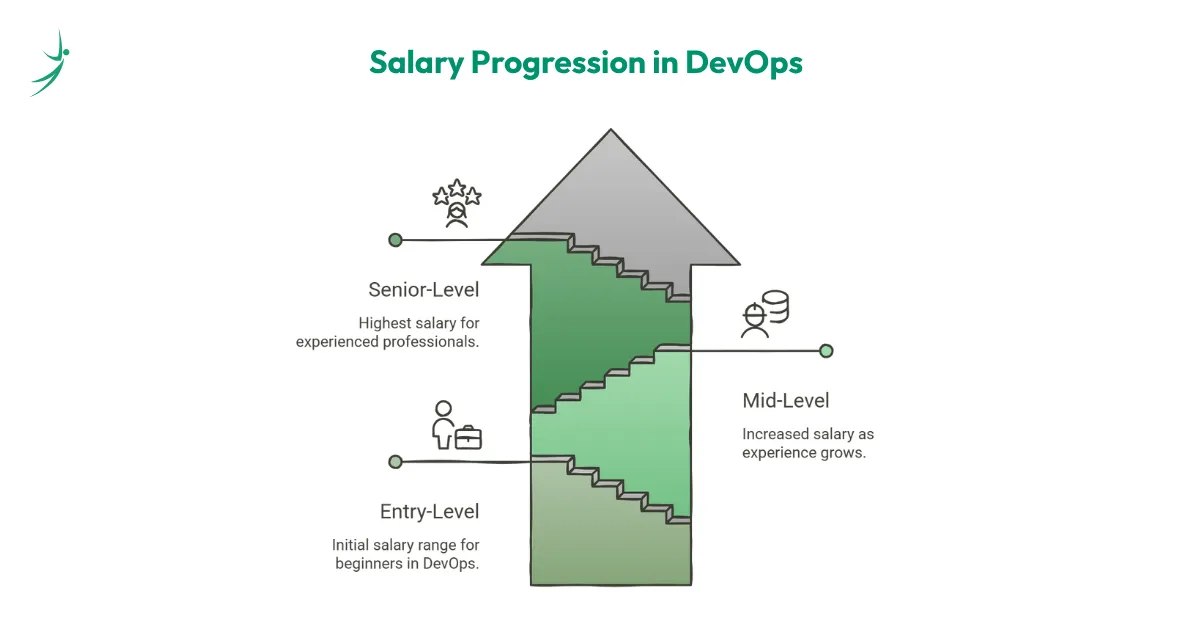
DevOps engineering commands some of the highest compensation packages in the tech industry at every level. According to Kumari Job's 2026 salary guide and Glassdoor’s DevOps Engineers salary data, here is what the Nepal market looks like today:
| Experience Level | Nepal (NPR/month) | India (INR/year) | USA (USD/year) |
|---|---|---|---|
| Entry-Level (0-1 years) | NPR 30,000 - 60,000 | ₹5 - 8 LPA | $80,000 - $100,000 |
| Mid-Level (2-4 years) | NPR 80,000 - 1,50,000 | ₹10 - 18 LPA | $110,000 - $145,000 |
| Senior-Level (5+ years) | NPR 1,50,000 - 3,50,000+ | ₹20 - 30 LPA | $160,000 - $200,000+ |
Note that remote roles for international clients in Nepal typically pay significantly more than the local market range, particularly for engineers with AWS, Kubernetes, or DevSecOps expertise.
A Direct Path to Remote and Global Work
DevOps is one of the most remote-compatible disciplines in all of IT. CI/CD pipeline management, cloud infrastructure, monitoring, and incident response can all be handled from anywhere with a reliable internet connection.
For professionals in Nepal, this creates a genuine path to international-level work and compensation without relocating. DevOps jobs in Nepal increasingly include remote positions with companies in Europe, the US, and Southeast Asia and the skill set that gets you those roles is the exact same one you build locally.
Compounding Technical Knowledge
Each DevOps concept you learn makes the next one easier. Linux fundamentals make scripting easier. Scripting makes CI/CD easier. CI/CD makes containerization easier. Containerization makes Kubernetes easier. The early learning curve is steep but it flattens fast, and the engineers who push through that initial phase build knowledge that compounds for their entire career.
Senior DevOps engineers and cloud architects do not just earn more, they become the people organisations rely on to make infrastructure decisions. That kind of strategic positioning is hard to reach in many other IT disciplines, but DevOps creates a clear, logical path to get there.
You Are at the Centre of How Software Gets Delivered
Most IT roles sit on one side of the product, either building it or supporting it. DevOps engineers sit in the middle, connecting everything. They work with developers, QA engineers, security teams, and business stakeholders. That cross-functional visibility makes DevOps professionals some of the hardest people to replace in any organisation.
When a deployment fails at 2am, the DevOps engineer is the one who fixes it. When leadership asks why the last release took three weeks, the DevOps engineer is the one who redesigns the process. That kind of ownership builds reputation and career momentum fast.
Real-World Impact: Professionals who complete structured DevOps programmes and earn recognized certifications; AWS Certified DevOps Engineer Professional, Certified Kubernetes Administrator (CKA), or HashiCorp Terraform Associate, consistently land roles faster and negotiate higher starting salaries than self-taught peers. Credentials signal to employers that your skills have been tested, not just listed on a resume.
What's Next? Go Deeper into DevOps
Now that you have a clear picture of what DevOps is and why it matters, the next step is building the actual skills. The following guides in this series take you through everything you need to go from complete beginner to job-ready DevOps engineer:
- A month-by-month DevOps learning roadmap; what to learn, in what order, and how long each phase realistically takes
- The core DevOps tools every engineer uses daily and how to get hands-on practice with them
- Every major DevOps career path, from Junior DevOps Engineer to Cloud Architect to DevSecOps specialist
- The top certifications to pursue in 2026 and an honest breakdown of which ones are worth your time
- How to build a DevOps portfolio with no prior job experience
- Where DevOps is heading in 2026 and beyond; DevSecOps, AIOps, Platform Engineering, and GitOps
Learn DevOps with Skill Shikshya
Reading about the DevOps roadmap is a great start. Applying it is what builds real skills and real careers.
At Skill Shikshya, our DevOps Diploma Course in Nepal takes you from complete beginner to job-ready professional through hands-on, project-based training. Whether you prefer structured classroom sessions in Kathmandu or online learning on your own schedule, the programme is built around what the industry actually hires for.
- Practical, project-based learning: Build real CI/CD pipelines, containerize applications, and deploy on cloud platforms. Every module ends with something you can show an employer.
- Expert instructors: Learn from professionals with hands-on industry experience in DevOps, cloud infrastructure, and automation, not just theory.
- Career support: Get guidance on certifications, portfolio building, and landing your first DevOps role in Nepal or remotely.
- Flexible schedule: Designed to fit students, working professionals, and career switchers equally.
Start your DevOps journey with hands-on training, real projects, and expert mentorship at Skill Shikshya.
Frequently Asked Questions
What is DevOps in simple terms?
DevOps is the practice of combining software development and IT operations into one continuous, automated workflow. The goal is to help teams ship software faster, more reliably, and with fewer manual steps in between.
How do I start learning DevOps as a complete beginner?
Start with Linux command line basics and Git, then move into CI/CD tools like GitHub Actions, then Docker, and then a cloud platform like AWS. Following a structured sequence matters more than how fast you go. A DevOps course that gives you hands-on projects from day one speeds up this process significantly. Most structured learners are ready to apply for entry-level roles within six to nine months.
Is DevOps a good career in Nepal?
Yes. DevOps training in Nepal is in growing demand as local IT companies modernize their infrastructure. Beyond local roles, remote DevOps positions for international clients offer salaries well above the local market rate and those roles are fully accessible from Nepal with the right skill stack and certifications.
Do I need a programming background to learn DevOps?
You do not need to be a software developer, but basic scripting in Bash and Python is essential. Most structured DevOps programmes teach you the scripting fundamentals as part of the course, so you do not need to prepare separately before enrolling.
Which cloud platform should I learn first, AWS or Azure?
AWS is the recommended starting point for most learners. It has the widest global job market, the most learning resources, and the highest number of DevOps job postings both internationally and in Nepal's remote job sector. Azure is a strong second choice if you are targeting enterprise or Microsoft-stack environments specifically.
How long does it take to become a DevOps engineer?
Most focused learners with structured training are ready to apply for entry-level DevOps roles within six to nine months. The timeline depends on how consistently you practice, not just how much you study. Building real projects, even small ones during the learning phase, shortens the gap between training and employment significantly.
How much does a DevOps engineer earn in Nepal?
According to KumariJob's 2026 salary data, entry-level DevOps engineers in Nepal earn between NPR 30,000 and NPR 60,000 per month. Mid-level engineers with two to four years of experience earn NPR 80,000 to NPR 1,50,000 per month. Senior engineers with five or more years of experience earn NPR 1,50,000 to NPR 3,50,000 and above. Remote roles for international clients typically pay more than local market rates, particularly for engineers with cloud certifications or Kubernetes expertise.
What certifications should I get first?
Start with AWS Cloud Practitioner to build foundational cloud literacy, it is widely recognised and takes most learners four to six weeks of focused study to earn. Once you have that, move toward the AWS Certified DevOps Engineer Professional or the Certified Kubernetes Administrator (CKA) depending on the type of roles you are targeting. You do not need multiple certifications before applying; one strong certification paired with a solid project portfolio is enough to land an entry-level role.