Is SEO Dead? How AI Search (ChatGPT, Perplexity, AI Overviews) Is Changing SEO Careers
"Is SEO dead?" gets typed into Google thousands of times a month, and the honest answer is no but the job has changed enough that the question makes sense. Between AI Overviews sitting on top of search results, ChatGPT answering questions that used to start with a Google search, and Perplexity building an entire product around cited AI answers, the old idea of "rank in the top 10 blue links" no longer covers the whole job.
This piece walks through what the 2026 data actually shows, why so many people still ask if SEO is dead because of AI, and since this question comes up constantly among students weighing a search or marketing career what it means if you're deciding whether SEO is still worth learning right now.
Is SEO Dead in 2026? The Short Answer
No. Search traffic is not disappearing, and the SEO industry is not shrinking it's repricing. A few numbers make the picture clear:
- The global SEO services market grew from roughly $74.9 billion in 2025 to about $84 billion in 2026, according to Launchcodex's 2026 market tracking.
- Organic search still accounts for roughly 53% of all measurable website traffic, per data cited by Savo Group.
- Google still handles the large majority of U.S. web search around 89% of web traffic by most tracking even with ChatGPT and Perplexity growing fast, Pixels Corp reports.
What has genuinely shifted is where clicks go and what counts as a "win." That's the part worth unpacking, and it's exactly why "seo dead" and "seo is dead" keep trending as search terms every time Google ships a new AI feature.
What Is an AI Overview? (Quick Definition)
If you've searched for the AI Overview meaning yourself, here's the short version: it is the AI-generated summary Google places above the traditional list of blue links, pulling information from several sources into one written answer with citation links underneath it. It replaced what was formerly called Search Generative Experience, and it's the single biggest reason people now ask "is SEO dead with AI" instead of just "is SEO dead."
Perplexity and ChatGPT Search work on a similar principle but outside Google entirely: a question goes in, a synthesized, sourced answer comes out, often with no need to open a separate results page at all.
Why "SEO Is Dead" Keeps Trending: What the Data Actually Shows
Here's where the nuance the panic-headlines skip actually lives.
- Zero-click search is real and growing. SparkToro and Datos' widely cited study found 58.5% of U.S. Google searches end without a click to any external site. Newer 2026 tracking from Launchcodex puts that figure closer to 68%, and inside Google's AI Mode specifically, zero-click behavior climbs as high as 93%.
- AI Overviews measurably reduce clicks on the answer that triggered them. Pew Research Center tracked real browsing sessions from 900 U.S. adults and found people clicked a traditional organic result just 8% of the time when an AI Overview appeared, versus 15% when it didn't cited by Pixels Corp.
- But commercial and transactional searches are barely touched. "How-to" queries get absorbed into AI Overviews at close to 99.9%, while "buy X" and "best X for Y" e-commerce searches trigger an AI Overview only 3–4% of the time, per Seer Interactive data reported by Pasquale Pillitteri. The searches that actually convert into sales, leads, or enrollments are the ones still driving people to click through.
- And AI referral traffic, while growing fast, is still small in absolute terms. ChatGPT has crossed 900 million weekly active users, up from 400 million in February 2025, and Perplexity is aiming for a billion weekly queries yet AI chatbots combined still account for under 1% of total website referral traffic, per BrightEdge data cited by Savo Group. It's growing 130–150% year over year, but it's growing from close to zero.
Put together: informational, "just tell me the answer" searches are the ones vanishing behind an AI summary. Purchase-intent searches, brand searches, and comparison searches still send real traffic which is why "is SEO really dead" is the wrong question. The better one is which parts of the old job still matter.
How AI Search Is Actually Changing SEO Careers
This is the part that matters most if you're building a career here, not just running a website.
Tasks That Are Now Mostly Automated
- Bulk keyword clustering and first-pass keyword lists
- Basic technical site audits broken links, missing tags, crawl errors
- First-draft content outlines built from top-ranking competitor pages
- Meta description and title tag generation at scale
None of this is a bad thing for someone entering the field. It just means the entry-level version of "SEO person" that only did these tasks is a shrinking job description.
Skills That Are Now More Valuable, Not Less
Judgment over volume deciding which 10 of an AI's 100 keyword suggestions actually fit the business
- E-E-A-T-backed content real experience and named expertise behind a page, since thin, templated posts are the content most likely to be skipped by AI Overviews entirely
- Generative Engine Optimization (GEO) structuring and phrasing content so ChatGPT, Gemini, and Perplexity can extract and cite it accurately
- Answer Engine Optimization (AEO) writing direct, quotable answers to specific questions, the same shape People Also Ask boxes and AI Overviews pull from
- Schema and structured data the technical layer that helps AI systems understand exactly what a page is and who wrote it
Titles are shifting to match: "SEO Specialist" postings increasingly sit alongside "Search & Content Strategist," "GEO Specialist," and "AI Visibility Lead" roles built around judgment and structure rather than manual keyword spreadsheets.
If this is the direction you want to move in, Skill Shikshya runs a course built specifically around prompting, structuring, and directing generative AI tools rather than just using them, which is exactly the shift this section describes.
ChatGPT vs. Perplexity vs. Google AI Overviews: Platform-Specific Differences
They all produce a written answer with sources, but the mechanics differ enough to change how you write for each one.
| Google AI Overviews | Perplexity | ChatGPT Search | |
|---|---|---|---|
| What It Is | AI summary shown above Google's traditional blue-link results | Standalone AI answer engine built around live, sourced answers | Conversational AI assistant with live web search layered in |
| How It Finds Answers | Google's existing index plus ranking signals | Runs a fresh web search for each individual query | Blends training knowledge with real-time web results when needed |
| Citation Style | Source links listed beneath the summary | Sources cited directly inline within the answer | Source links shown alongside relevant claims |
| What Content It Favors | Crawlable, technically sound pages with clearly extractable passages | Direct, recent answers stated early, weighted toward recency | Authoritative, clearly structured pages an AI can lift a passage from |
| Click Impact | Traditional result clicked ~8% of time when present, vs ~15% without (Pew Research) | Targeting ~1 billion weekly queries; still under 1% of overall referral traffic industry-wide | 900M+ weekly active users (up from 400M in Feb 2025); currently leads AI search platforms by usage |
Google AI Overviews
Built from Google's existing index and ranking signals, layered under the AI summary. A page generally still needs to be crawlable, fast, and technically sound in the ways classic SEO already required plus written clearly enough for a model to lift a direct answer from a specific passage.
Perplexity
Behaves closer to a live research assistant. It runs a fresh web search for each question and cites its sources directly in the answer, weighting recency and how directly a page answers the question. Content that states the answer in the first sentence or two of a section performs better here than content that builds up to it.
ChatGPT Search
Blends its own training knowledge with live web results when a query needs current information. ChatGPT currently leads the AI search platforms by usage, ahead of Gemini and Copilot, which makes it the single highest-priority AI surface to be citable on right now.
What Actually Works Now: Practices for AI-Era Visibility
- Answer the question in the first two sentences of a section. AI engines extract passages, not whole articles bury the answer and it gets skipped.
- Add structured data and schema markup to every page, especially FAQ and how-to content.
- Publish original data. Surveys, internal benchmarks, and proprietary numbers get cited far more than restated general knowledge.
- Build genuine entity authority consistent naming, an About page, real author bios, and mentions from other credible sites in the niche.
- Target purchase-intent and comparison keywords, not just broad informational ones, since those still send clicks.
- Track citations, not just rankings. Set up regular checks of how your brand appears (or doesn't) inside ChatGPT, Perplexity, and AI Overview answers for your core topics.
Common Challenges and How to Handle Them
- "My traffic is dropping and I don't know if it's AI Overviews or something else." Pull the specific queries losing clicks and check whether an AI Overview now appears for them. Informational queries losing traffic to an AI Overview is expected; commercial queries dropping usually points to a different, unrelated problem worth investigating separately.
- "I don't know if I'm being cited anywhere." Manually search your top 20 target queries inside ChatGPT, Perplexity, and Google AI Overviews once a month and log whether your site appears. There's no perfect automated tool for this yet, so a manual spot-check remains the most reliable method.
- "Leadership wants to cut the SEO budget because 'AI killed search.' Bring the numbers: a $84 billion, still-growing SEO market, 53% of traffic still organic, and Google still handling roughly 89% of U.S. search volume. The budget conversation should be about reallocating effort toward citations and structured content, not eliminating it.
Real Examples: Who's Winning Inside AI Answers
Brands that already invest in structured, well-sourced content are seeing a real upside once they get cited. Seer Interactive's research shows brands cited inside an AI Overview see roughly a 35% higher click-through rate compared to brands that aren't cited at all a strong signal that being named inside an AI answer builds enough trust that the click that follows is a higher-quality one.
Separate tracking backs this up from another angle: Digilligence's review of citation data found that being referenced inside an AI Overview does not hurt click-through rates if anything, an AI citation appears to work like a pre-qualification step, filtering in people who already trust the source before they click.
The pattern across both is the same: it's not enough to rank. Structured, well-sourced, clearly-answered content is what gets pulled into the answer in the first place.
Where SEO Is Headed Next?
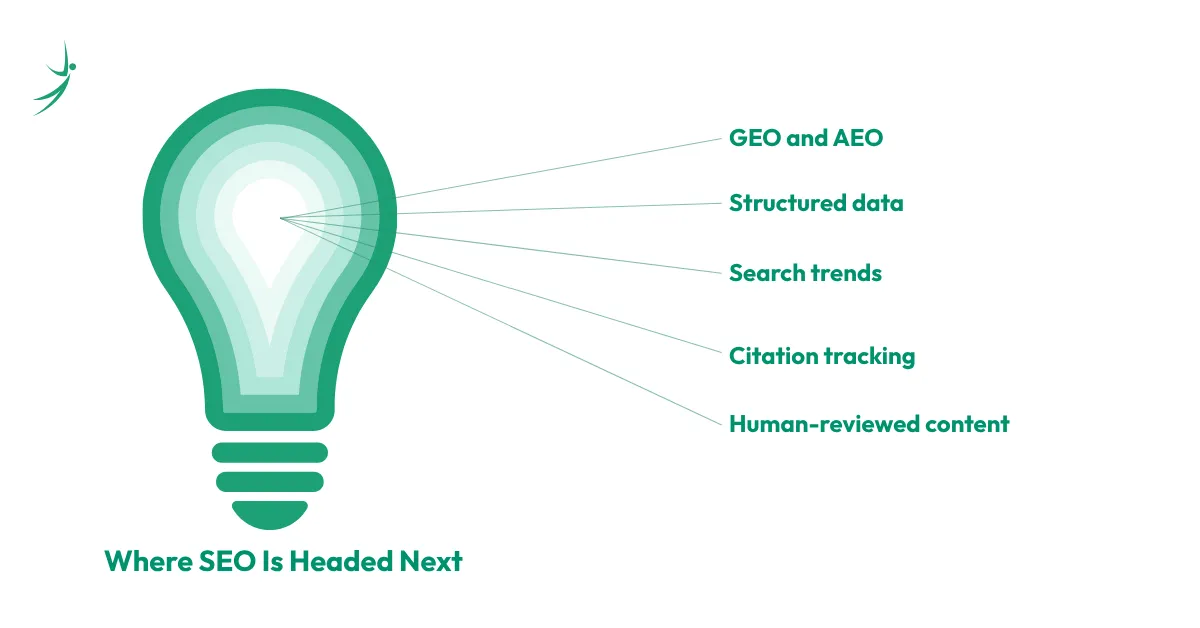
- GEO and AEO become standard line items, not specialist add-ons, inside most SEO job descriptions.
- Structured data moves from "nice to have" to baseline requirement for any page competing for an AI citation.
- Commercial and local search stays resilient while purely informational content keeps losing ground to AI summaries.
- Citation tracking tools mature, giving teams something closer to real rank-tracking for AI answers instead of manual spot-checks.
- Human-reviewed content gains a quality premium as AI-generated content floods the web and search engines lean harder on genuine expertise signals to sort through it.
Is It Still Worth Learning SEO in 2026? How to Choose Your Path
Yes, with a caveat: it's worth learning the 2026 version of SEO, not the 2015 version. If you're choosing between specializations, the honest breakdown looks like this:
- Pure keyword-and-backlink SEO is shrinking as a standalone specialization; still useful as a foundation, not enough on its own anymore.
- Technical SEO + schema/structured data is growing, since it now directly feeds AI citation eligibility.
- Content strategy with E-E-A-T and GEO/AEO skills is the fastest-growing lane, and the hardest for AI tools to replace since it depends on judgment and real expertise.
- AI tool direction and prompt-level content work are a genuinely new skill category that barely existed three years ago.
There's also a real, underserved gap worth naming directly: search "is SEO dead" or "how AI search is changing SEO careers" right now and every ranking result is a global agency blog Neil Patel, Semrush, generic marketing sites. None of them speak to a Nepal-specific job market, salary range, or hiring reality. Someone who understands both classic search fundamentals and the AI-search shift, and can speak to local businesses and local hiring, is filling a gap almost nobody else is currently covering. For anyone thinking through this specifically, Skill Shikshya's digital marketing program covers the SEO fundamentals alongside the newer AI-search skills in one track, and it's worth talking to a mentor directly if you're still weighing options.
How to Measure Success When Clicks Aren't the Whole Story
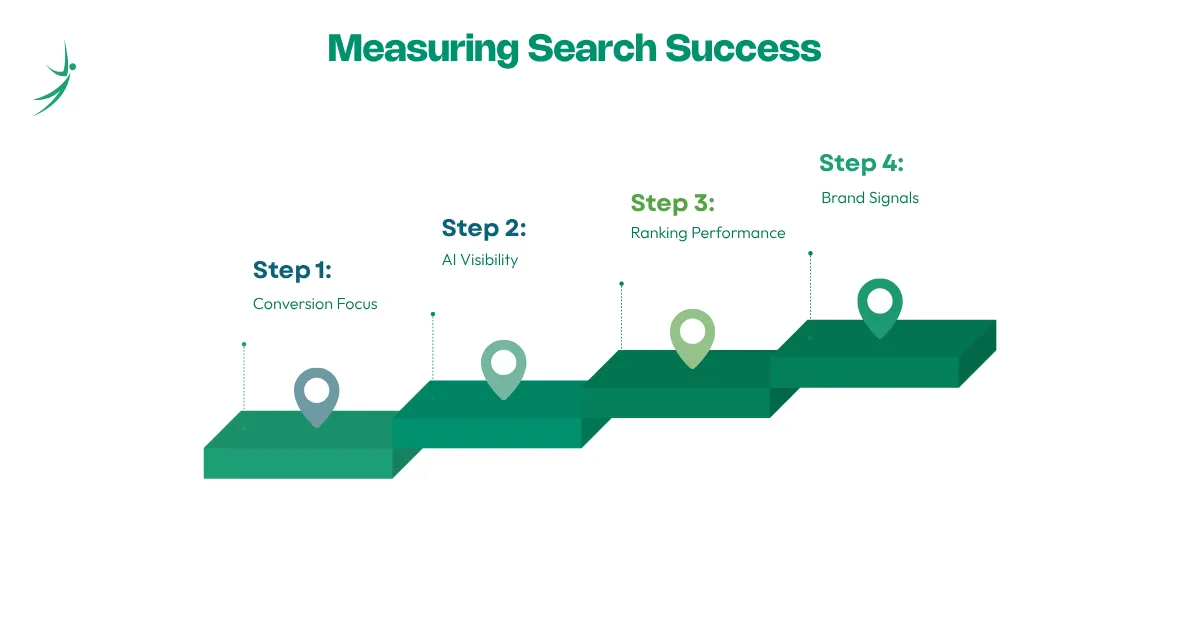
Ranking position and raw click volume still matter, but they stopped being the whole scoreboard. A fuller picture now includes:
- Citation rate, how often your brand or page gets referenced inside ChatGPT, Perplexity, and AI Overview answers for your target queries
- Branded search volume is a rising signal that AI-driven awareness is working even without a direct click
- Click-through rate on cited pages, checking whether being cited is actually translating into the qualified clicks the Seer Interactive data suggests it should
- Conversion rate on organic traffic, not just traffic volume, since the searchers who do click through now tend to be further along and more likely to convert
- Share of voice on commercial queries, the searches still reliably sending clicks are the ones worth ranking-tracking closely
Conclusion: So, Is SEO Dead?
No but the version of SEO built entirely around keyword lists and blue-link rankings is fading, and pretending otherwise is how a team gets caught flat-footed. What's replacing it needs a wider set of skills: intent-first content, real entity authority, structured data that AI systems can read cleanly, and the judgment to know what still needs a human eye before it gets published. That's a harder job than the old one. It's also a considerably harder job for AI to fully take over.
If you're weighing whether to invest time in this field, browse the full course catalogue or read more career and industry breakdowns on the blog before deciding where to start.
Frequently Asked Questions
Is SEO dead because of AI?
What does AI Overview mean?
Is SEO dead with AI Overviews specifically?
Is it still worth learning SEO in 2026?
How is AI going to change SEO?
Is AI taking over SEO jobs?
How is Perplexity different from Google AI search?
How is AI changing the way we search?
About Author: